The Brixton Fair Deal opened in March 1982 at the venue that we now know as the Brixton Academy. The place had been unused for gigs since the early 70s when the previous venue, The Brixton Sundown, closed down.
The venue was set up with some very bold intentions. Owner Alan Briggs (together with business partner George Denham) spent over half a million pounds on converting the venue into a 5,000 capacity venue. The venue boasted light and laser installations, as well as a sound and video studio. Crucially, the venue was slated as creating 200 new jobs in Brixton, at a time that certain reports have suggested that black youth unemployment in the area was over 40%. In addition, Briggs hoped that the venue would stage one benefit show every month, raising an estimated £60,000 for local organisations.
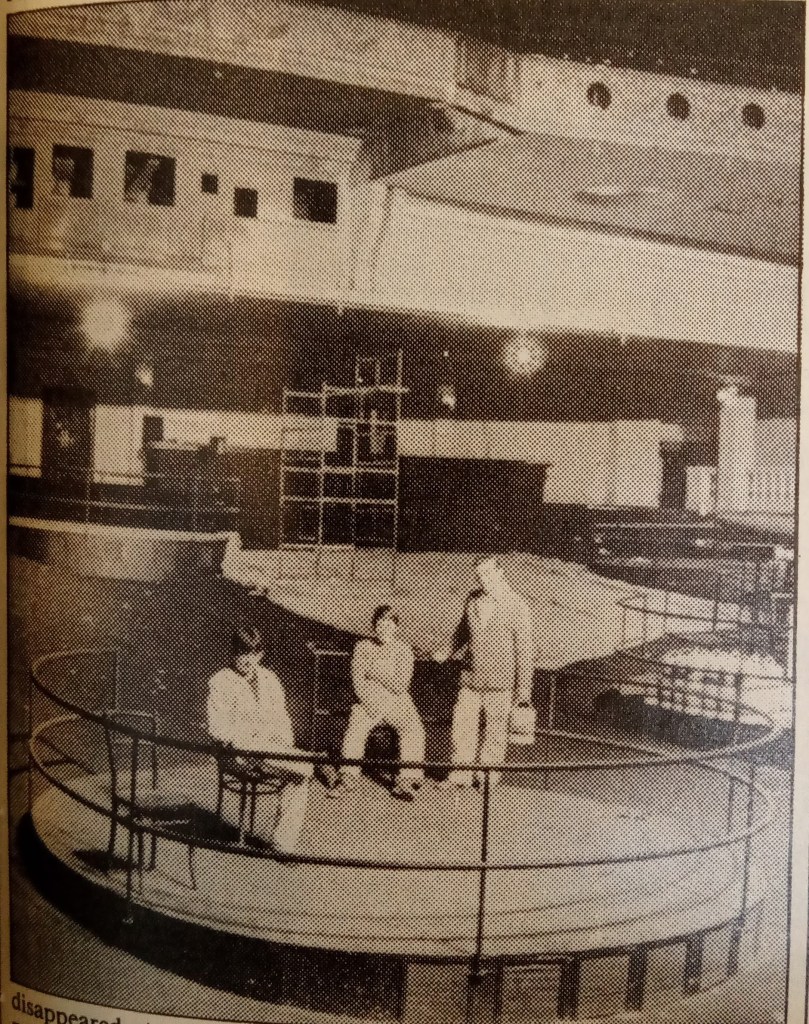
The venue lasted for just 6 months before going under. From the start it seemed to be cursed. As the following history will show, it seemed to stumble from one mishap to another. Whether this was down to bad luck, bad management or something more nefarious is a matter of debate.
There has certainly been more than one allegation of wrong-doing by Fair Deal. Simon Parkes, in his book “Live at the Brixton Academy” is quoted as saying “Fair Deal could not have been a less appropriate name. These guys proved to be as crooked as they come, doing a runner with UB40’s box office takings, a very expensive sound desk, and £120,000 borrowed from Watneys to set the place up.” The Melody Maker alleged in June 1983 that “manager Alan Briggs absconded, allegedly taking a considerable sum of money”.
“Don’t worry, it will work out alright, and I can guarantee we shall have shows on a nightly basis.”, proclaimed Briggs before the venue opened. Oh dear.
Whatever the naivety of the venture, it does seem that The Fair Deal did help to act as a springboard to regenerate the area as a music destination.
Black Echoes magazine announced in December 1981 that The Fair Deal would be opening in February 1982. It stated that Alan Briggs had tried to stage a six week festival in the Caribbean in 1980 that “fell foul of bureaucracy”. That should have been a clue that all was not well.
Opening a major venue less than a year after the 1981 riots that had made Brixton infamous in the minds of the general population was certainly a brave move. From the very beginning Briggs was facing opposition from within the music industry. He told the NME in January 1982 “For some obscure reason, a number of agents and promoters say they are reluctant to put anyone into Brixton. Not only is that bullshit, but it’s also totally alien to the ideals for which many bands are constantly campaigning….Brixton definitely needs a leisure facility to help defuse the prickly situation…I’ve had the utmost co-operation from the authorities – but I certainly didn’t expect opposition from within the music biz”.
“I think one of the reasons for resistance is money. For my own promotions I’ve pledged a maximum £5 admission irrespective of who’s appearing – hence The Fair Deal. And I suspect that other promoters, who might consider putting in their own shows, resent this.”
Paul Fenn of Asgard booking agency took a rather different view. He told Time Out magazine “We’re entrusted to handle the careers of our acts and I can’t afford to risk a major act with a new venture”. His feeling was that a wait-and-see approach would always govern the attitude of promoters to entrepreneurs who tried to come into the London music business at the top rather than building up a reputation through smaller venues.
Briggs stated in January that The Clash were pencilled in for February (that didn’t happen) and that The Human League were definite for two nights in March. That didn’t happen either. Briggs also claimed that big name promoter Harvey Goldsmith had booked the 25th-28th April, although he did not say would be appearing. Nothing came of that either. Beginning to see a pattern emerge?
We have listed below a month by month run down of the gigs at The Fair Deal. However, given the huge amount of cancellations that plagued The Fair Deal, it needs to be treated with caution.
February
In late January, The Fair Deal announced that would open on the 12th and 13th February with two benefit shows for the trade union Solidarity, which had recently been suppressed by the Polish government. The Beat and The Boomtown Rats were understood to be playing.
The 30th January edition of the NME announced that the gigs were cancelled. “Solidarity haven’t been able to get it together. I can’t wait any longer. I gather that several groups wanted to appear, but their arms were twisted by their agents, who are opposed to their acts coming to Brixton.” said Briggs. He then went on to say that he would put on a benefit any time for Solidarity if they could organise it and bemoaned the fact that he would now have to promote the opening night himself, which was due to include Bo Diddley, Talisman and Dr Feelgood and a jam session between The Who’s John Entwistle and Family’s Roger Chapman. According to Time Out the opening night was to be a lowkey, invitation only affair.
A week later the bill had changed, with Dr Feelgood being dropped and Lionheart being added to the bill on the 12th February. The bill for the 13th February comprised The Cimarrons, with support from Jah Warrior and The Skank Orchestra. The 14th February was a showcase for local talent “to demonstrate to the media the exciting things happening in the area.” We know that the Bo Diddley show went ahead as it was reviewed in the Melody Maker. We would love to know if any of the other gigs actually went ahead. Given the ensuing chaos, we doubt it.
In early February it was announced that the Solidarity gig was back on, but this time on the 13th March.
Then Briggs announced that February would be preview month, with a series of free gigs for the local community. The gigs were to be held in the foyer. They ended up getting cancelled as well, apparently because the decorators hadn’t finished!
The records also show that Briggs’ builders were still putting in planning applications to carry out alterations to the building at the beginning of February, which only received approval in early March.
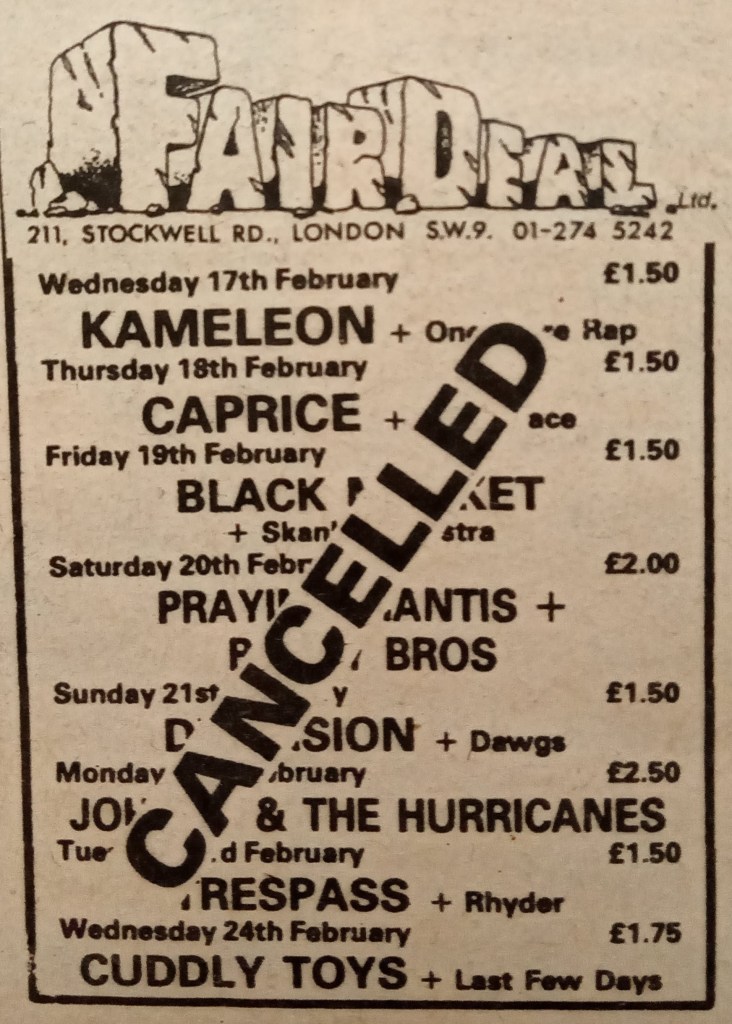
The 6th February edition of trade paper Music Week reported that a preview gig featuring the Baily Brothers and Rock Goddess was to be held that week.
It seems that a few bands were using the Fair Deal for rehearsals both before the formal opening and when gigs weren’t happening. Gary Owens of heavy metal band Tytan remembers playing a gig at the venue as a trial run as well as meeting heavy rocker Sammy Hagar rehearsing there. The 20th February edition of Melody Maker reported that the neighbours had been complaining about him as he had been smashing windows.
March
Prior to the official opening, Black Echoes magazine held their annual awards show on 7th March, due to feature Michigan and Smiley, Ranking Dread, Carol Thompson, Lion Youth, The Cool Notes and The Instigators.
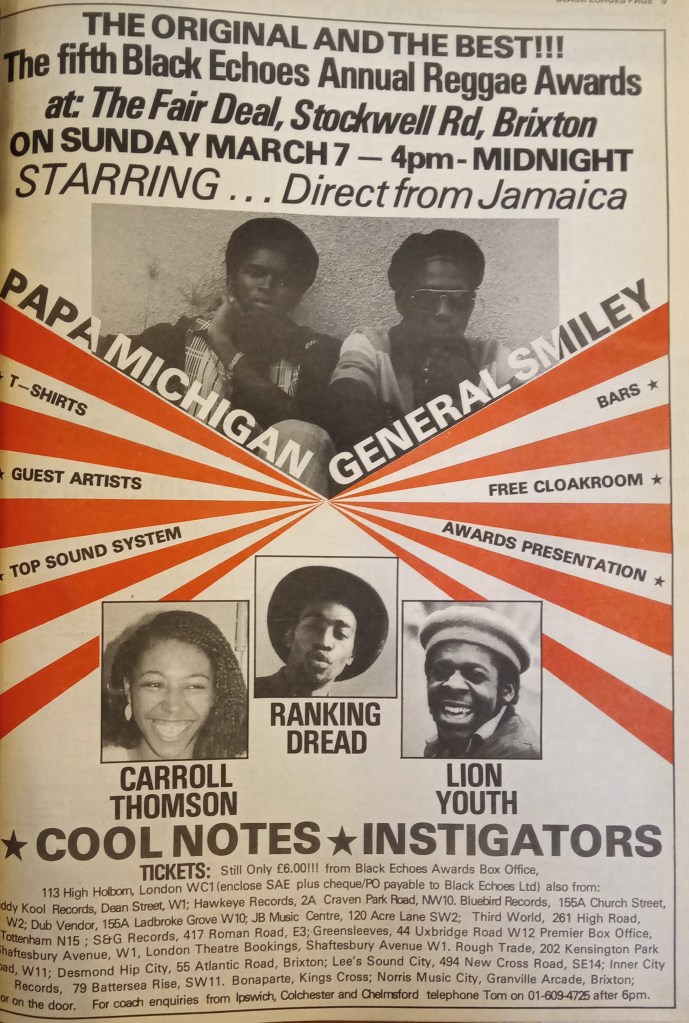
In the spirit of The Fair Deal, it didn’t quite go to plan. Headliners Michigan and Smiley were a no-show and had to be replaced by Sugar Minott. Similarly, Lion Youth didn’t perform but seems to have managed to turn up to collect his award.
However, the main problem (and this is not the only time we have read this) was that the venue was freezing cold. “I’ll never go to The Fair Deal again” bemoaned the Black Echoes reviewer. To add insult to injury, the bar ran out of warming brandy half way through the presentations.
“The vibe was a positive one, despite the arctic conditions”, the reviewer continued. The evening was split into three parts-sets by The Cool Notes, The Instigators, Carol Thompson, Second Generation Dancers (replacements for Lion Youth) and Ranking Dread; followed by the awards ceremony and then a set by Sugar Minott.
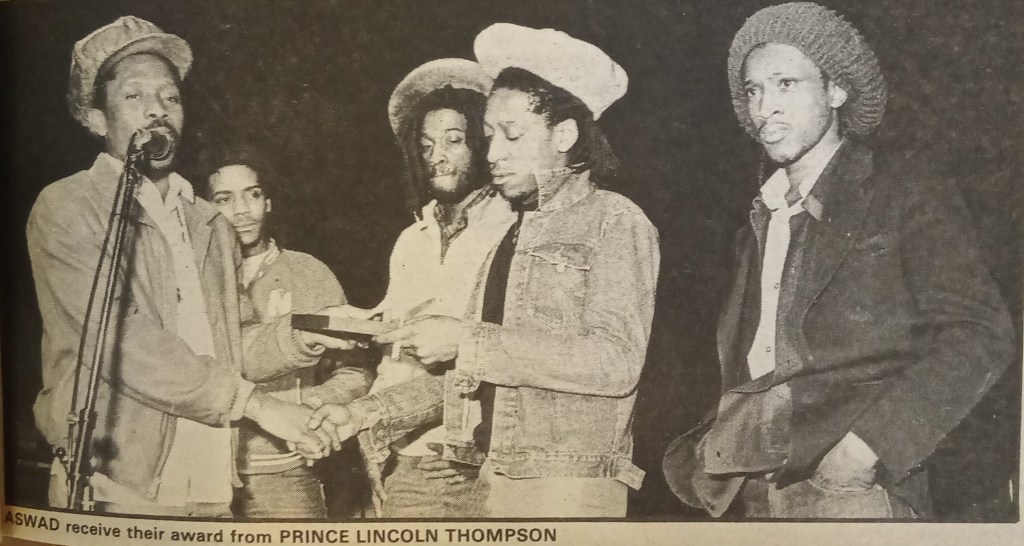
The presentations didn’t go without a hitch, with DJ Tony Williams presenting the wrong award and presenter Mikey Dread “looking as though he wished he were somewhere else”. He can’t have been as underwhelmed as Aswad were for winning the best band award:
Sugar Minott rounded the night off. It wasn’t a good night for him. His cassette player was stolen backstage and during his set the crowds started to visibly thin out due to a combination of wanting to catch the last tube home, the arctic conditions in The Fair Deal and a dodgy PA. As someone pointed out “Most of the Brixton youths there, have better PA stacks in their bedrooms.”
The official opening was moved to March 12th, with UB40 as the headliners.
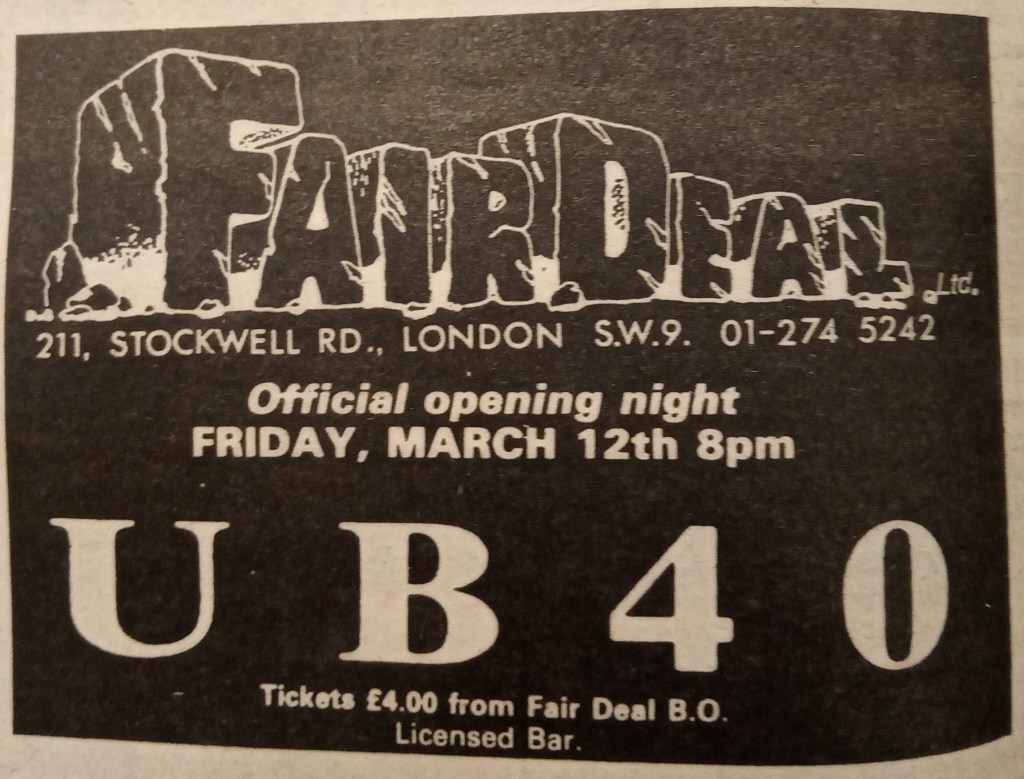
The Solidarity gig was to be on the following days, the 13th and 14th March. The 13th bill was to feature The Members, The Modettes, Wilko Johnson, The Bureau and local group Inspector House. This was cancelled just a matter of days beforehand due to the “secret” headliners The Boomtown Rats pulling out. Their manager told the NME “We didn’t want to let anyone down, but we felt we would by doing a rushed show, depriving the audience of the standard they expect from us. We are still strong supporters of Solidarity, and we’d like to arrange a charity at the Fair Deal as soon as we can.”
The bill for the 14th included The Blues Band, Jools Holland and his Millionaires, Alexis Korner, The Cheetas and Pinski Zoo. We’re not sure if this actually went ahead.
As part of the official opening announcement, it was also publicised Frank Zappa would play a 3 night stint on the 26th-28th March. It never happened.
The Jam definitely did play on the 15th March.
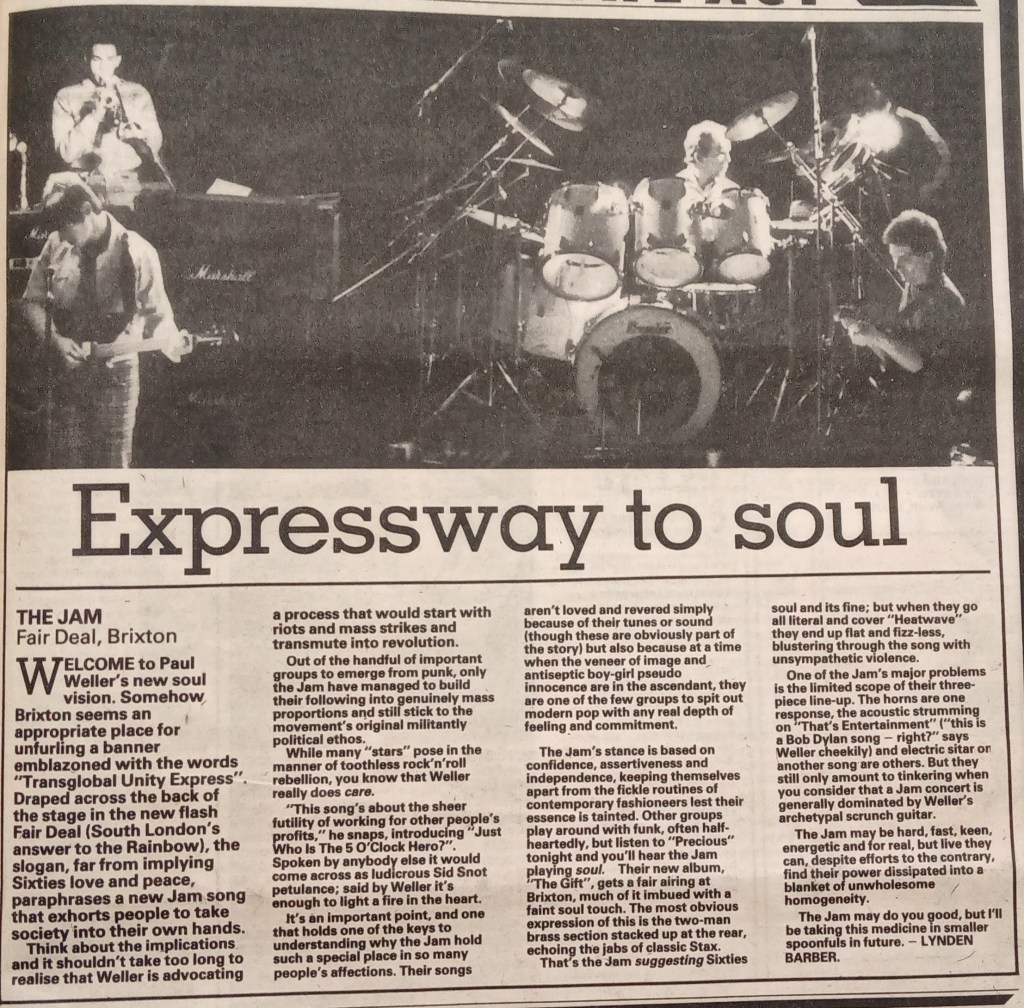
The NME’s Barney Hoskyns savaged The Jam’s performance. If you want an example of how pretentious 70s and 80s music journalism was, try this from his review: “His every movement is a genuflection of rhetorical presence”.
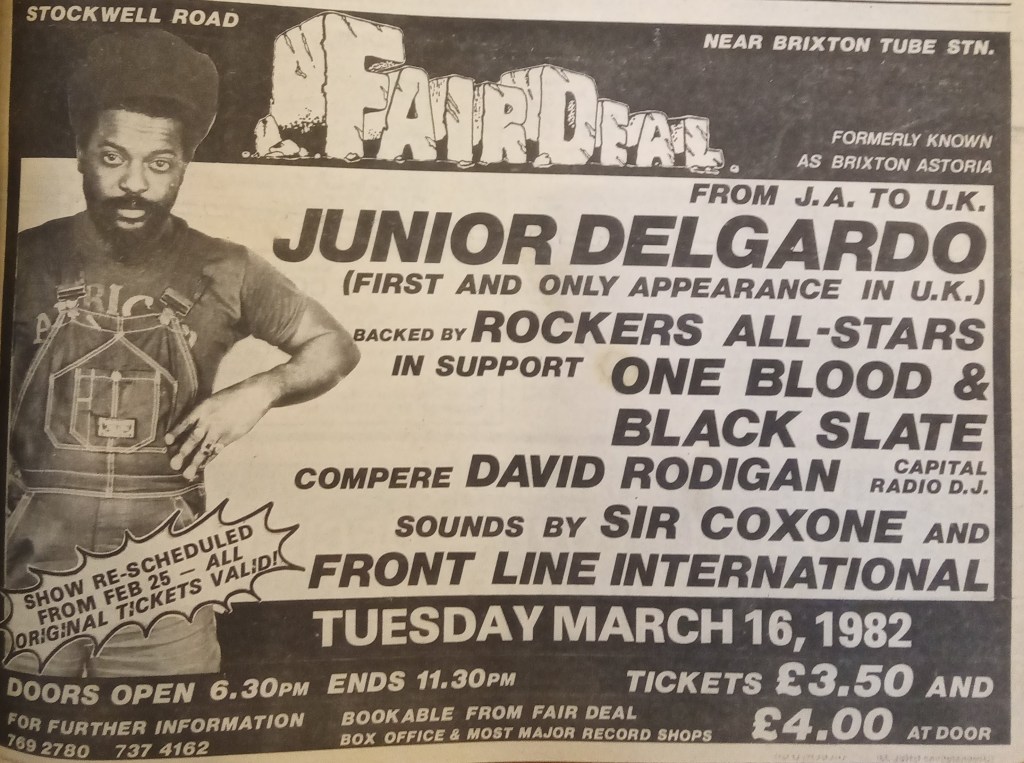
Junior Delgado, Black Slate and One Blood were originally due to appear on the 25th February. However, this was put back to the 16th March.
The 17th March featured a 60s revival package (probably quite rare in those days), featuring The Tremeloes, The Troggs, Johnny and The Hurricanes and The Merseybeats.

It was also announced in March that Briggs would be collaborating with Lambeth council on a series of events to be held in June, which included gigs at the Fair Deal, smaller venues and an open air event at Brockwell Park. None of that happened.
April
At the beginning of March it was announced that The Might Diamonds would be playing the Fair Deal on the 6th April to promote their single “Pass the Koutchie”, a version of which was taken to Nr 1 in the pop charts by Musical Youth just six months later. The gig was rescheduled for the 17th April. However, this was cancelled as well. According to the NME the group had flown to the USA after a dispute with their British promoter. Although the dispute was subsequently resolved, it was too late for the group to fly back.
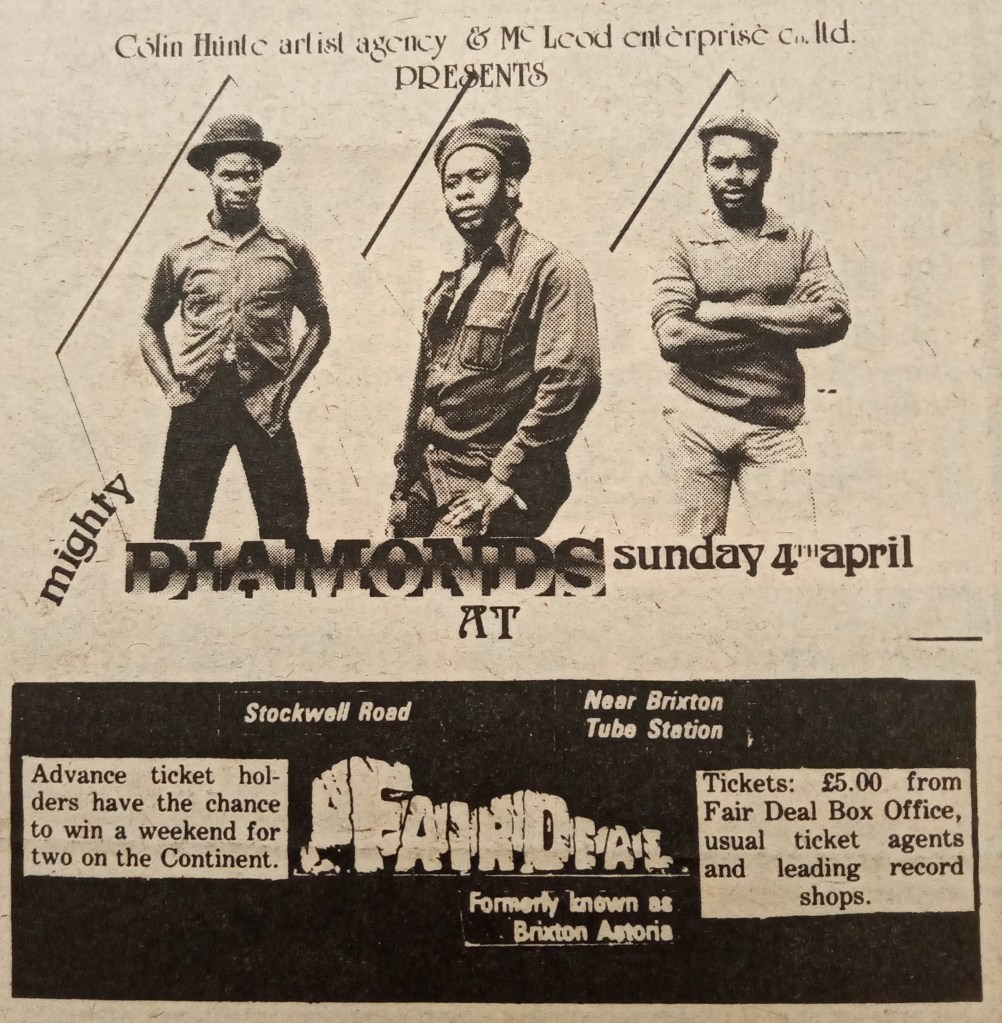
Apparently Alan Briggs was told of the cancellation just 3½ hours before showtime. He told the NME that disgruntled punters should contact the promoters and took (by today’s standards) the unusual step of publishing the promoters’ address and phone numbers. Briggs told Sounds magazine that they had no money to refund punters on the night as the promoters had apparently taken the unusual step of collecting ticket sales money on a daily basis……
The promoters, for their part, said that the gig had now been moved to the Lyceum in central London and would take place on the same day that the NME was published, giving fans only a few hours’ notice, yet again.
Desmond Dekker and Hi-Tension co-headlined a benefit for Help a London Child and Band Aid alongside Sticky Stuff and The Skank Orchestra.

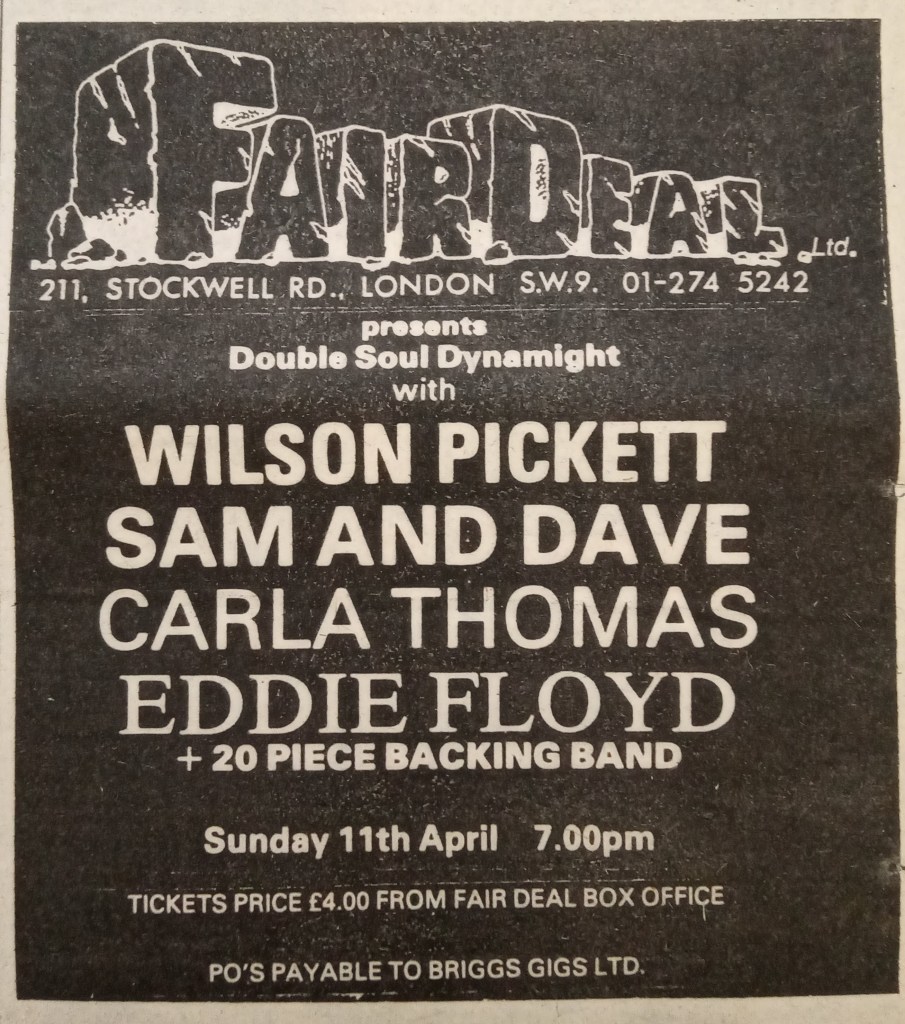
The “Double Soul Dynamight” package, featuring 60s soul stars, was due to play on the 11th April as an exclusive London date. The artists’ record companies had lined up Best Of compilations to be released to coincide with the date. Unfortunately, the headliner was Wilson Pickett, who the NME described as holding the record for blowing out more British concerts than any other American act. Regrettably, whilst the package was touring Europe, Wilson got drunk and ended up in a punch-up with two band members and a hotel official. The entire tour was consequently cancelled, leaving hundreds of disgruntled fans outside the Fair Deal, who had turned up unaware that the gig was not going ahead. The situation was diffused by giving them their money back, a free drink and a disco. The Fair Deal’s management were left to lick their wounds and try and recover their money.
April also saw the Fair Deal announcing that they would be opening their bar during the day, which might just give punters a chance to see a top band using the Fair Deal for rehearsals. This is a concept that hasn’t been exploited much by bands in the intervening years. Time for a revival?
The Fair Deal also announced that from 23rd April they would be running a disco on any day when bands weren’t playing.
May
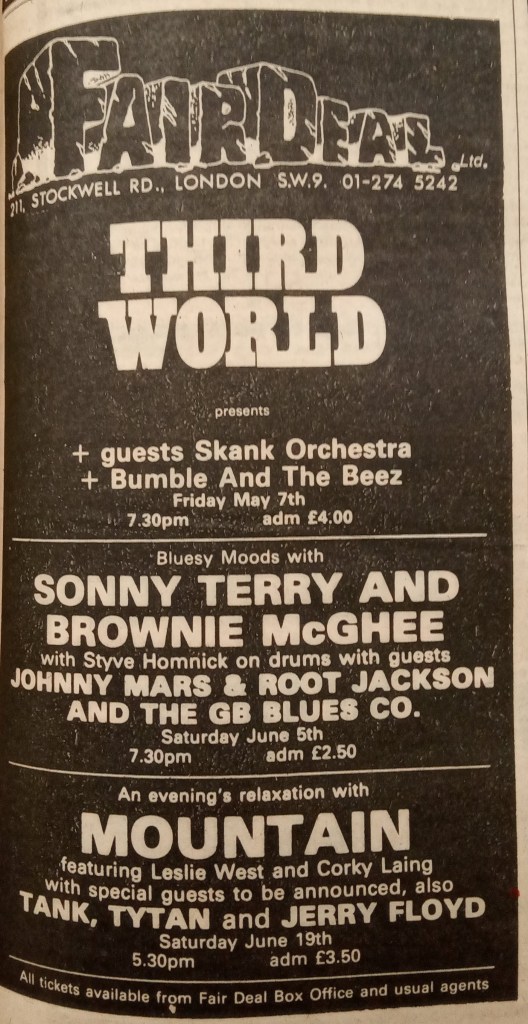
Third World played on the 7th May due to heavy demand for their other two UK shows at the Hammersmith Odeon.
Although not advertised, Status Quo were due to play on the 15th May as an overflow from their run of seven shows at the Hammersmith Odeon. The show was cancelled by Quo due to what they described as their own production technical problems.

The Clash were advertised as playing the 22nd and 23rd May.
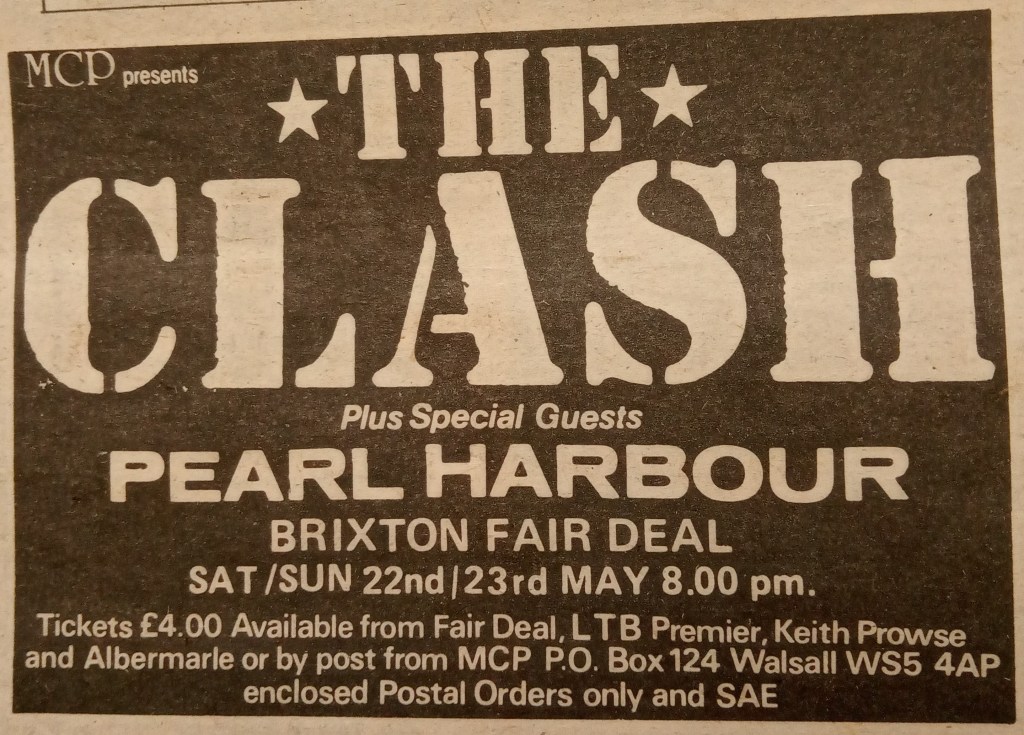
Sales for the Clash’s tour were not going well. So, in another blow to the Fair Deal, the Clash’s Joe Strummer decided to disappear as a publicity stunt, which led to the gigs having to be cancelled and then rescheduled for 11th and 12th July.
Billy Preston and Syreeta appeared on the 28th May.

June
As if having a string of collapsed promotions wasn’t enough to deal with, in June Alan Briggs announced that he was starting a record label, People Records. He announced that a series of talent competitions would be held in the autumn, with the winners being offered a record contract. The winners would be decided based on audience reaction. All finalists would also receive a video tape of their performance. You have probably guessed by now that the venture never got off the ground.
June also promised blues legends Sonny Terry and Brownie McGee as well as heavy rock behemoths Mountain. Mountain cancelled as a result of their mainland Europe tour being cancelled.
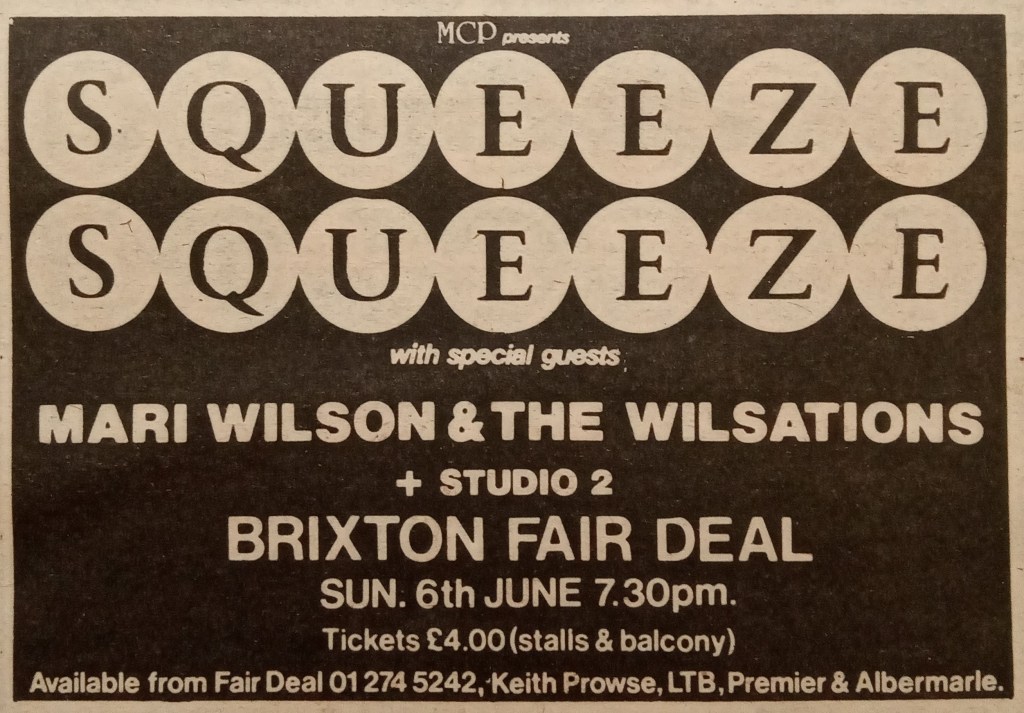
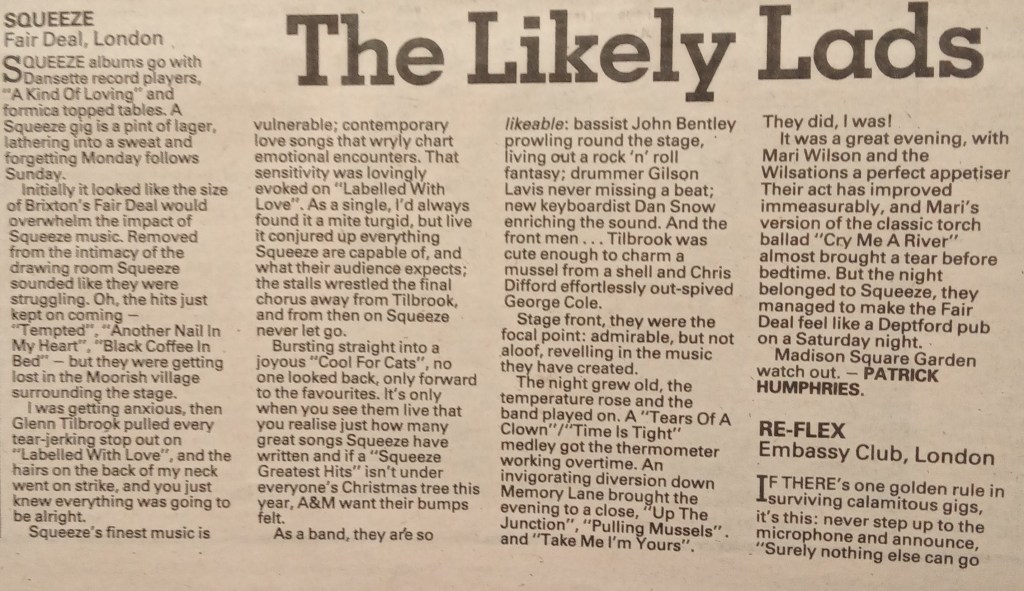
Squeeze and Mari Wilson played on the 6th June.
In June Toyah was rehearsing for her upcoming UK tour at the Fair Deal. The rehearsals are captured on this boxset. Whilst rehearsing, Toyah decided to put on a matinee gig on the 16th June for people who couldn’t get to her forthcoming evening shows at the Hammersmith Odeon.
The NME announced in their news pages in May that Black Uhuru would be playing the Fair Deal on the 22nd and 23rd June.

We do know that this gig went ahead but we only know that for all the wrong reasons. Reggae singer Ijahman Levi attended the gig and had his car stolen, which led him to make a plea in Black Echoes magazine for the return of his possessions. Black Echoes also reported that there was a brawl, involving bouncers, audience and band members after an audience member was repeatedly ejected form the stage by a bouncer.
July
It is a measure of the chaos surrounding the Fair Deal that in July they were having to issue denials that Freddie McGregor would be playing there. Apparently a promoter had started fly posting for the gig even though the Fair Deal knew nothing about it. The Fair Deal was forced into putting out a press statement saying “We’ve had nothing in writing, they’ve not paid us any money nor provided us with tickets to sell”. Naturally enough the gig never happened.
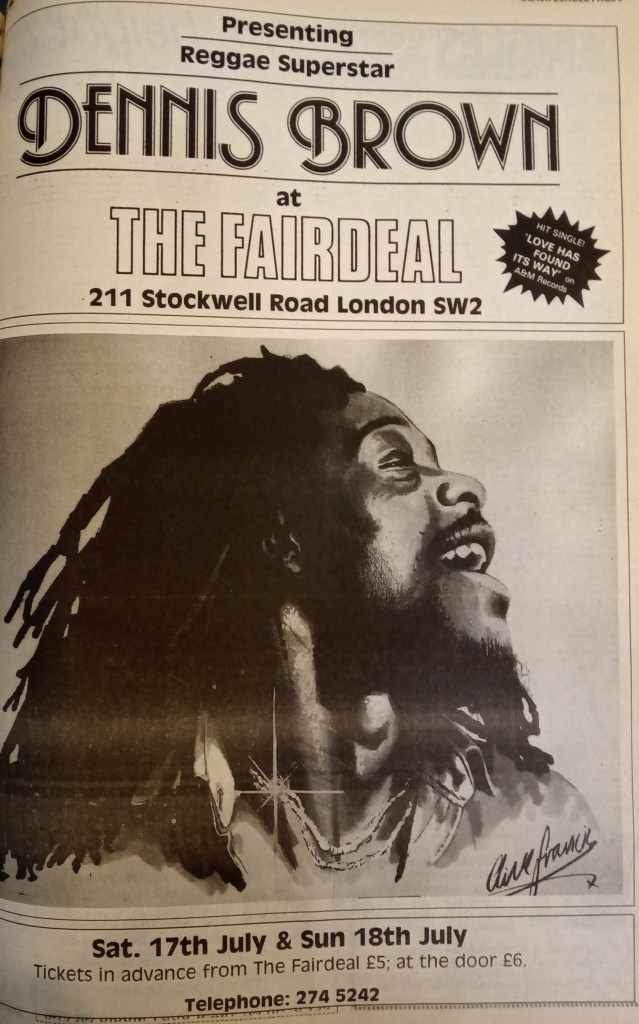
Dennis Brown was listed as playing the Fair Deal on the 17th and 18th July. The NME stated that the tickets were a “prohibitive £6 on the door”.
It was announced in May that reggae band Culture would be appearing in July.
The Clash finally got to play their postponed dates on the 11th and 12th July. In true Fair Deal fashion it all seemed a bit chaotic. Time Out listed the gig with the caveat of “At the time of going to press The Clash Bill…was in such chaos that Sid, Doris and Aunt Madge Bonkers could well be playing. Aswad pulled out and The Burundi Drummers were/weren’t playing, leaving a gap between The Clash and guest Honey Bane….The only certainty is that the Rolling Stones are not playing. Waitaminute…”
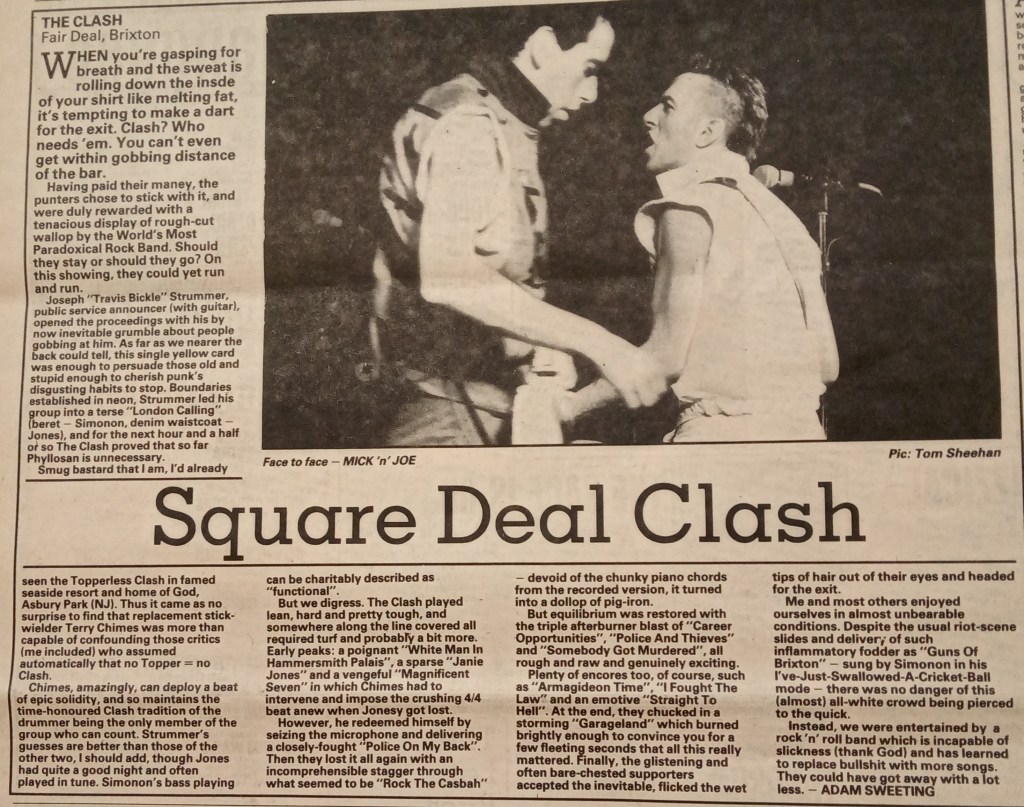
So popular were the gigs that The Clash returned for another date on the 30th July.
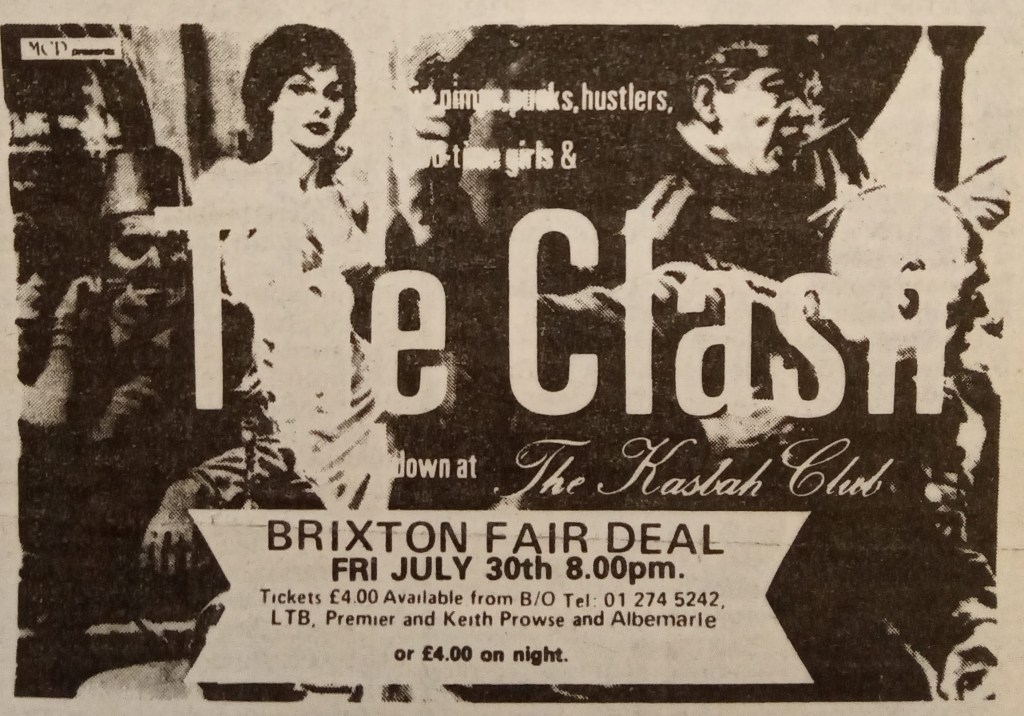
The poster reads “Join pimps, punks, hustlers, good-time girls & The Clash down at the Kasbah club”. An original of this poster sold at Bonhams for nearly £3,000.
The Kasbah club was The Clash’s attempt to, in their words, “get away from the predictable rock industry format….The club will take over halls for the night as a celebration of low life and Clash fans (sic). As well as the Clash playing there will be guest appearances by celebrities, public figures and other attractions…..if England make it to the World Cup final, the match will be shown on a live screen in the foyer of the Casbah Club, Brixton Fair Deal on July 11.”
The gig was also captured on tape in high quality from the soundboard.
July also saw the Fair Deal announcing a series of free foyer gigs from 8PM to 2AM, featuring some lesser known bands, such as True Life Confessions, The Group and The Creamies, who would play when there was no gigs in the main theatre.
August
August commenced with more foyer gigs, now renamed The Pub Club, from The Impossible Dreamers, Blue Midnight, Fan Club and Me, Dangerous Visions, Apocalypse, Achilles Heel and Zeitgeist. The gigs were no longer free but entry was only £1 plus 50p off the first drink. The Ruts DC also played the foyer on the 20th August.
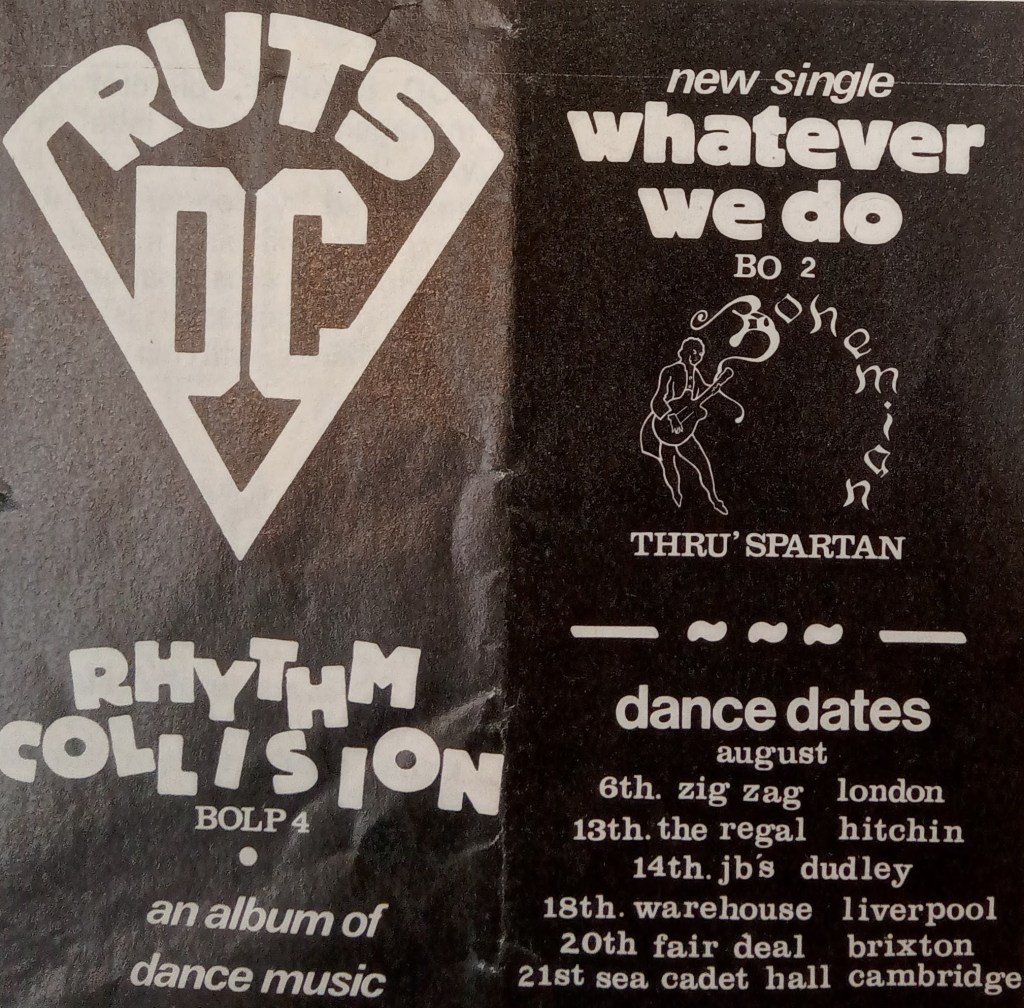
Ras Michael was also listed as playing on the 1st August.
September
The writing was on the wall in late August when the NME announced that rumours were circulating that the Fair Deal was facing closure. “We have a hard fight on our hands”, admitted Alan Briggs, whilst at the same time announcing two gigs by UB40 in September.
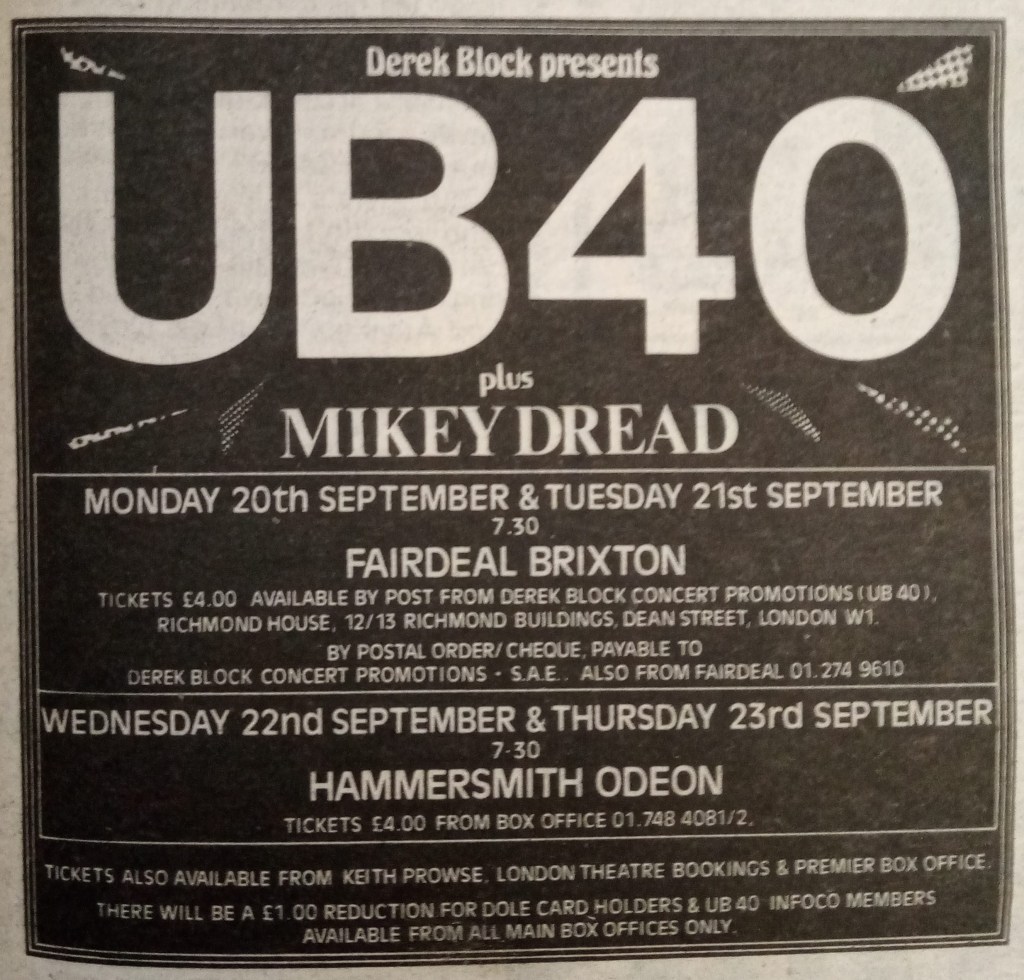
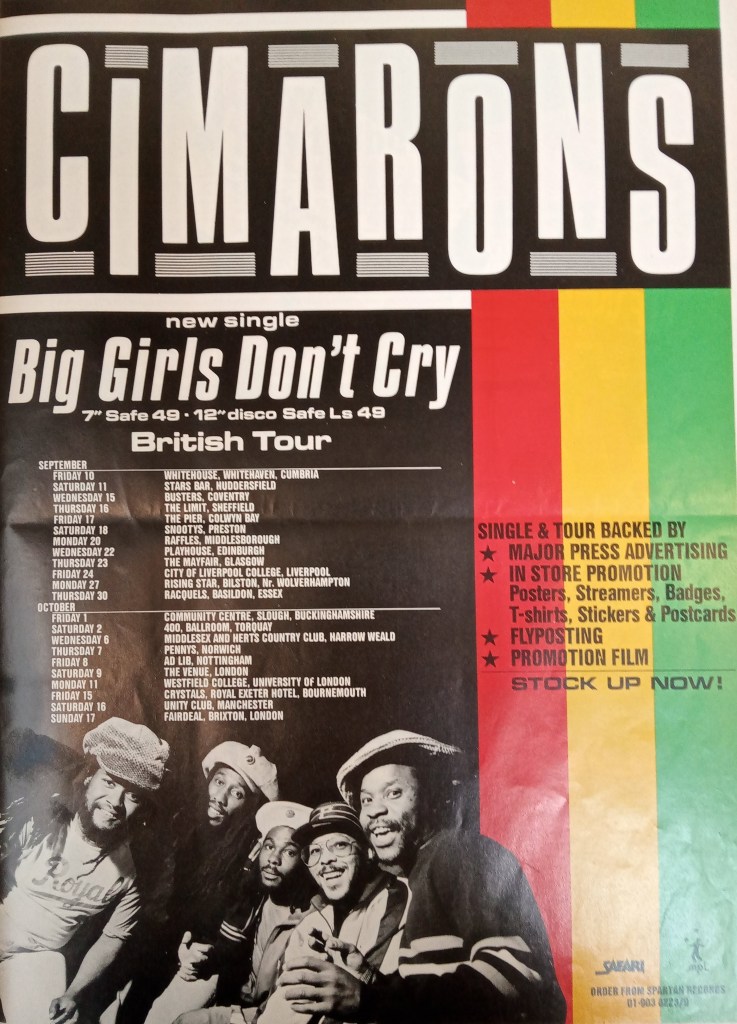
Briggs also announced gigs by Gregory Isaacs, The Cimarrons and a soul festival in October as well as gigs by the Jam in December. The Cimarrons performance was filmed for broadcast on Central TV later in September. Burning Spear and Osibisa were also in the pipeline according to Briggs. Briggs also stated that The Fair Deal’s video division would be releasing a video of Motorhead’s recent Hackney Stadium show later in the year.
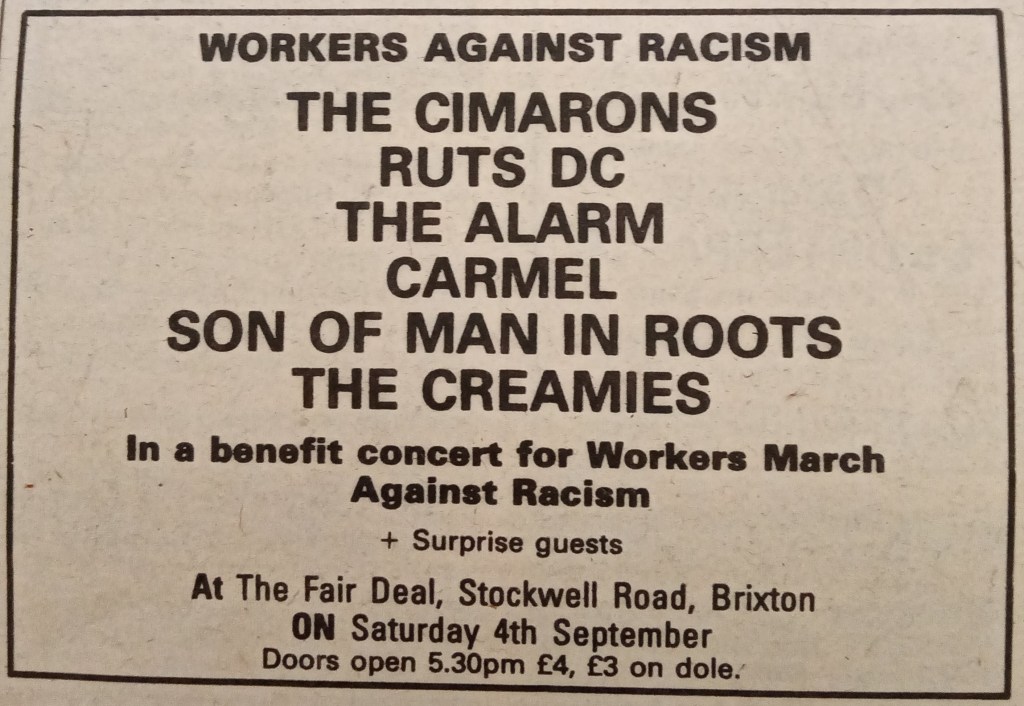
The 4th September saw a benefit gig for the Workers March against Racism, a four day march from Brick Lane to Brighton.
UB40’s promoter Derek Block told the press in mid September that they had been forced to pull out of the gigs on the 20th and 21st September as the venue had reneged on the contract with the group: “We were assured that the venue was in possession of a suitable licence to present entertainment on its premises. Since then we have discovered that no such licence was in existence at the time….Under these circumstances the group had no alternative but to cancel the shows and they apologise for any inconvenience caused to those who had bought tickets”
At the same time it was made official that The Fair Deal was no more. Briggs called in the liquidators and the Fair Deal folded. Briggs blamed a multitude of problems which led to the liquidation: Six of the initial ten concerts were cancelled, which was all the fault of the artists rather than the Fair Deal; business partner and backer Peter Lodenberg had pulled out; promoters were reluctant to book acts in Brixton because of its notoriety.
According to Briggs, he was trying to raise £60,000 from Lambeth council to keep the venture afloat but the council was unwilling to part with the money without proof that the Fair Deal was financially viable.
One backer, Mantrax, had remained and Briggs remained confident that he could save the place. Ultimately even Mantrax eventually bailed out. The Fair Deal had also been the subject of a takeover attempt by a consortium of local businesses, headed by Asian tycoon U-Ming. Whatever the politics going on behind the scenes, neither of them were successful in keeping the place afloat.
Sounds magazine used to run a weekly consumer advice column called (ironically) “Fair Deal”, which added some more detail as to what had happened with the Fair Deal. A reader had written in to say that he had bought tickets to the UB40 gig and asked if there was any way he could get his money back.
Sounds gave the following lengthy reply:
“Following the temporary collapse of the Fair Deal, helped on its way by a steady backlog of bills and bad debts piled up by Briggs Gigs Ltd, the Scots based company which kicked off the brave new South London rock enterprise in March this year, the chances of refunds for the 1,500 punters who bought tickets direct from the venue seem slim.
At the time of going to press, this ticket money, estimated at £6,000 in all, has gone missing, along with Fair Deal director Alan Briggs, currently being hounded from here to next week by a galaxy of creditors.
And Derek Block Concert Promotions, who found their UB40 dates at the Fair Deal cancelled when the Greater London Council were unable to grant the venue a covering music licence as application was made too late, say that they cannot refund people who bought tickets direct from the Fair Deal as they’ve received not one penny of the proceeds or any returned tickets from the venue….
“From our point of view, we can only say we’re sorry it happened and we’re making refunds of the money we’ve received, said a spokesman for Derek Block.
One past Fair Deal backer, Mantrax, owed over £60,000, has currently set proceedings in motion to wind up Briggs Gigs Ltd, trading as the Fair Deal, and, as and when this happens, unlucky punters are unlikely to receive a penny in compensation. Bailiffs acting on behalf of an electronic equipment supplier owed a considerable sum by the Fair Deal management have already stripped the venue clean. Even so, very little of value was found.”
Several interested parties with designs to take over the theatre are currently negotiating with Watneys for a slice of the action. And Asian businessman Philip U-Ming, one of the contenders, does offer the chance of compensation to ticket holders if his application is successful”.
Documenting Brixton's musical heritage
 brixtonmusicmemories