The Brixton Sundown formed one quarter of what was dubbed The Sundown Experiment. The concept was to use the sites of existing cinemas to provide, in the words of a Sundown spokesman “a new concept in entertainment presentation-to fill a gap in the London leisure scene. It will be a showcase centre for the world’s major bands and artists-a combination of theatre, concert hall, cinema and discotheque.”
The four Sundown venues were all owned by the Rank cinema organisation and comprised venues in Charing Cross Road, Edmonton, Mile End and Brixton. The Brixton venue was on the site of the Astoria cinema, the venue we now know as the Brixton Academy.
Since 1929 the venue had been run as the Astoria cinema. Falling cinema attendances in the age of mass television ownership had led the owners, Rank cinemas, to seek a change of use for the venue.
The Brixton Sundown lasted for less than four months, yet in that short period hosted some of the finest bands of the day.
The Sundown venues were run by John Conlan, who had started working for Rank as a management trainee in 1964. In the 60s Rank had used their Top Rank venues to host touring pop shows and Conlan had persuaded his boss at Rank that the Sundown venues could be equally successful. The venues were to remain as cinemas during the week and be used as gig venues/discos at the weekend. This involved taking out all the seating in the stalls to create the dancefloor and leaving the circle upstairs available for cinema goers. The idea was to have two headline acts playing on Friday and Saturday, with a smaller band on Thursday, leaving the rest of the week free for the cinema.
What follows is a brief rundown of the gigs that did happen and some explanation of why the venue failed.
September
The opening of the venues was only announced in the music press in late May. Talking several years afterwards Conlan said: “We opened all four sites within a four-week period in 1972. We made the decision that we would promote ourselves, and I went to see Neil Warnock at NEMS, who became the agency. I said we wanted to open in three months time and he nearly fainted. We tried to fill the date sheet which was not easy because bands had loyalties with certain promoters such as John & Tony Smith or Barry Dickens.”
The Brixton Sundown comes across as being the runt of the litter out of the four Sundown venues. The other three venues tended to host more gigs and also seemed to put on more major acts. The very first adverts to appear at The Sundown venues almost relegates Deep Purple, who opened The Brixton Sundown, to an afterthought. This was a pattern that was to be repeated over the coming months, with most major acts generally appearing at the other Sundowns.
Conlan did admit that programming the Brixton venue did prove to be a problem, but didn’t go into the reasons why.
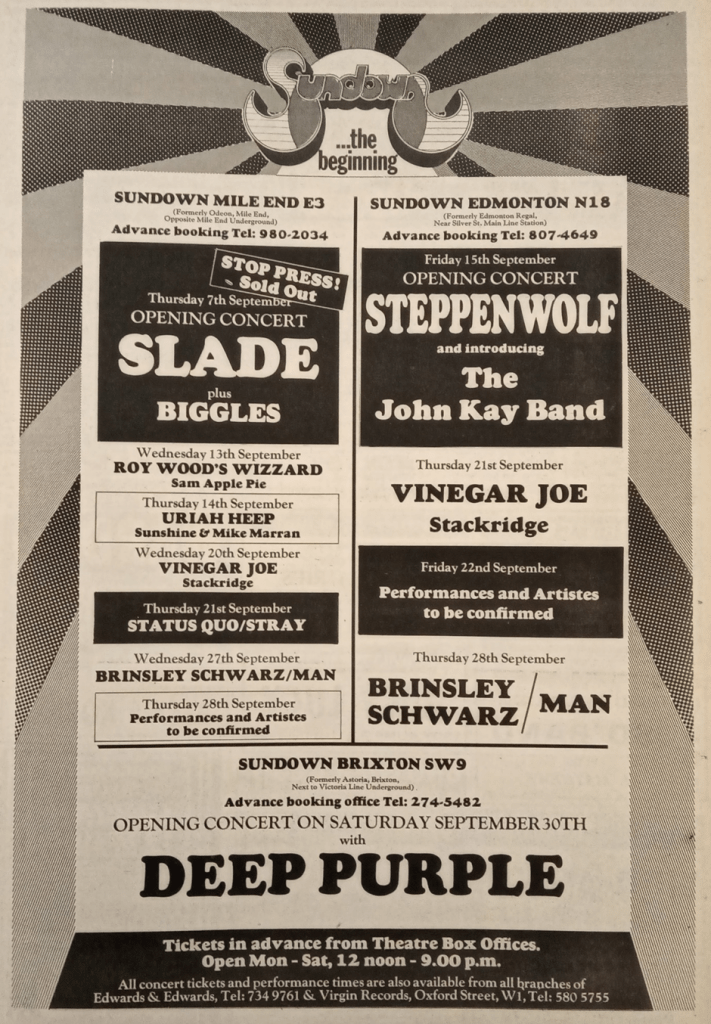
Deep Purple were arguably at the height of their powers when they played Brixton on the opening night. Machine Head, their second (and last) Nr 1 album had been in the charts ever since April of 1972. It contained such classic songs as “Smoke on the water” and “Highway Star”. The live album “Made in Japan” would follow in January 1973.
A 14 year old Phil Collen, who would become the guitarist in Def Leppard, attended the Brixton gig and claims that the photo on the back of the Made in Japan album was taken at the Brixton gig. The photo is too dark to tell definitively, but the clothing and layout is the same as these photos, so it could well be true.
October
October featured gigs by Screaming Lord Sutch on the 6th October. The South London Press was in attendance to review the lunacy of the gig:
“THE ONE . . . the only . . . Screaming . . . Lord . . .Sutch! yelled the compere. But the clapping stopped as a puzzled audience of about 70 at Brixton’s new Sundown realised the zany peer was not going to leap from the side of the stage. Minutes passed before the backing group, Rock Rebellion, poured themselves into a heavy rock funeral march, and the exit doors at the back swung open. Six pall bearers solemnly carried a black coffin up to the stage….
Fans jumped back from the front of the stage as he swooped on them with a colossal rubber club. Someone fired a gun and Sutch fixed a pair of grotesque rubber hands round his neck….
Strangulations, duels with whips, swords and increasingly large axes, disembowelling operations, fires and Sutch-type fire engines, explosions, rubber piggy masks and bright blue loo seats dangling from his neck left the loony lord with little time to sing….
After a call for encore and a surprising amount of applause for such a small audience, Sutch thanked everyone and throttled another verse of “Molly” out of the mike.”
To think that Rank had closed down the Astoria cinema to put on a gig for 70 people!
Steppenwolf, famous for their hippy anthem “Born to be wild”, played on the 8th October.
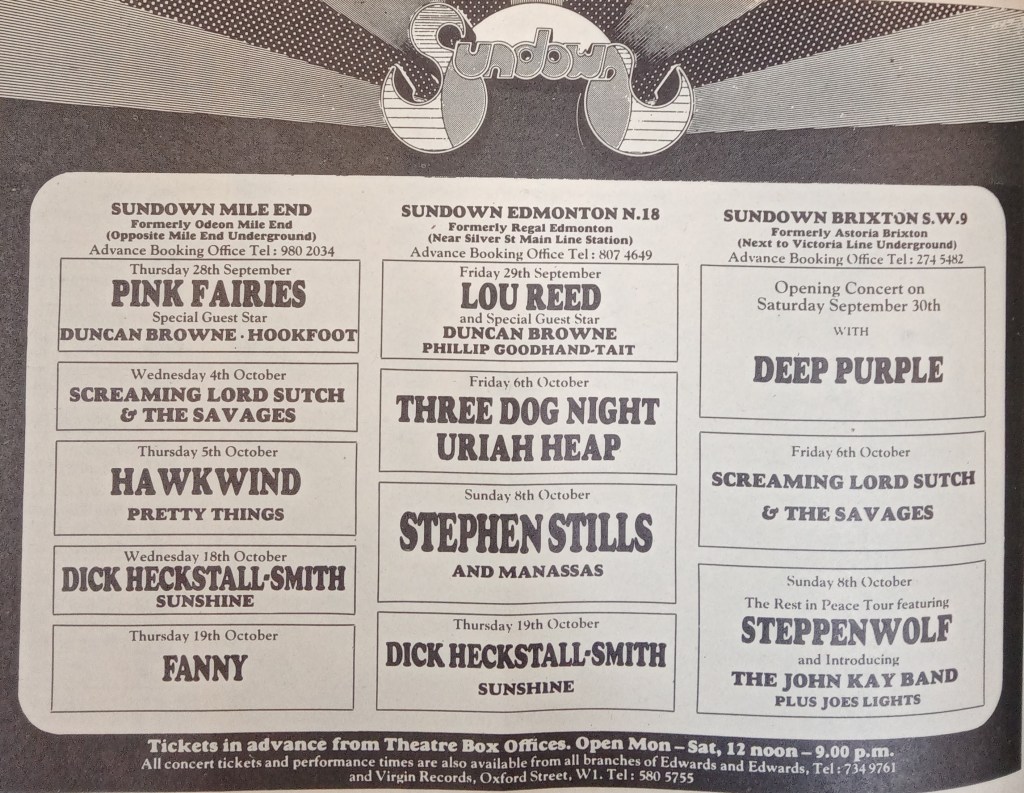
Only the local press seemed to show combined adverts for the cinema and music events. The film selections tended to be a mixture of cult and sleaze films:
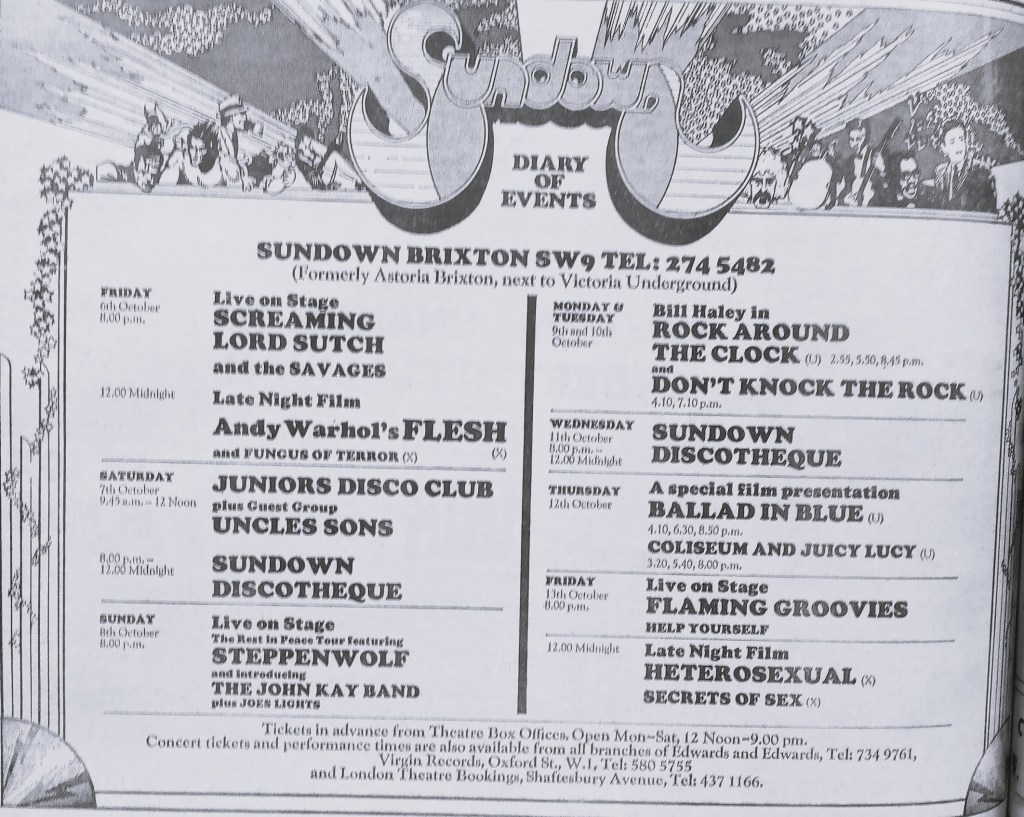
On the 13th October, Americans exiles in London The Flamin’ Groovies played, supported by Help Yourself.
Johnny Nash played on the 14th. He had a huge hit earlier in 1972 with “I can see clearly now” and was riding high on the success. He headlined a show at Alexandra Palace in August and had just broken into the top twenty again with “There are more questions than answers”. His backing band during 1972 had been a pre-fame Wailers (before they were Bob Marley and the Wailers). It would make a nice story if The Wailers were still his backing band when he played the Sundown. However, we suspect that they may have returned to Jamaica by this stage.
The ever mutating group The Drifters had decamped to the UK on the back of two top ten hits earlier in 1972. They played The Sundown on the 15th October.
Ellis played on the 20th October, supported by pub rock stalwarts Bees Make Honey, according to an advert in the Brixton Advertiser.
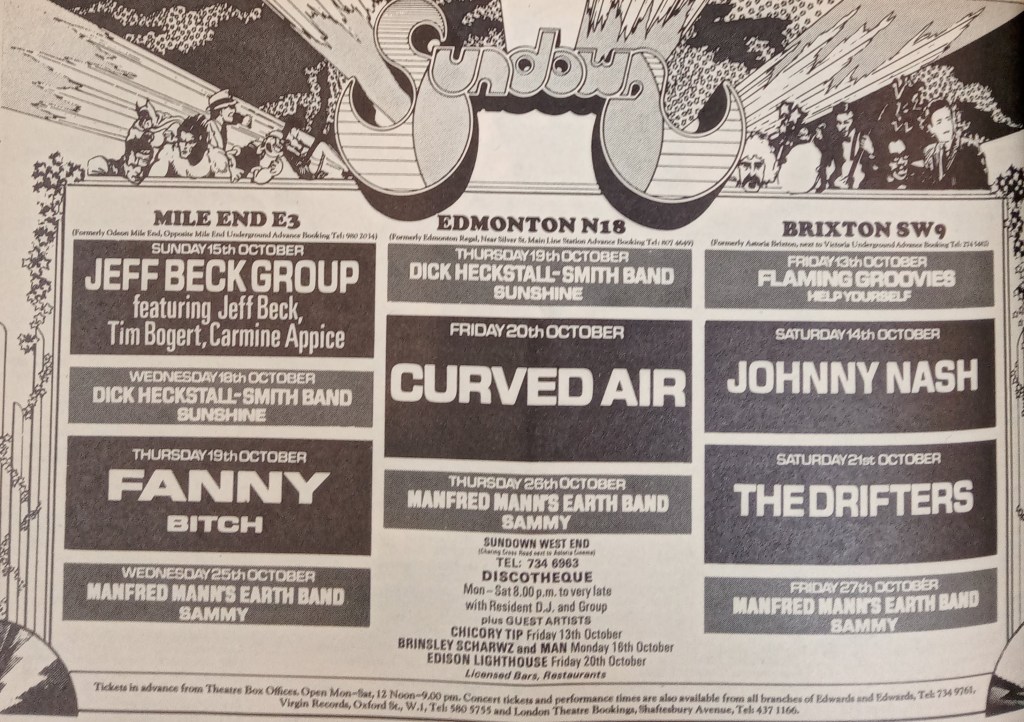
Mannfred Mann’s Earth Band and Sammy played on the 27th October.
Blue legend B.B.King gave an interview to Sounds magazine prior to his 28th October gig at The Brixton Sundown. He was due to play a gig at Dartmoor prison prior to Brixton but had to cancel due to an injury. Playing prisons was a subject close to his heart-he had apparently played over 30 such gigs in America.
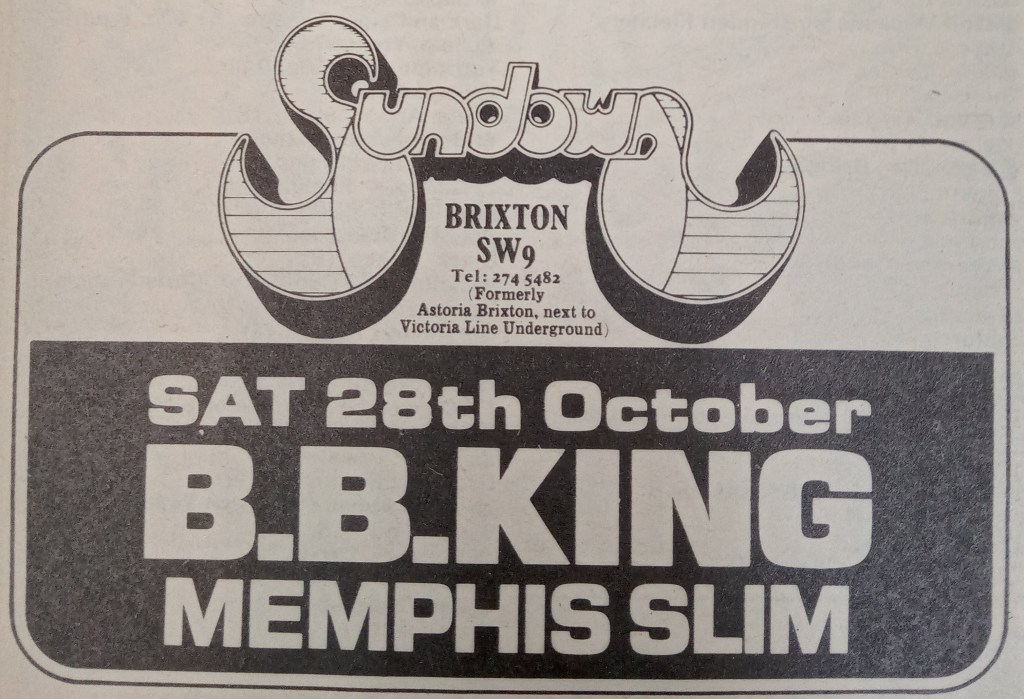
The gig was reviewed in Sounds. Music journalism in the early 70s wasn’t particularly descriptive. Journalist Ray Telford wrote “The overall effect of B.B and the eight-piece band was ultra smooth. As I say it was what the audience wanted to hear and B.B.King gave it to them-and how”.
November
The gig listings for November start to briefly show other Sundown venues appearing across the UK, for example in Birmingham, Liverpool, Brighton, Sunderland, Swansea and Cardiff. This was an albeit brief attempt to extend the Sundown Experiment outside of London.
Sarah Gordon and Little Free Rock played on the 4th November. You wonder how such unknown bands could have attracted enough people to even get anywhere near filling such a huge venue. Maybe they played in the foyer? Little Free Rock’s album is now one of those prog rock rarities that cost a small fortune to buy.
Other shows in November included Quiver and Stairway on the 3rd November. Time Out listed the reggae band Greyhound as playing on the 4th November. Sam Apple Pie on the 10th November. Support on the night came from Atacama, a Chilean/Swedish folk music group.
On the 11th November Dandy Livingstone played, as the management of the Sundown realised that there was a market for reggae groups in Brixton. Dandy had recently had a top twenty hit with “Suzanne beware of the devil”, which had just dropped out of the top 40 when he played The Sundown. Support on the night came from the wonderfully named Erasmus Chorum. Dandy is probably best known for the classic “Rudy a message to you”. It wasn’t a hit at the time but in 1979 The Specials would make it into a top ten hit with their version.
Hookfoot and Colin Blunstone played on the 17th November.
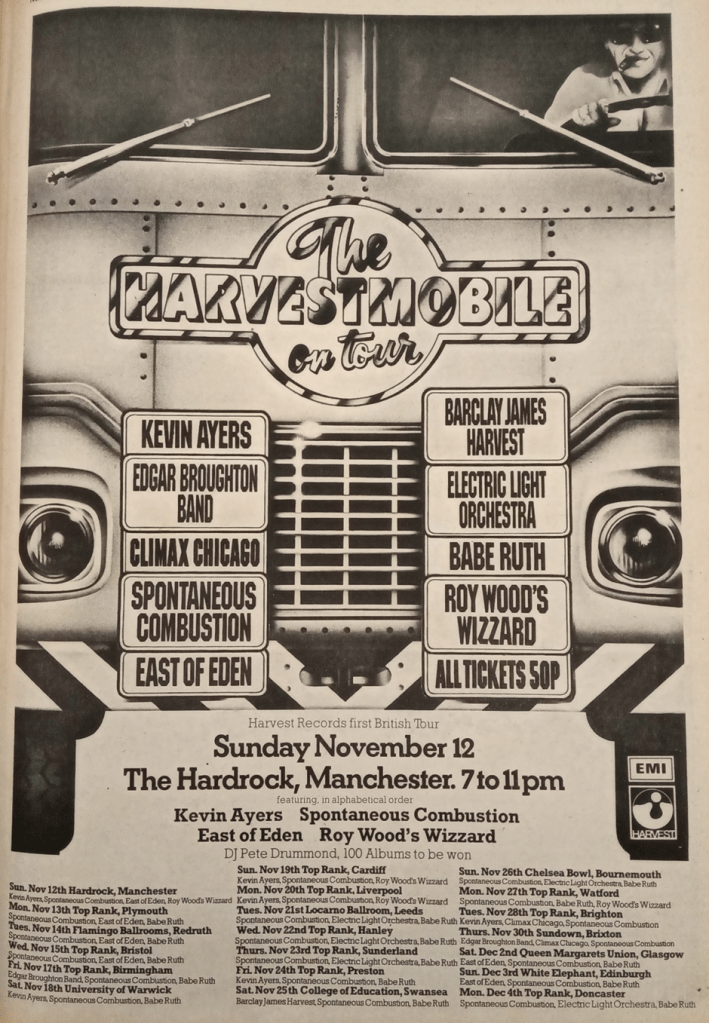
Rounding off November was the HarvestMobile tour, a rolling tour of the UK to promote various artists on EMI’s Harvest label. Harvest was EMI’s label for progressive groups. Playing Brixton on the 30th November were perennial festival favourites The Edgar Broughton Band, as well as Climax Chicago and Spontaneous Combustion. The idea was that the bands on the tour would travel together in a Harvest Mobile truck and that a live album would be released from recordings made on tour. Nothing ever came of the album.
December
By early December rumours were already swirling of the Sundown venues closing down. In his weekly opinion column of 9th December Sound Journalist Jerry Gilbert wrote “three converted picture houses in the unlikely suburbs of Edmonton, stuck out on the North Circular, Mile End-which in the olden days was singled out as the worst example of East End squalor-and Brixton. And we all know about Brixton….So the Rank Organisation either knew something we didn’t or else they were chumps. Audiences appeared to diminish and diminish until… this week the rumours started going about that the Sundown chain of theatres was to close.”
Another rumour doing the rounds in the music press in December was that James Brown would be playing The Brixton Sundown in March. The rumour was scotched by his promoter, who seemed a bit miffed that other promoters might be trying to steal his charge. Still, what a thought that James Brown could have played Brixton in 1973, at the height of his powers. The last time he had played in Brixton was at the Granada in 1965. He wouldn’t play Brixton again until 1988.
Gigs in early December included collectible prog rock band Gnidrolog and Mick Greenwood on the 1st December.
Time Out listings stated that classic soul singer Al Green appeared on the 2nd December. He was at the height of his commercial powers in 1972, having had three hits in 1972, including the evergreen “Let’s Stay Together”.
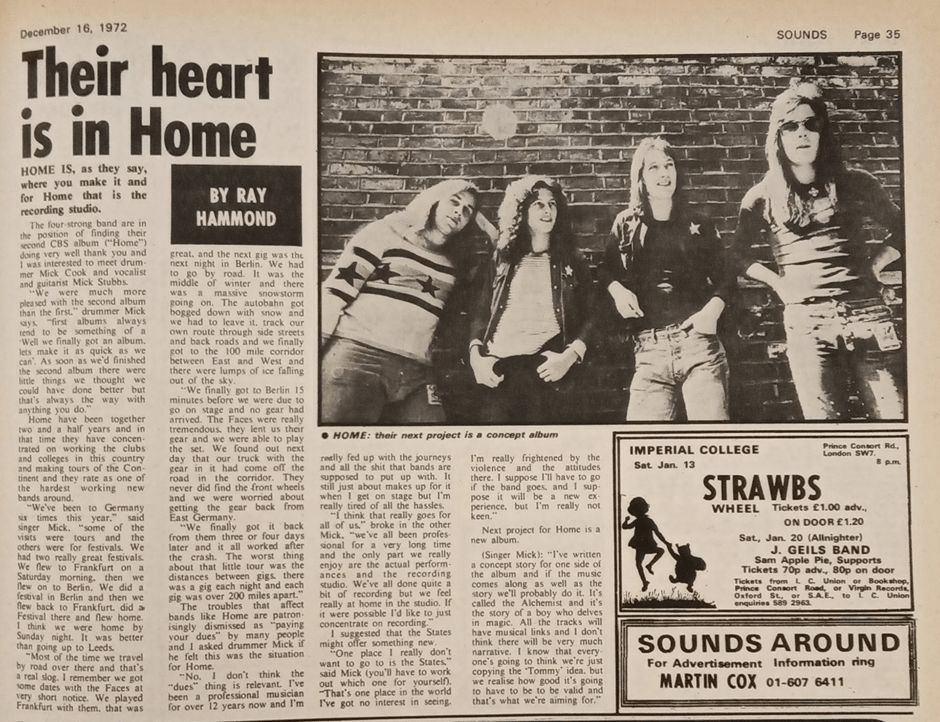
Home and Wheels on the 8th December. A founder member of Home was Cliff Williams, who went onto fame and fortune as a member of heavy rock titans AC/DC.
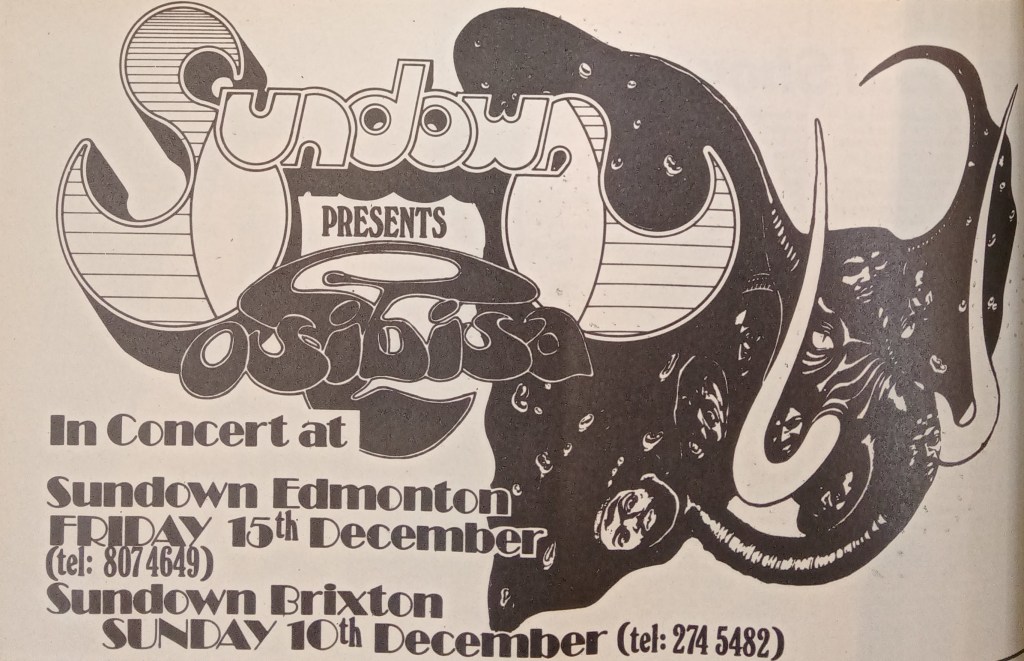
On Sunday 15th December (Sunday gigs were common at the Sundown), Osibissa played, supported by Silverhead.
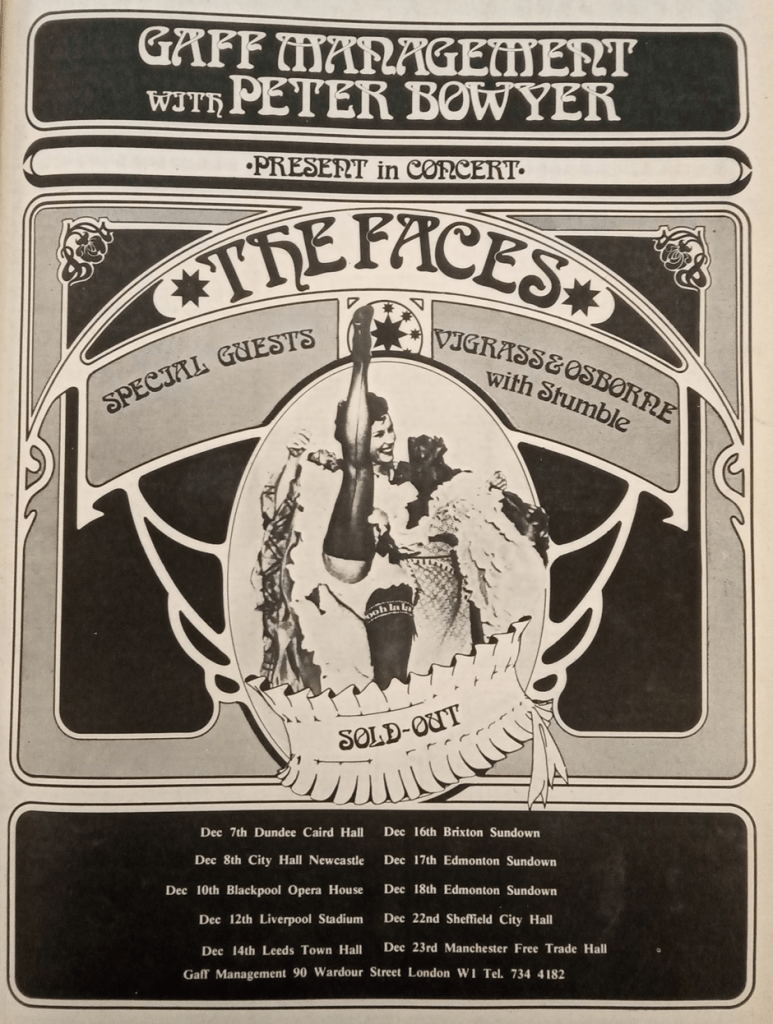
The Sundown finished the year with a flourish, with The Faces playing on the 17th December. This was their first major tour for nearly two years and provided the audience with a foretaste of their new album “Ooh La La”, which was due to be released the following January.
This was followed by The Pretty Things and Climax Chicago on the 22nd December.
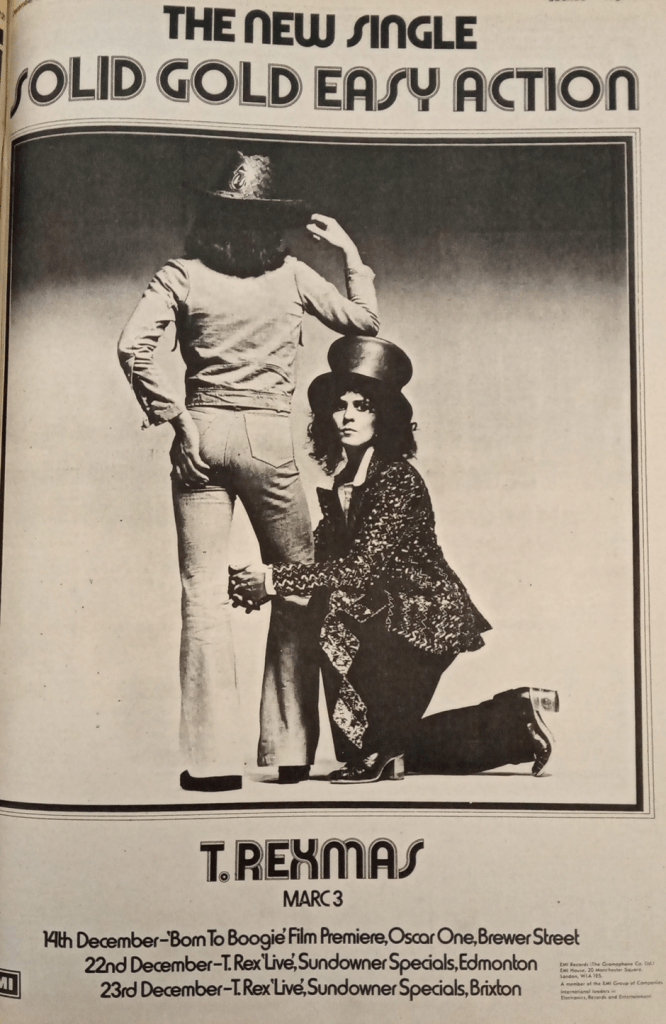
1972 had been T.Rex’s most successful year to date, with five top ten hits, including two Nr 1s. This was the height of what was called TRexstacy, where levels of fan adoration was at levels not seen since Beatlemania. To round off the year T Rex hosted three T.Rexmas specials. The shows (one at the Edmonton Sundown and a matinee and evening show at Brixton Sundown) were intended to promote the just released “Solid Gold Easy Action” single and the recently released “Born to Boogie” film.
Mainstays of the free festival scene, Hawkwind rounded off the year on December 30th, supported by Magic Muscle.
Hawkwind were at the commercial peak in 1972. Classic single “Silver Machine” had been a top 5 hit. The band were touring to promote their recently released album “Doremi Fasol Latido”, which would go top twenty.
The Brixton Sundown gig was recorded and would be released as part of the band’s classic Space Ritual album, which would become their sole top ten album.
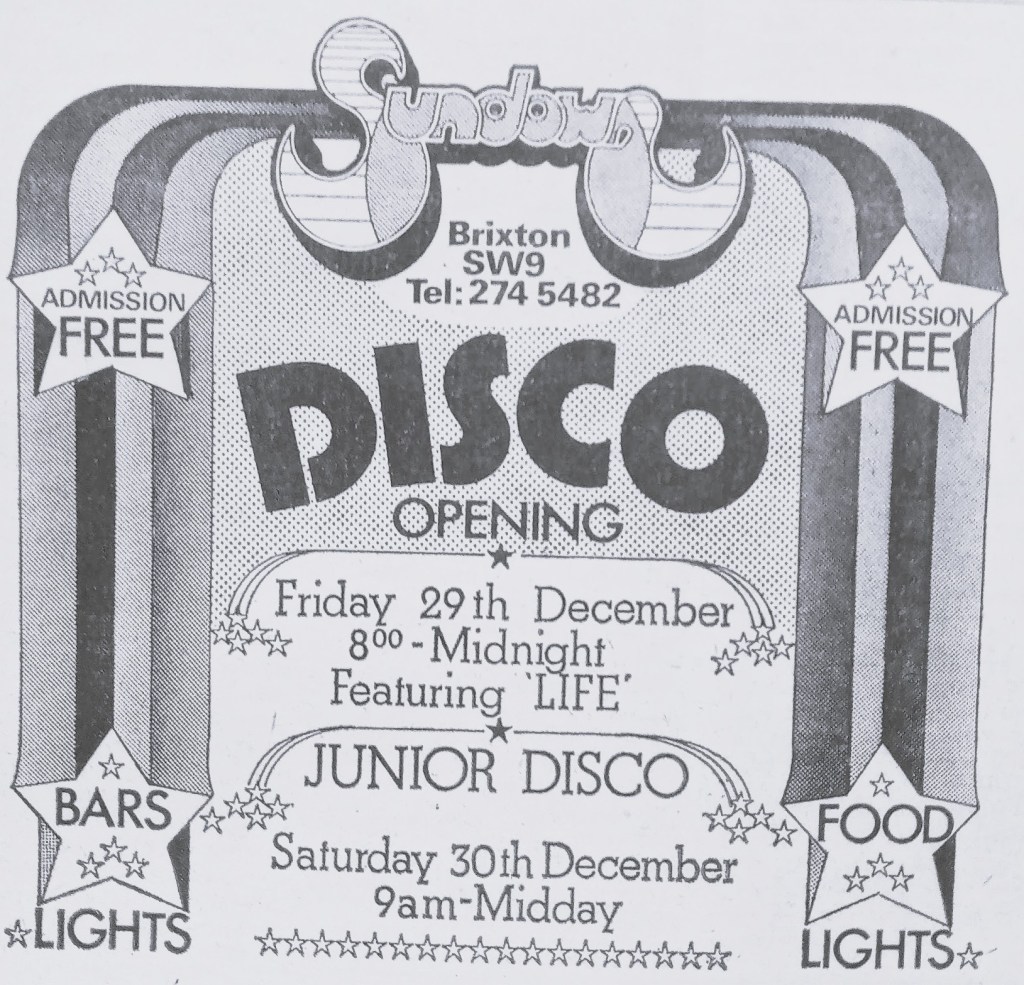
Having promised that disco nights were soon to be launched back in October it seems that the disco nights were finally launched in early December on Thursday and Saturday, although this advert is for Friday and Saturday, so who knows what really went on:
1973
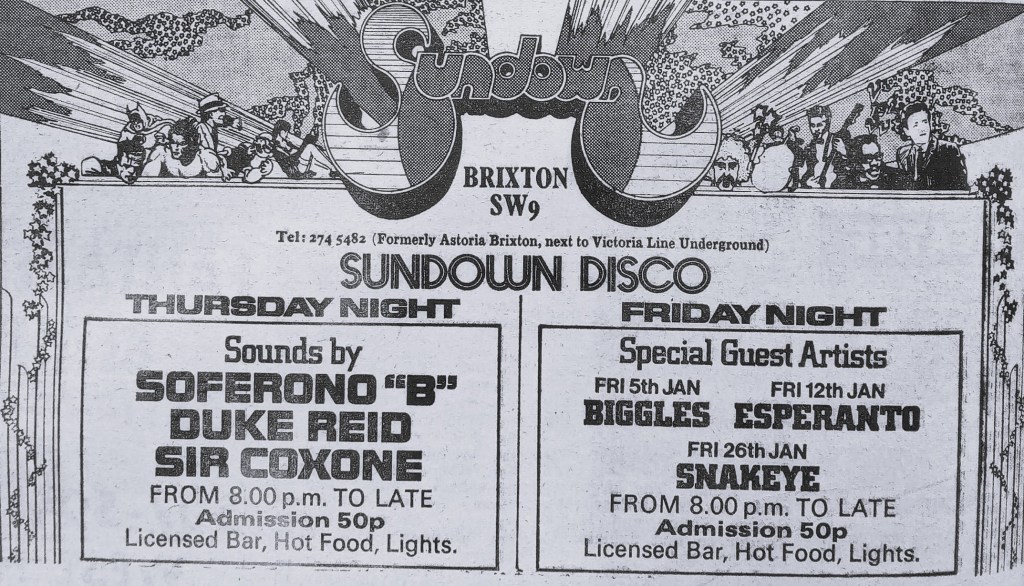
The Sundown just about made it into 1973, with gigs by Biggles on the 5th January, Esperanto, dubbed the first international rock orchestra, on 12th January, Bees Make Honey on the 19th January and Snake Eye on the 26th January.
January also saw the beginnings of a sound system night on Thursdays, with well know operators Soferno B, Duke Reid and Sir Coxsone playing:
In late January it was announced that both the Brixton and Mile End Sundowns had closed. John Conlan told Sounds “There simply aren’t enough top name bands to regularly fill three London venues. We have rationalised the situation by putting all the acts on at Edmonton. We still believe that our programme of expansion in the rest of the country will be successful.” the local press were given a more curt: “The closure is for reasons beyond our control.”
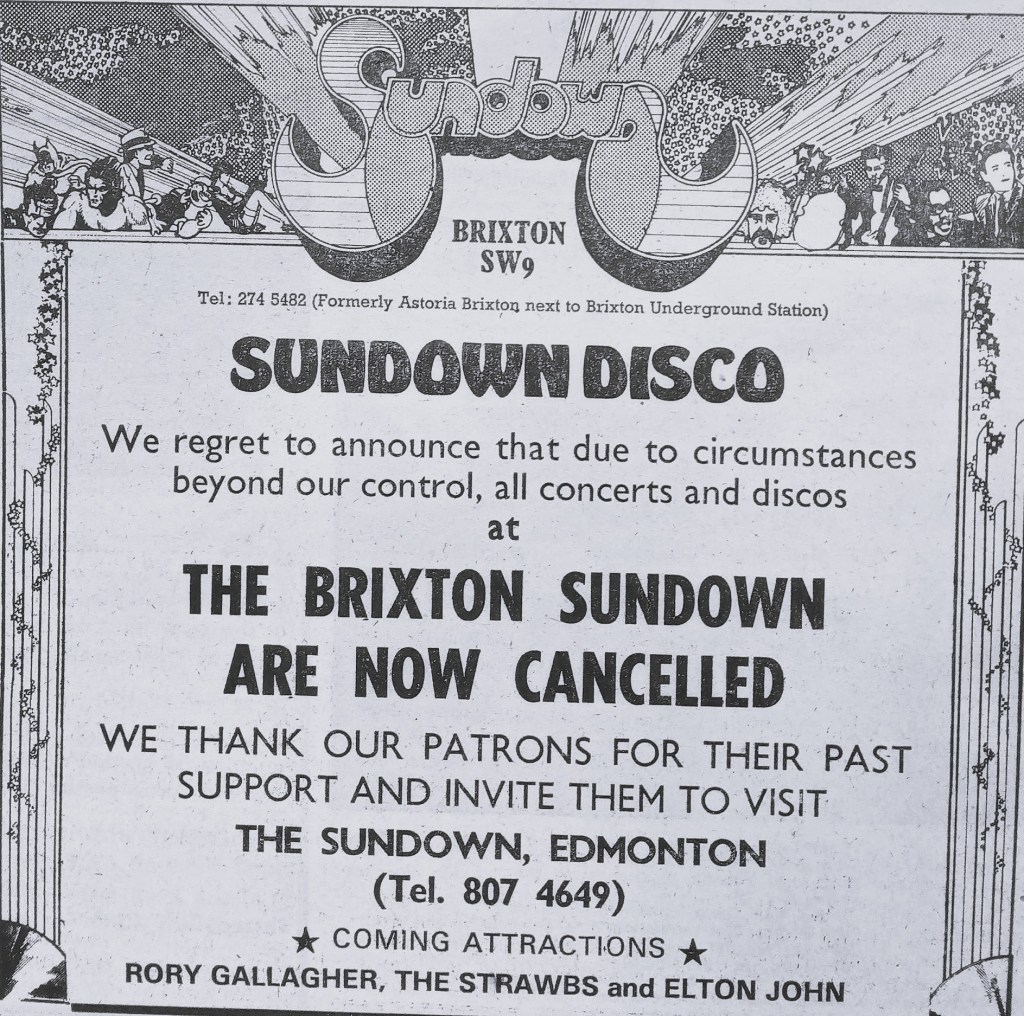
Fruupp and the Alex Harvey band are listed as playing on the 2nd and 9th February respectively, although it doubtful whether these happened.
Gigs which were planned for February and March included Rory Gallager on the 17th February, The Strawbs on the 17th March and Elton John on the 24th March. These gigs were transferred to the Edmonton Sundown.
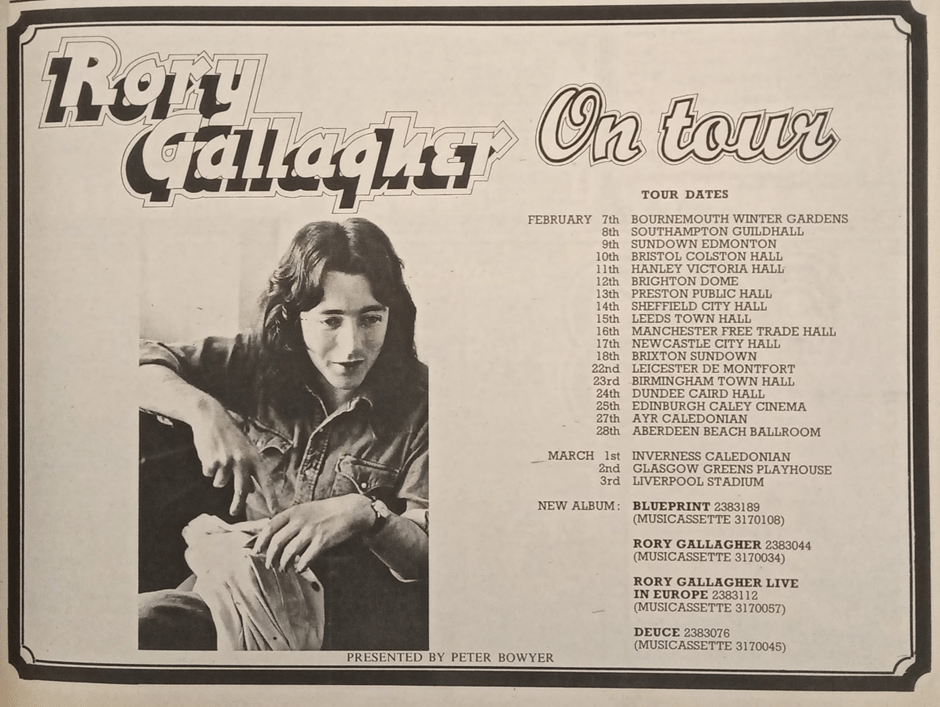
The Edmonton Sundown carried on until 1974, whilst the Brixton Sundown remained unused as a venue until 1982, when it reopened as firstly The Fair Deal and then in 1983 as The Brixton Academy, which remains open to this day.
There seems to have been several reasons for the failure of the Sundown. Ironically, given that Rank was such a major player in the film industry, the cinema side of the Sundown venture suffered. As the cinema was no longer a full time cinema (with the weekends being given over to gigs), they struggled to get film distributors to provide them with first run films.
Apparently some of the small scale gigs, which record companies had funded to promote new bands, had been successful. However, it was the large scale gigs that proved to be the problem. The Sundown suffered from the fact that they were the new kids on the block, so rival promoters refused to put on gigs at The Sundown venues.
“We were marginally profitable but eventually the board asked ‘Is it going anywhere?’ and we said ‘No’, so it was phased out and I went on to other things. We simply opened too many and part of the plan was flawed.” lamented Conlan.
Perhaps Rank’s heart was never truly in the Sundown project. In a prescient opinion piece written just before the Sundowns opened, Time Out’s Connor McKnight wrote: “What we do know is that Rank’s financial control system is being used by Sundown…. which could mean that Rank will get cold feet before the idea has a chance to flourish….It can probably be sustained on hope for about three months. After that we will have to see.” Three months is pretty much how long it did last.
 brixtonmusicmemories