Clouds nightclub opened in 1976 at the site of the old Ram Jam Club, 390 Brixton Road. The club was jointly owned by ex-fireman Steve Cole, who had been turned on by the music he heard when he worked in Jamaica in the mid 60s. The club catered for a predominantly soul and reggae crowd. The club did not last long, closing down in 1979(?), after which the first incarnation of The Fridge club opened at the same venue in December 1981.
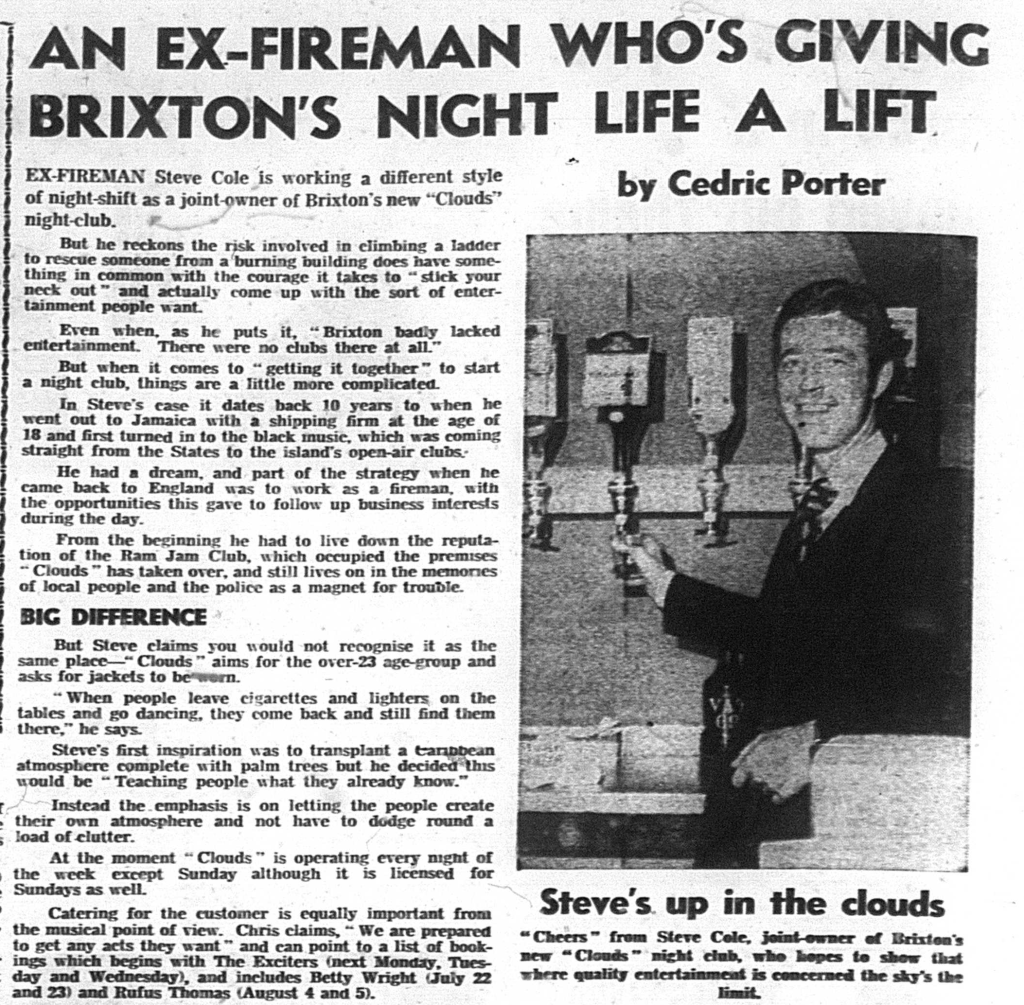
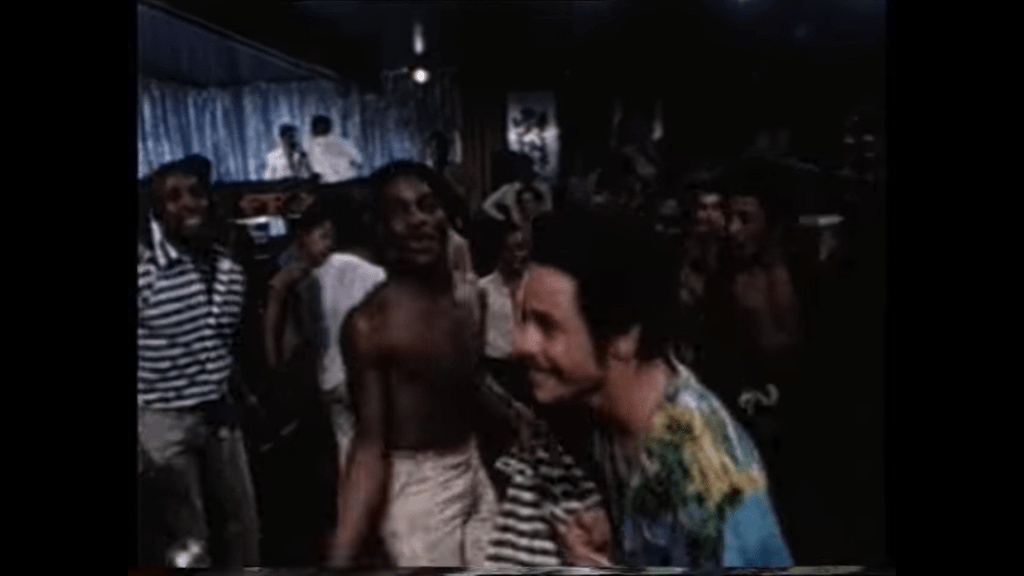
There is not much documentary evidence of what went on there, other than occasional articles in the South London Press (SLP), infrequent music press listings and random adverts scattered sporadically throughout issues of Black Echoes magazine. We do at least have evidence of two films that were made at the club.
What follows is a selection of the events that we could find. No doubt there were many more, publicised by word of mouth or flyers. Maybe after a while the club was self sufficient and had no need to advertise.
1976
The opening of Clouds was featured in the 2nd July edition of the SLP. Subsequent editions of the SLP gave plugs for gigs as well as a request from the club to find an old tree to decorate the stage with!?!
The club even claimed in the SLP to have been the first premises in the UK to introduce the American concept of “Happy Hour”, where club goers could take advantage of a “Buy one, get one free” offer for 1 hour.
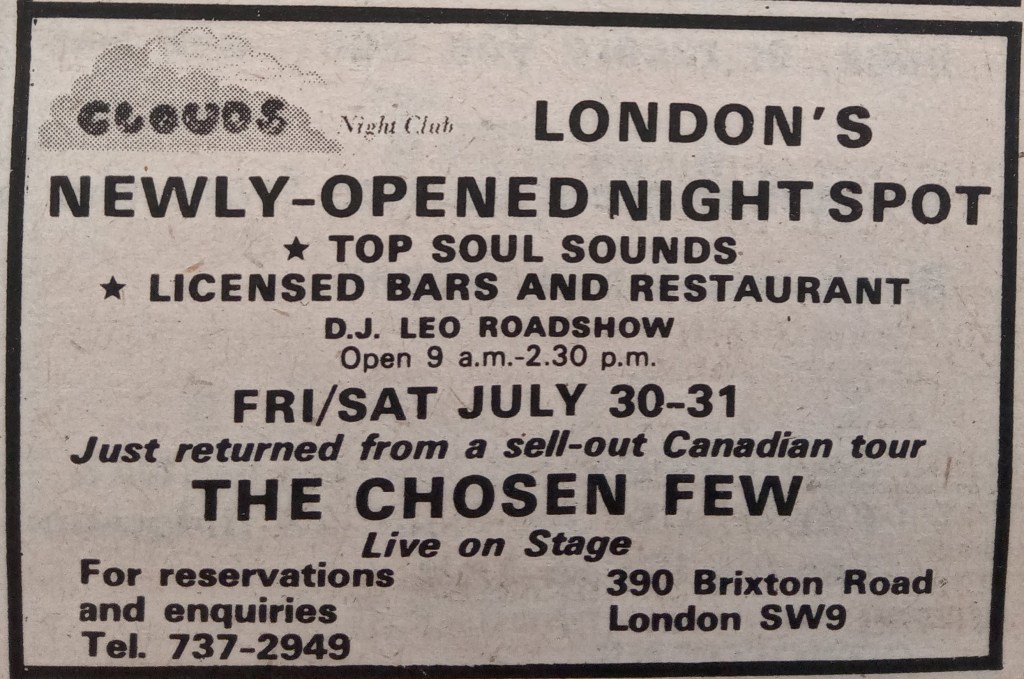
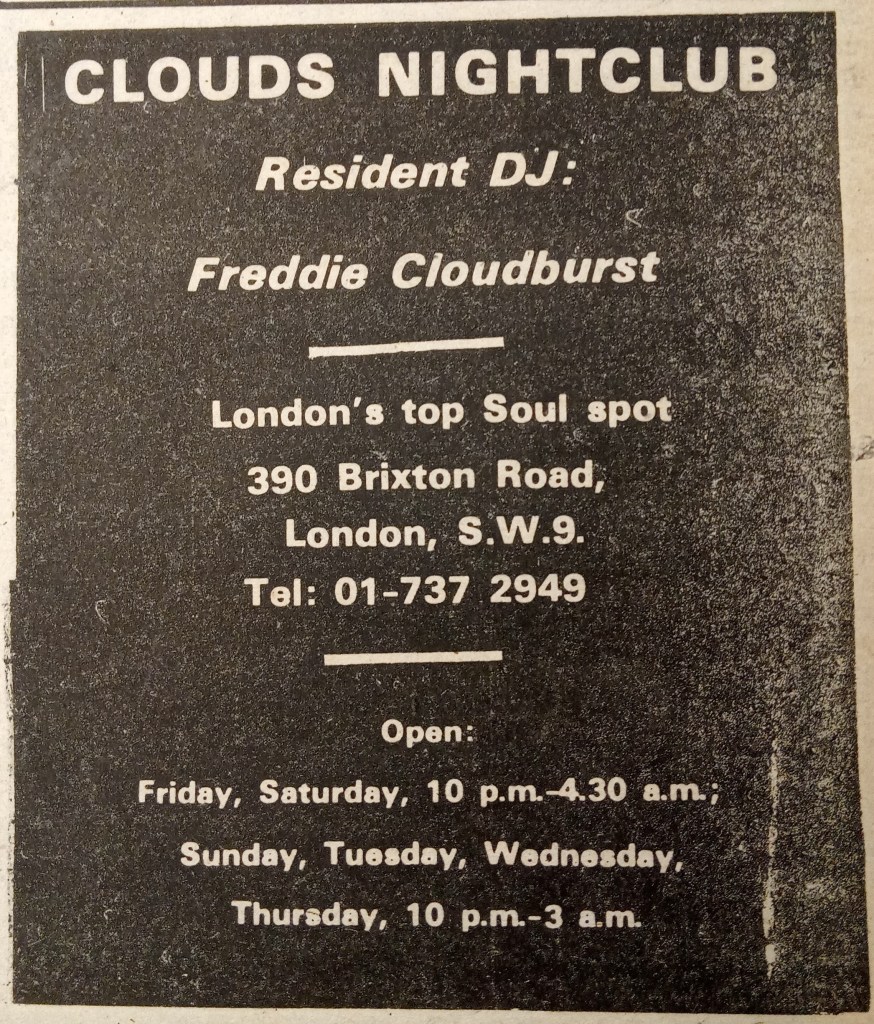
The first adverts for Clouds in Black Echoes appear in July 1976, referring to “London’s newly open night-spot” and promising top soul sounds, licensed bars and restaurants and DJ Leo.
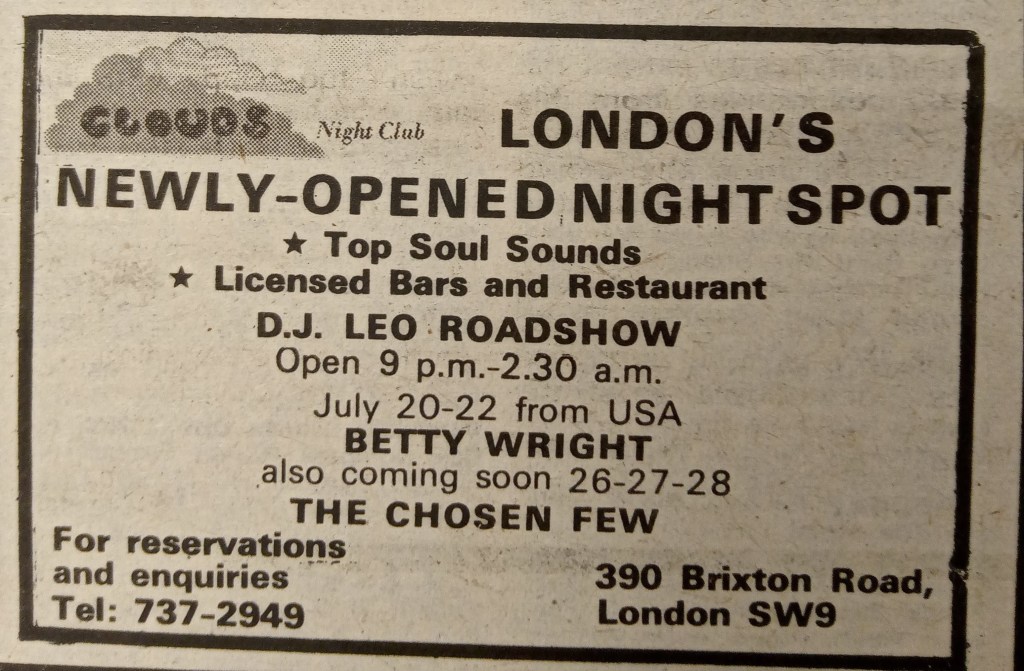
Black Echoes also reported that Matumbi had secured a seven week residency at Clouds, commencing on the 18th July. Black echoes also reported that members would be allowed free admission on Monday, Tuesday and Wednesday.
Other acts that played in July included Heatwave, The Exciters and Mean Machine, who were all mentioned in SLP.
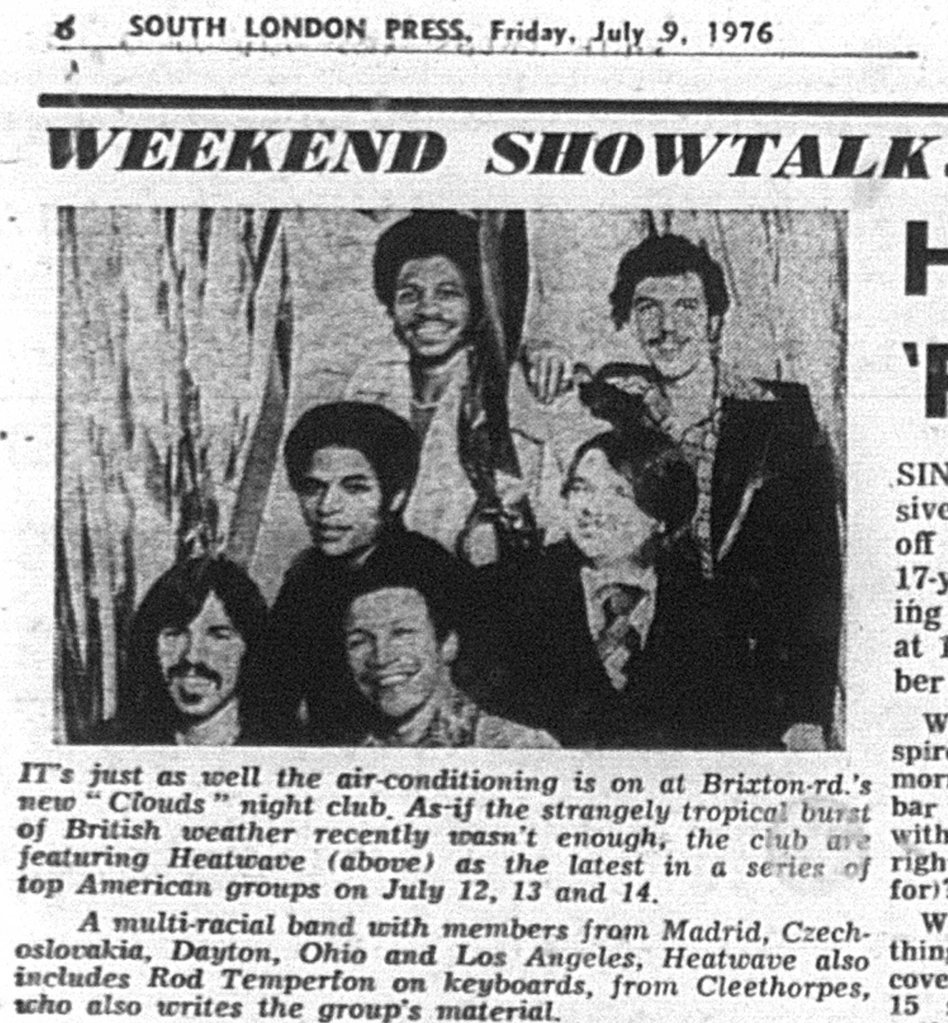
Heatwave’s singwriter Rod Temperton would go on to write classic songs for Michael Jackson, such as “Thriller” and “Rock with me”.
Acts advertised in Black Echoes included American soul singer Betty Wright, who was touring the UK off the back of her two 1975 top 30 hits, “Shoorah Shoorah” and “Where is the love”, played 3 nights.
Reggae group The Chosen Few also played 3 nights in July.
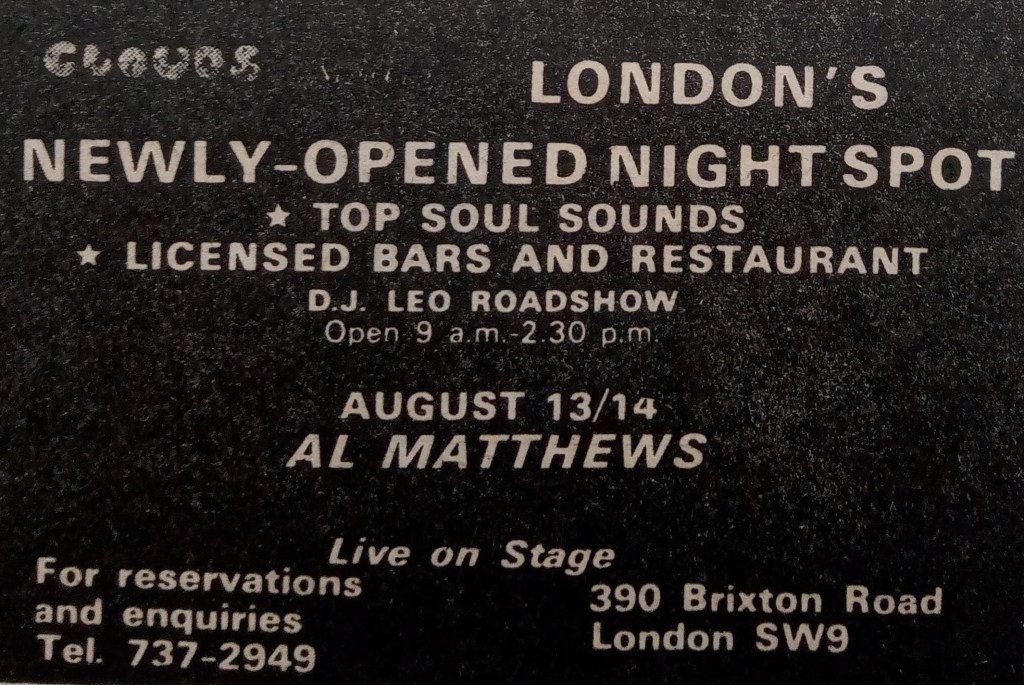
Al Matthews played two dates in August. He went on to become a DJ on Capital Radio and the first black DJ at Radio One, as well as having a successful acting career. According to the NME of 14th August 1976, he also played gigs that week in Bath and Newquay.
According to the SLP, Rufus Thomas, of “Walking the Dog” fame was also booked to play in August. Whilst being best known as a soul act, his career started back in the 1950s on Sun records, the rock and roll label that launched Elvis Presley. 1976 had seen a rock and roll revival, which prompted Charly records to release an EP of his early rock and roll songs in that year.
August also saw a talent competition take place as well as a competition to find “Miss Cloud Disco 1976, the winner of which would represent the club at a Miss West Indian event. The SLP also reported that Chris Scott, the entertainment manager at Clouds, “reckons he can make some small contribution to job-finding in the area by training girls who show a talent for singing and would like to take it up as a career. Using his own experience as a record producer he has found two takers for his scheme already and is hoping to get in touch with many more.”

Heatwave returned to Clouds in September and received a rave review in the SLP: “When Heatwave are around, nothing and no one are allowed to stay still”. The group were promoting their recent single “Super Soul Sister” but were just a few months away from stardom when their classic “Boogie Nights” would reach Nr 2 in the charts.
SLP also noted that soul band The Bouncers played three dates in September. They returned to play on the 16th October according to listings in the SLP.
Record Mirror reported that The Fantastics (who had played at the old Ram Jam in 1968), played on 24th October. However the SLP stated that JALN, who were currently in the Top 30 with “Disco Music-I like it” played that night. Perhaps they were both on the bill.

In December the SLP reported that Afro Rock band Inner City were playing. The following week, reggae artist Tracey King appeared, promoting her new single “Love me right”.
The Fantastics played on Boxing Day and Cool Notes played on New Years Eve according to the NME listings.
1977
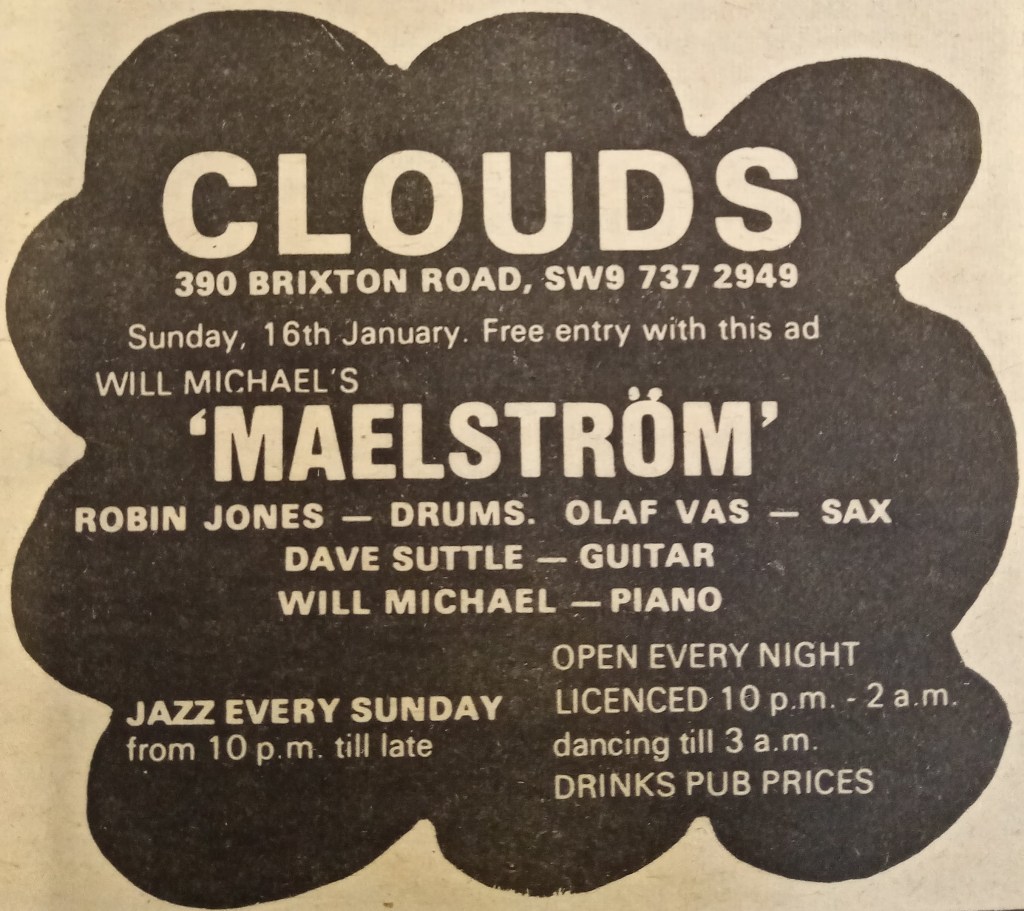
The first advert for 1977 appeared in the 1st January edition of the Melody Maker, which announced that from 2nd January there would be a resident jazz band, Maelstrom, appearing every Sunday night.
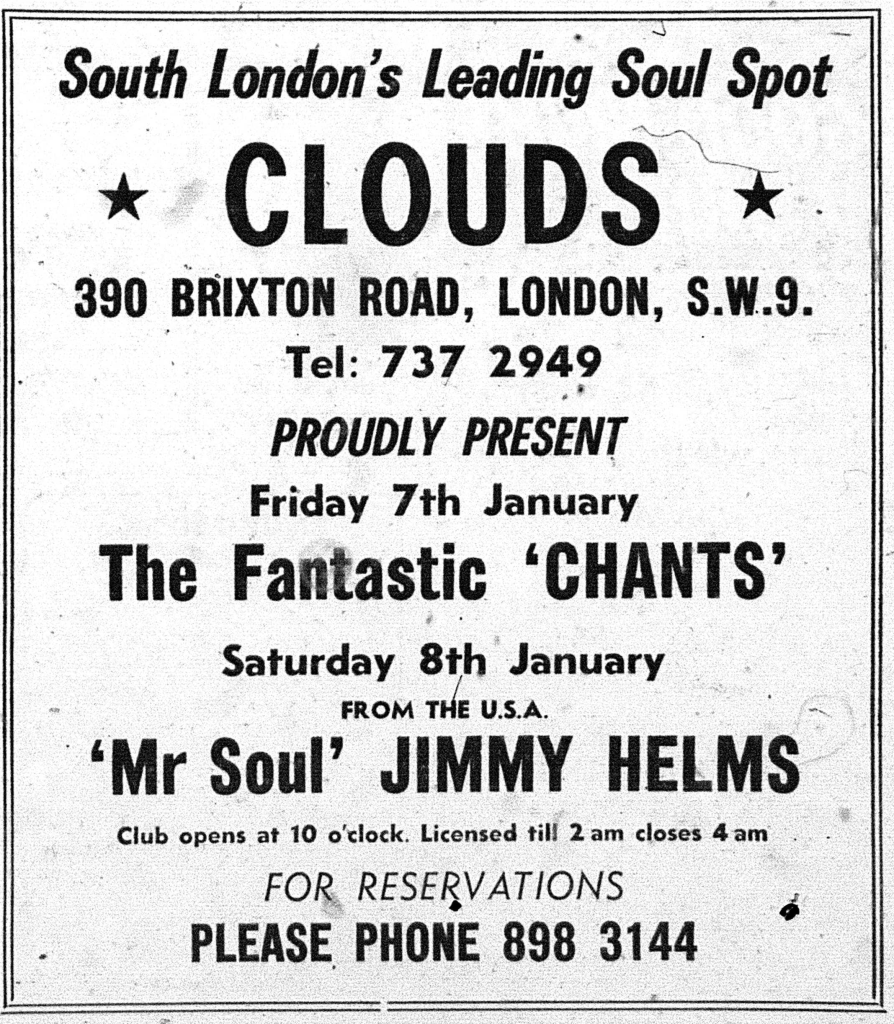
The Chants and Jimmy Helms followed soon after. Jimmy Helms had been releasing records since the late 60s, peaking in 1973 with the Nr 8 hit “Gonna make you an offer you can’t refuse”. Jimmy would release two singles in 1977-“Putting it down (to the way I feel)” and “Black Joy”, the title track of the film of the same name that was filmed around Brixton. After a long gap, Jimmy would find gretaer chart success in the late 80s and early 90s as a member of Londonbeat.
The Record Mirror and Black Echoes reported that Trax also played in January.
Jaln also had a return visit on the 28th January according to listings in Black Echoes.
The first adverts for Clouds in 1977 in Black Echoes appeared in February, with a return visit for Matumbi.

The resident DJ was now “London’s Mr Funk, Leon Blackman”.
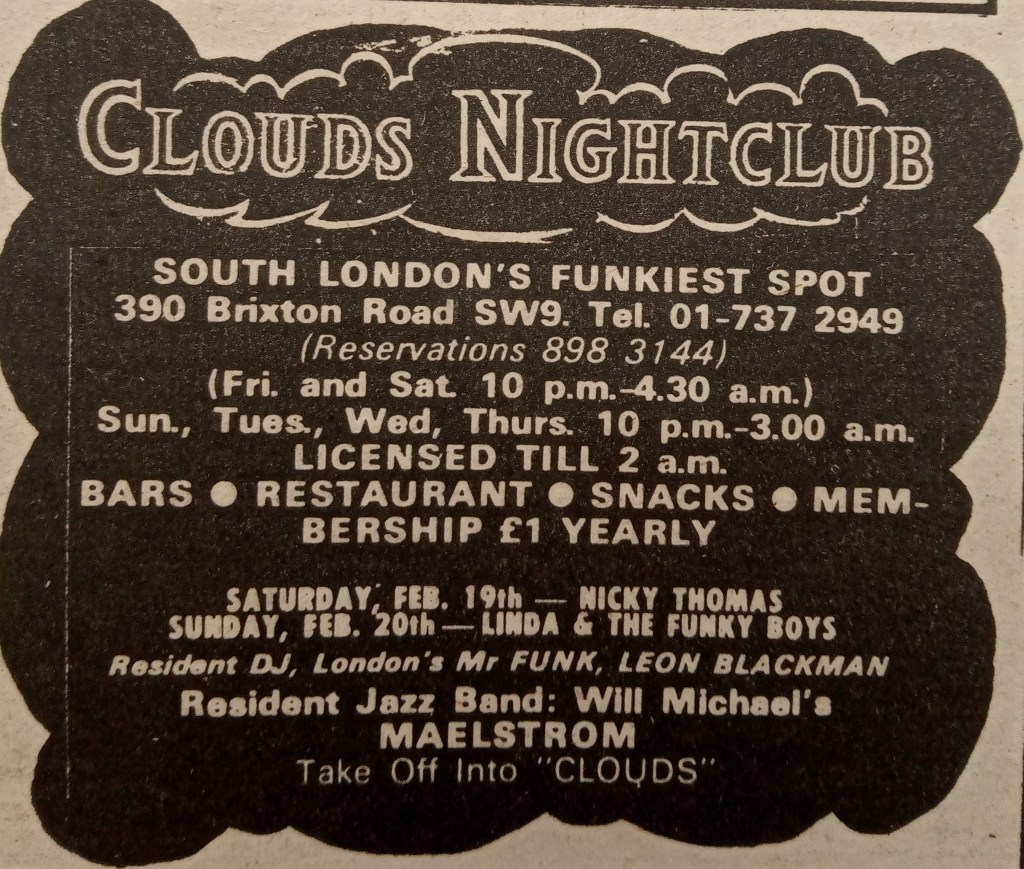
Acts playing in February included Barry Biggs. Biggs had just scored a Nr 3 hit in early 1977 with “Sideshow” It was still a top 5 hit when he played Clouds.
Nicky Thomas, had last been in the charts with the classic “Love of the common people”. However, Thomas had still been consistently been releasing music since then. Love of the common people was reissued in 1976 and Thomas also released a new single “London” in 1976.
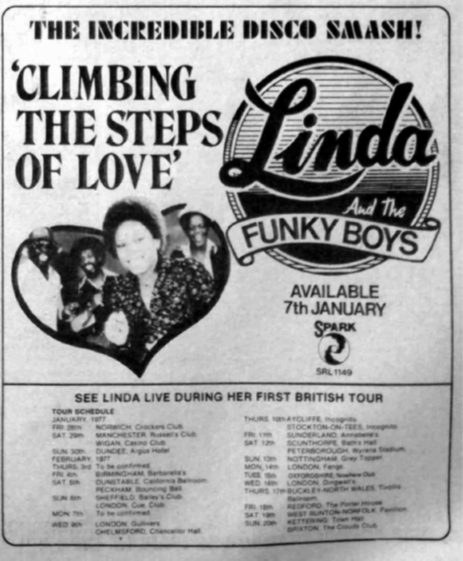
Clouds was also the final stop of an extensive UK tour for Linda and the Funky Boys, who had a minor top 40 hit in 1976.
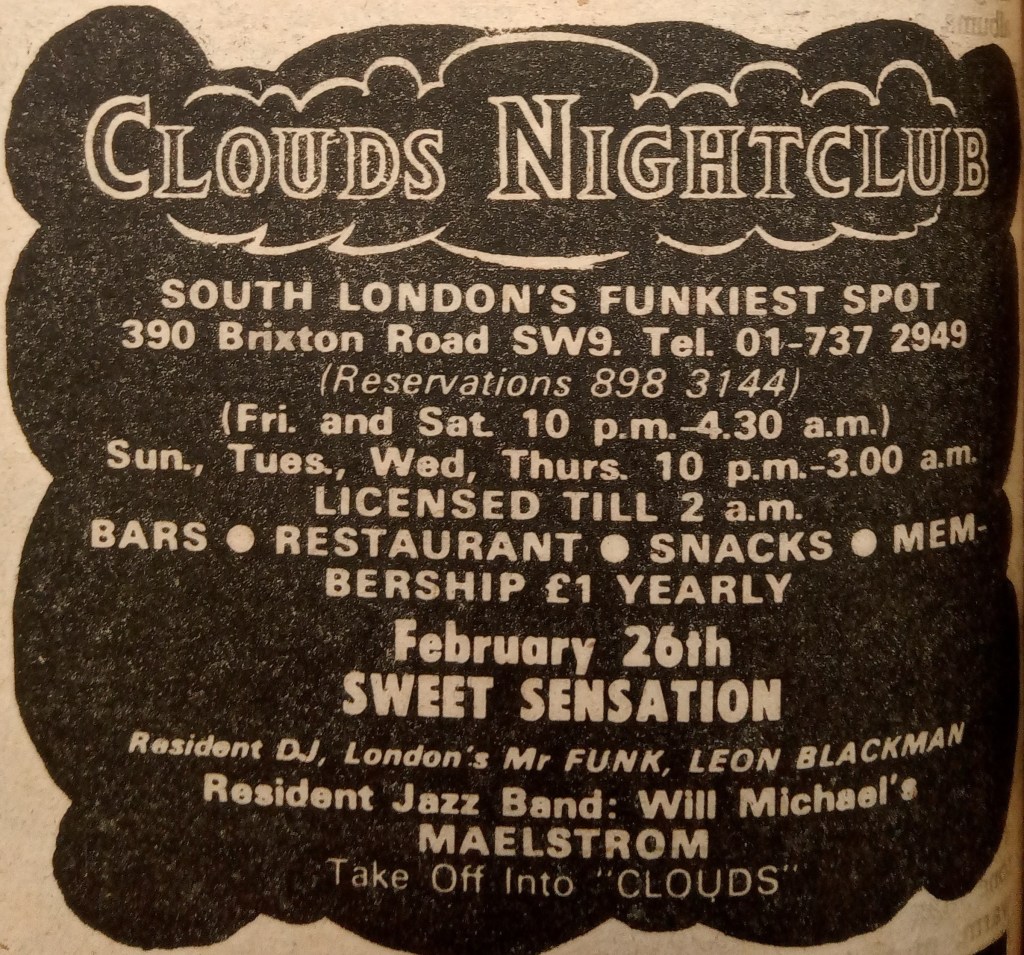
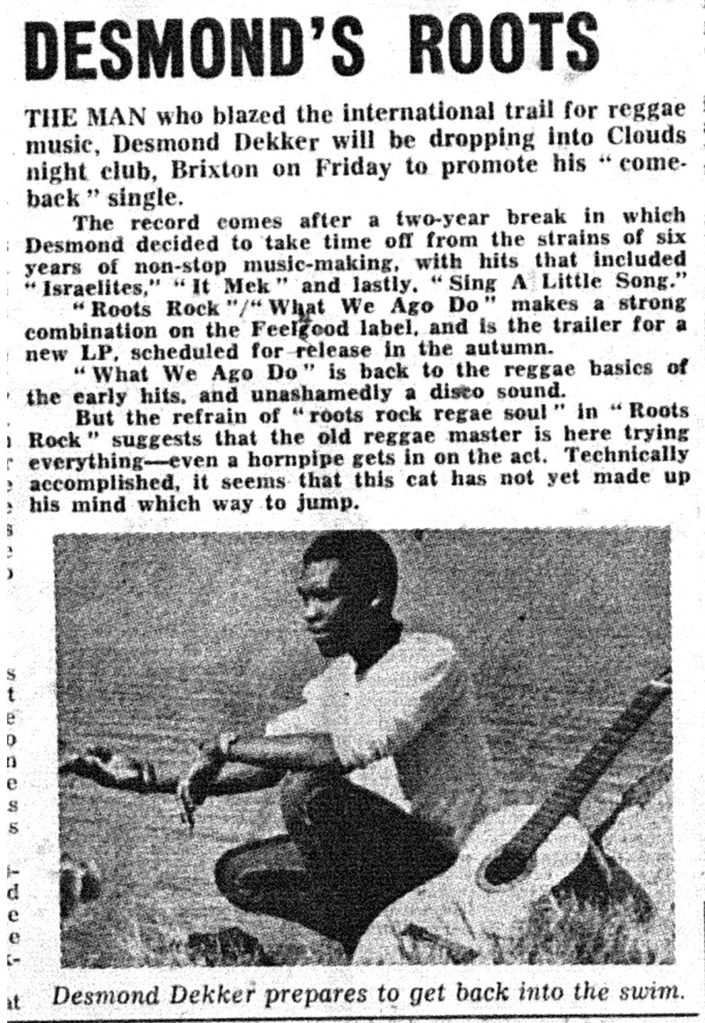
The sole advert for Clouds in the March 1977 edition of Black Echoes promises Desmond Dekker, who was still treading the boards. His Nr 1 hit “Israelites” was re-released in 1977. He would also play in July, promoting his new single “Roots Rock”. According to SLP he was playing as part of a double bill with John Holt.
March also saw the first appearance of long term resident DJ Freddie Cloudburst. His legacy includes being a mentor to the legendary reggae DJ Jah Shaka. Freddie’s son Tiny T carries on the family tradition to this day.
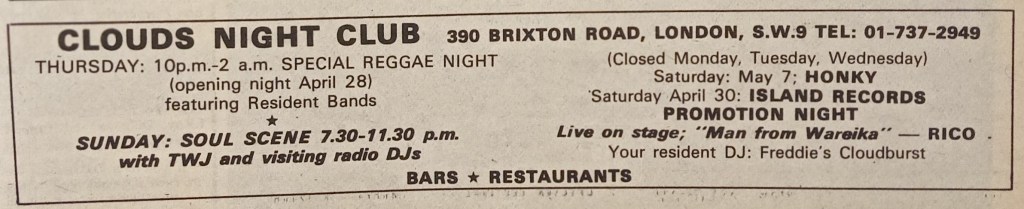
April provided a reggae night featuring resident bands and an album launch party for legendary Jamaican trombonist Rico’s “Man from Wareika”.
May saw the appearance of all white funk band Honky, promoting their soon to be released top 30 hit “Join the party”.
The Northside Rhythm and Blues Ensemble played on the 17th and 18th June according to listings in Black Echoes and the NME.
Early August saw Clouds being used for the press launch of his latest UK tour, which led to a rare review of Clouds in the NME. Holt was riding high on the recent success of his classic “Up Park Camp“.
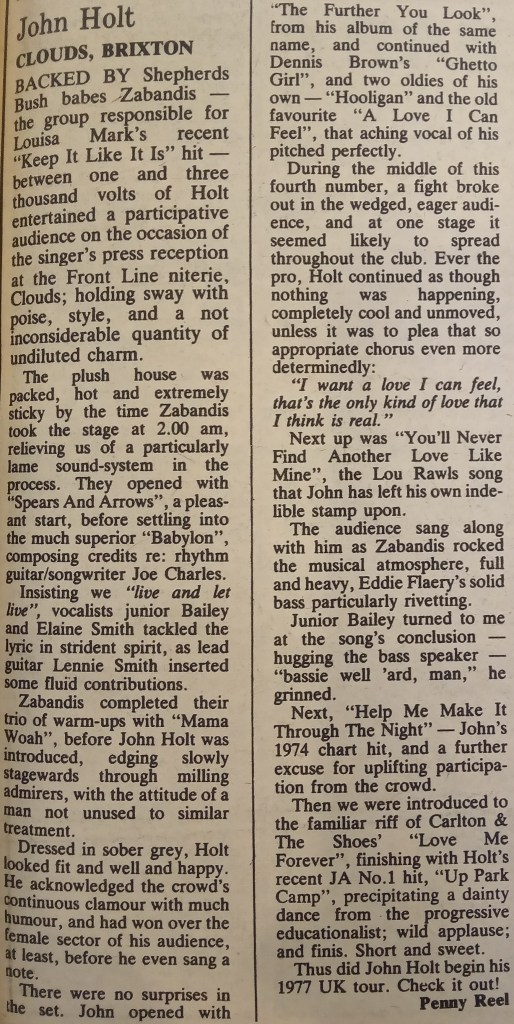
Backing band for the night was Matanzis, who played “Live and let live“. Well worth a listen.
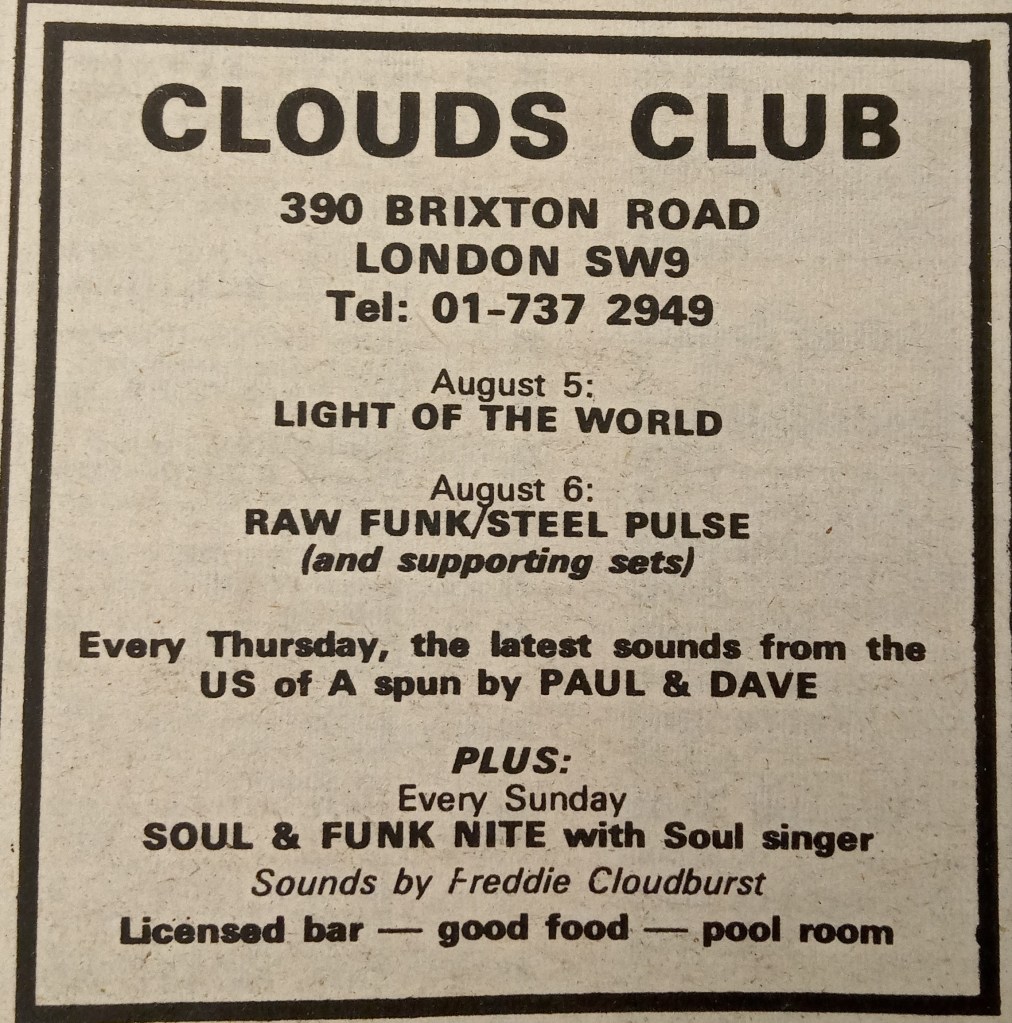
There are no further adverts in Black Echoes until August when Light of the World played. The funk band Light of the World did not release any records until 1979, so this must have been a very early appearance. Raw Funk and reggae band Steel Pulse, who were at the vanguard of British reggae and the Rock against Racism movement, were also advertised as playing in August.
Unannounced on the Steel Pulse bill were influential female punk band The Slits. This was the only other mainstream rock review of Clouds that we could find:
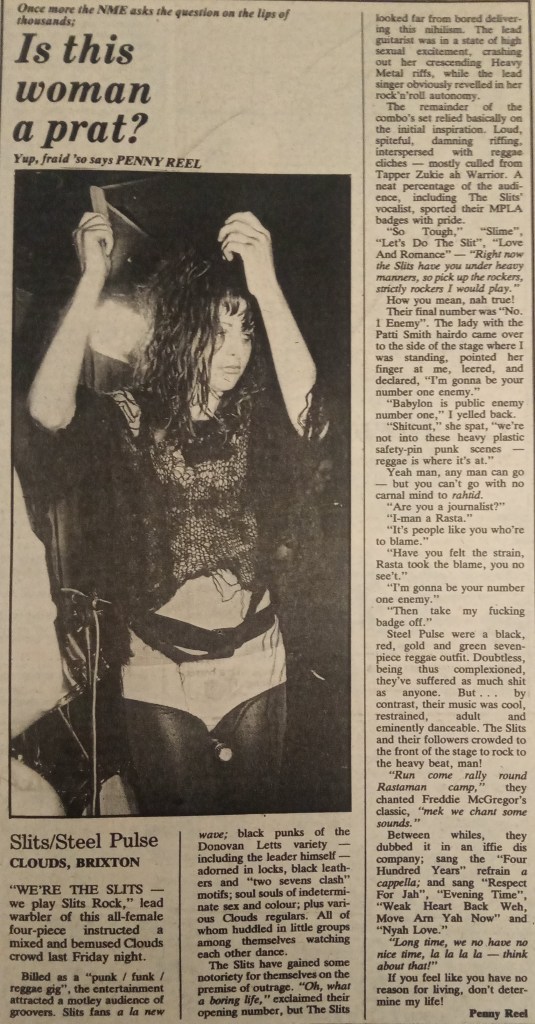
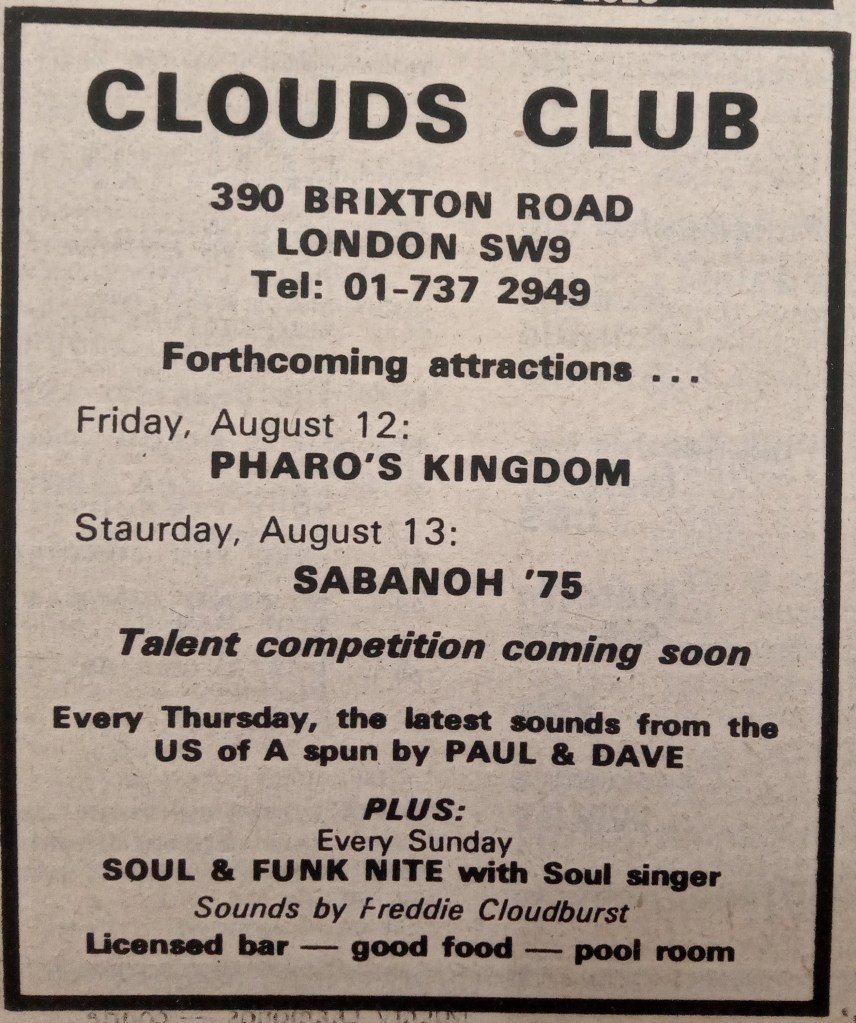
Coventry band Pharoah’s Kingdom also played in August. The band was fronted by Ray King, who was a major mover on the Coventry music scene. He would give the first break to many future members of the Two Tone scene. Pharoah’s Kingdom included future members of The Specials, Lynval Golding and Silverton Hutchinson. In the words of Lynval Golding “No Ray King, No 2-Tone”. The band would later morph into Nite Train , which would include future members of the Specials and The Selector, Jerry Dammers and Neol Davies.
Sierra Leonean Sabanoh 75 also played in August.
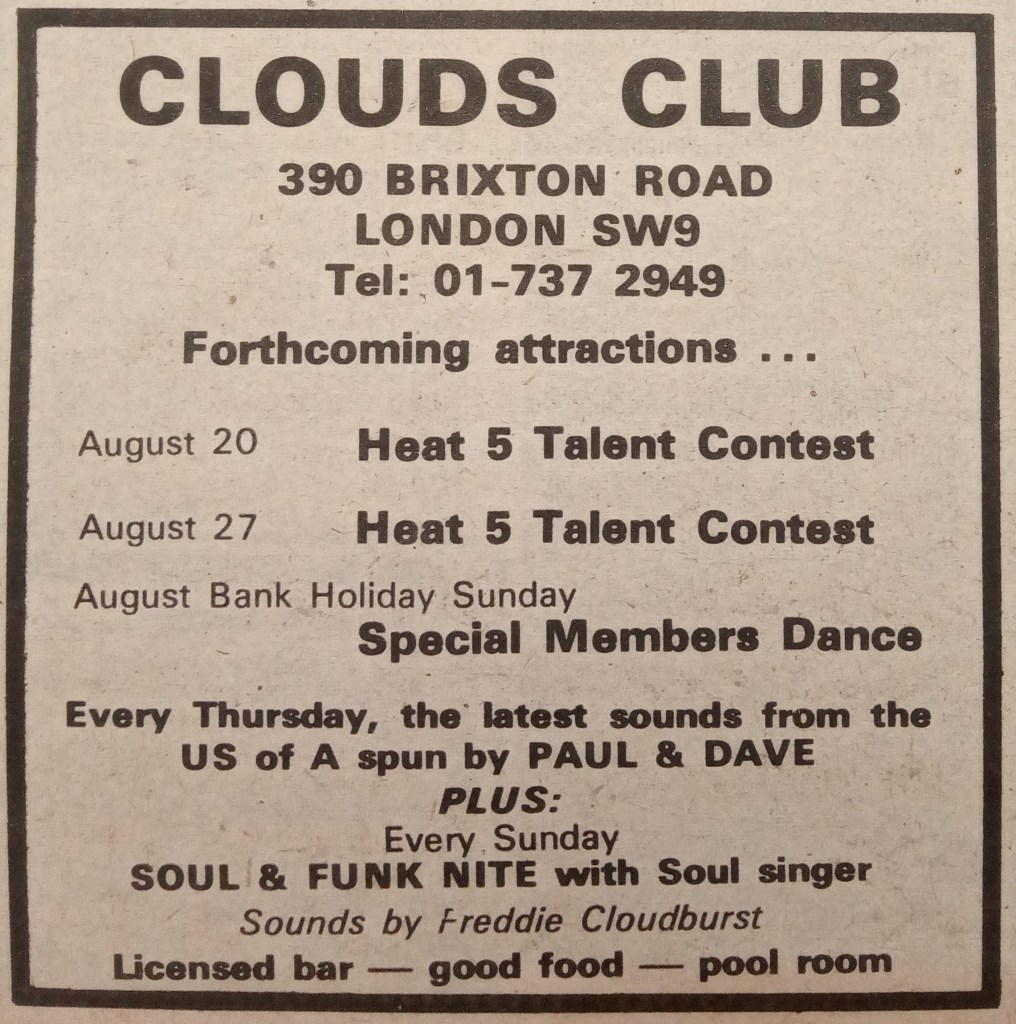
August also saw the return of the talent contest.
A surprise visitor to the club in August was heavyweight boxing champion Muhammed Ali. The visit was less than harmonious, with Ali keeping fans waiting for nearly two hours and Ali and members of the public exchanging words.

There was an all star cast on the 22nd October for the first anniversary dance of the Caribbean Post newspaper. Black Echoes listed George Chandler, Norma White, Sol Ray, Spartacus, Rudy Boyce, Greg Edwards, Raw Funk Band, Barry Biggs and Eddie Grant.
Danny Ray and the Eclipse band played in November according to Record Mirror.
Disco covers band State Express played Clouds in early December.
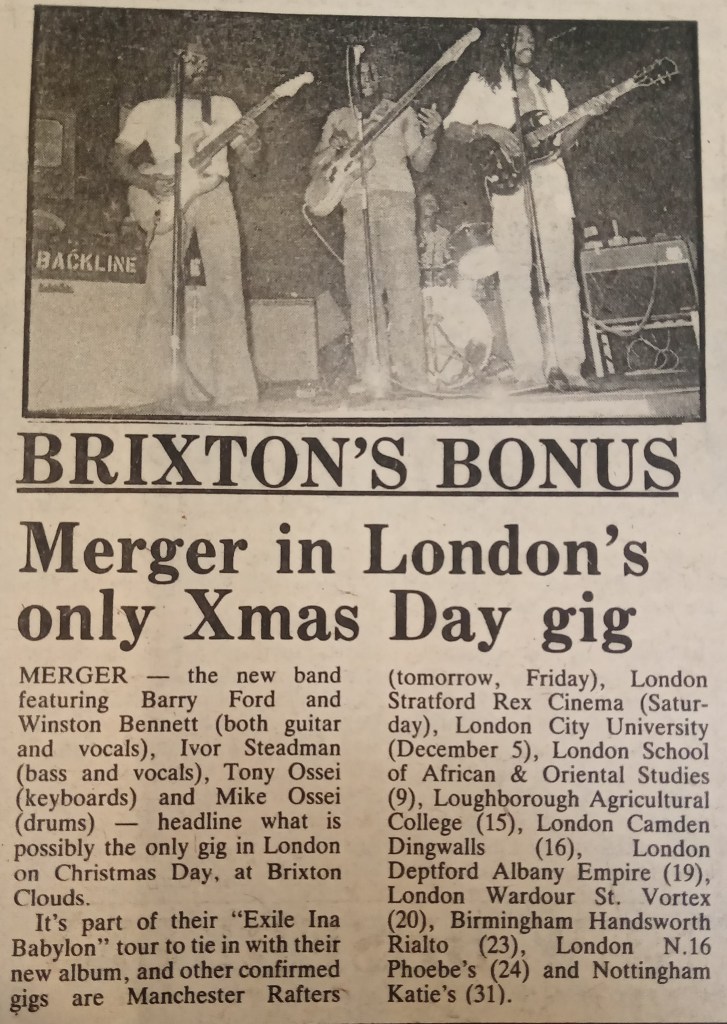
Merger, who were promoting their new album “Exiles ina Babylon” played on Christmas day at Clouds.
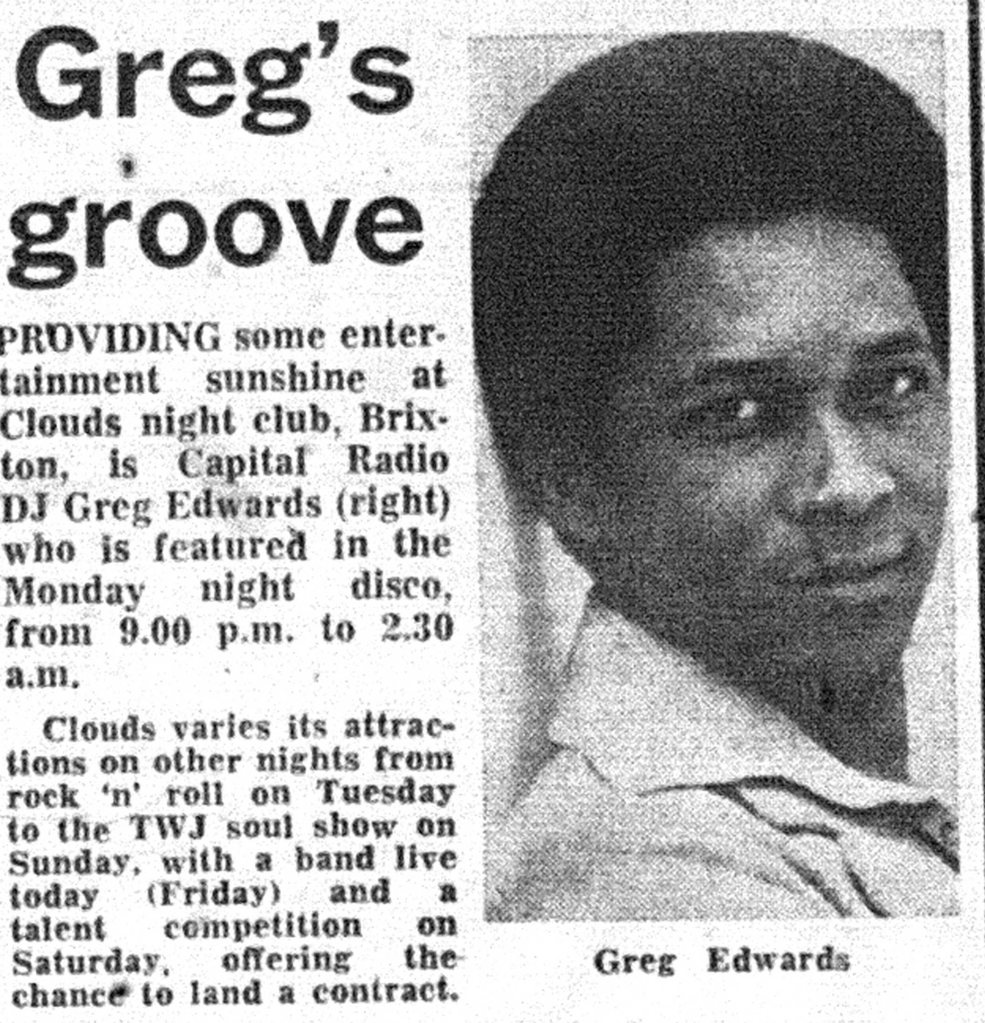
By the end of the year Clouds had settled into a routine, with Monday being a residency for Capital Radio DJ Greg Edwards, Tuesday being rock and roll night, a live band on Friday night, talent contest on Saturday night and TWJ soul show on Sunday night.
1978
February saw the filming of “Blackcurrent” a pilot show for the BBC for a proposed series of the UK version of Soul Train.
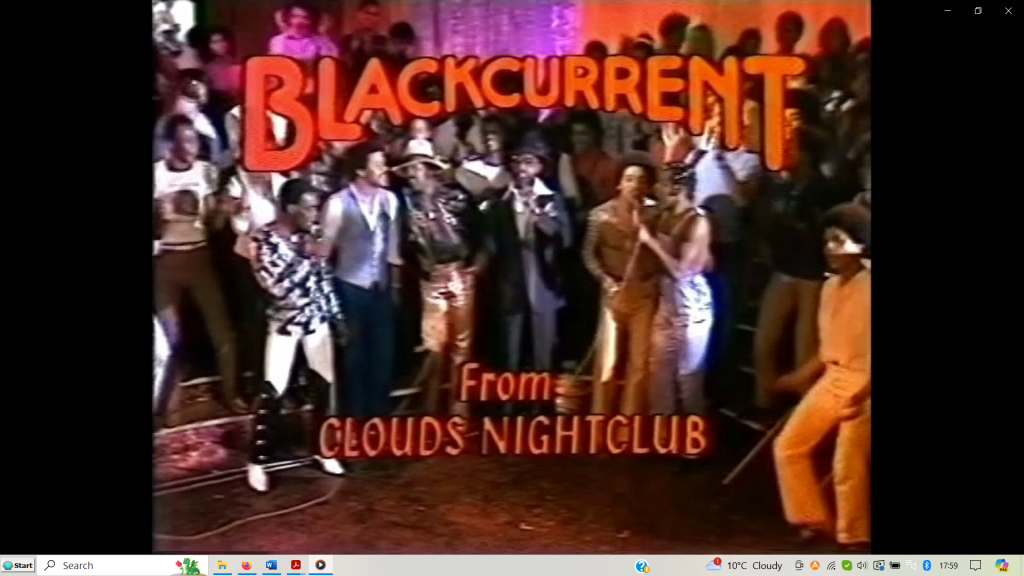
The recording featured Greg Edwards as compere, with acts including The Real Thing, singing “Stanhope Street”, their Nr 1 hit “You to me are everything” and current top 20 hit “Whenever you want my love”. Desmond Dekker, sang “Israelites” and “Sing a little song”, whilst a new group on the scene Hi-Tension sang soon to be top 20 hits “Hi Tension” and “British Hustle”. Billy Paul finished up the programme singing “Takin’ it to the streets”, “Let’s stay together”, and recent hits “Only the strong survive” and “Let ‘em in”.
The Three Degrees had been slated to appear on the programme but they were replaced by Hi-Tension.
Sadly the the follow up to the pilot never materialised.
The broadcast of “Blackcurrent” certainly initiated a conversation amongst Black Echoes readers and contributors. In an opinion piece in Black Echoes, struggling artist Mataya Clifford argued that homegrown talent was being ignored in favour of overseas talent. At the time of writing the piece only one of the acts featured (The Real Thing) was originally from the UK-“This was the perfect opportunity for the BBC to find out what is happening in Britain’s black music community-and there’s so much-and they’ve predictably thrown it away….Now will be (sic) BBC tell me when acts like Billy Paul ever played Brixton before-especially at a place like Clouds which features homegrown music nearly every night? Whoever organised this show has missed the boat completely. I’d like to know what research was done to find out what was happening in this country….I have talked to lots of musicians in London and they all feel very pissed off about this show.” He then went on to argue that there should be no need for a specialist black music show as there should be more black artists featured on existing programmes.
The Black Echoes review posed several pertinent questions about the show. Why was so little publicity given the show. Why did the BBC broadcast the show at 9:30PM on a Friday night when most people interested in the music would be in a disco dancing rather than watching people dancing on the TV? Other than those criticisms, the review was generally positive.
A letter appeared in Black Echoes, which again criticised the timing of the screening of “Blackcurrent” and complained that “Recently the BBC aired a pathetic little programme in reply to the many petitions and demands for a black music programme, it was called Black Current….I believe that it has done more harm than good. I say that because anyone who watched the programme and knew nothing about black music would think that the likes of the Real Thing and Desmond Dekker were the cream of our music’s artists….Why did they choose artists who are in no way representative of black music today, for such an important first showing?”
Another reader expressed similar views about a later attempt by the BBC to represent black music bemoaning “appalling production and presentation of a programme of this type can only be matched by the earlier effort named Black Current!”
Throughout 1978 there were no adverts for Clouds in Black Echoes during the first half of the year, although Brixton based reggae band the Cool Notes played Clouds in June according to the SLP. Their tune “My tune” would be released in 1978. The band would morph into a soul band who enjoyed chart success in the 80s.
Clearly there must have been events going on as the British Hustle film, which documented the UK soul/jazz funk scene, was filmed there in the spring of 1978.
In August an advert appeared in Black Echoes for George Power’s Redbox club.

George Power was a legendary figure in the 70s soul scene and was one of the founding figures behind the Kiss FM radio station. There is a really good summary of his career here.
An advert also appeared later in the year for Doctor Shotgun’s club night:

After no adverts in Black Echoes all year, all of a sudden, in the last week of the year this advert appears:
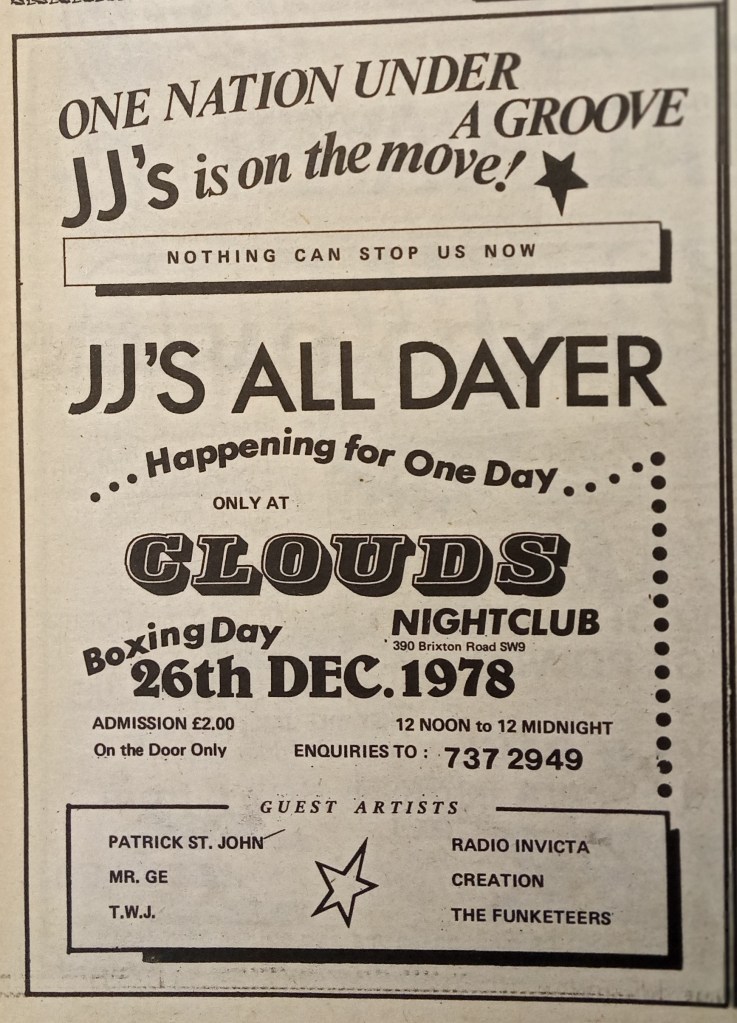
We have no idea who JJ’s were or why they were on the move. Similarly, we don’t recognise the acts playing apart from Radio Invicta, which was the first pirate station to play soul music in the UK. We would love to know more.
From hereon in the adverts and mentions in the SLP dry up. The only mention we could find was this mention in Time Out magazine:
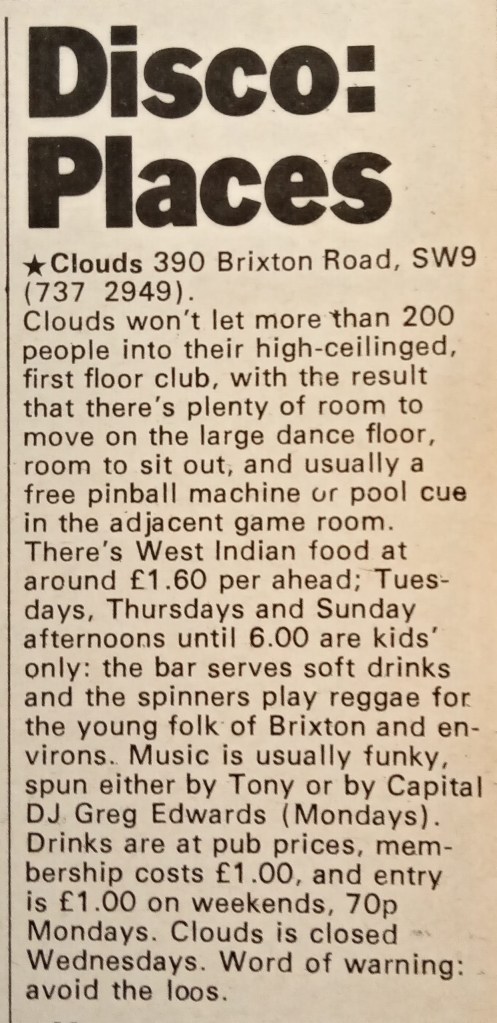
It is interesting to note that the club was given over to kids in the afternoons. It would be nice if clubs did that sort of thing these days.
That, we think, was the end of Clouds. They must have been doing something right as the club was rated 3rd best soul club in the Black Echoes annual readers poll for 1978.
In December 1978 and then again in October 1979 planning approval was given by Lambeth council to turn the premises into offices by respectively, MFI Furniture and Solon Housing Association. The premises would receive a brief stay of execution when the first incarnation of The Fridge night club opened there in December 1981. But that is a whole other story….
 brixtonmusicmemories