
Introduction
The Ram Jam Club existed for two short years between early 1966 and early 1968. Yet during its short lifetime it played host to the cream of RnB, soul, ska, rock and psychedelic acts. Legendary acts who played there included Otis Redding, Jimi Hendrix, The Who, Nina Simone, Cream and many others.
Spread over two floors at 390-394 Brixton Road, the venue is commonly reported as being opened by music promoter Rik Gunnell and his brother John. However, the South London Press (SLP) of 11th February 1966 says that the promoter of the club was Pat Robinson, who ran a baby linen store in nearby Coldharbour Lane. Rik Gunnell was named as being his business partner. Certainly the day to day running of the club seems to have been managed by Pat Robinson. All the correspondence in the archives we have seen between the Ram Jam and licensing authorities was either signed by Pat Robinson or the club’s manager, Mr Dezart. The headed notepaper for the Ram Jam listed 328 Coldharbour Lane as the office address, which was presumably the same address as the baby linen store.
The club had previously been the premises of the Universal Health gym, which had closed in the summer of 1965. Universal Health had been the subject of several debates in parliament as a result of the coercive methods they used to sign up members.
In fact the Ram Jam had a previous (rather chequered history) as an entertainment venue. There are several letters in the London Metropolitan archives throughout this time referencing noisy behaviour and overcrowding. In the 1930s the venue was the Saville ballroom and billiards club, the Gresham ballroom and the Vincini academy of dancing before becoming the Brixton Palais de Dance in the 1940s and the Harlequin Irish club in the late 50s and early 60s.
The conversion into a club cost about £8,000 according to the SLP (or £14,000 according to the Brixton Advertiser). The first floor had deep pile carpet and a 2,000 sq.ft dance floor, a stage and raised platforms at the side for spectators. The room above was where the cloakrooms and coffee lounge were, with music being piped from the room below. The upper floor also had a smaller dance floor.

Talking to the SLP, Pat Robinson said of the new venture:
“It’s about time Brixton had some really first-class entertainment. The music will probably attract younger people, although it’s surprising how many middle-aged people also like rhythm and blues. We don’t intend to have too many rules about dress but motorcycling jackets are out and so are scruffy people. I haven’t had any objections to the project yet and the police have been most helpful.”
The venue was named after soul singer Geno Washington’s backing band, who were on the Gunnell’s roster of artists. In fact, the decision to use the name Ram Jam was taken at the last minute. The Record Mirror of 15th January 1966 reported that the club was called the Brixton New Flamingo, named after one of the Gunnell’s other clubs, The Flamingo, in the West End. The Brixton Advertiser of 17th February 1966 also referred to the club as “the new Ram Jam Club, Brixton’s Flamingo.”
You can hear how the club came to be named the Ram Jam in this exclusive interview with Geno Washington:
In a less than believable piece of hype, the Raver column in the 26th February 1966 edition of the Melody Maker said “Wham! Bam! At the Ram Jam! A runaway ram, hotly pursued by seven publicists, blocked traffic, befouled pavements, and nearly toppled a policeman when a stunt to launch Brixton’s new Ram Jam club backfired last week. Says publicist Dave Block: “The ram was being paraded along Brixton Road when it finally got free and roared off at 30 mph. We finally cornered the ram in a garage.”” The Raver column was full of spoofs and parodies so we thought this story must be an urban myth. However, the Brixton Advertiser repeated the story, complete with a photo of 19 year old model Judy Jason ,who apparently captured the ram, whose nickname was “Jam”. Readers can make their own minds up.
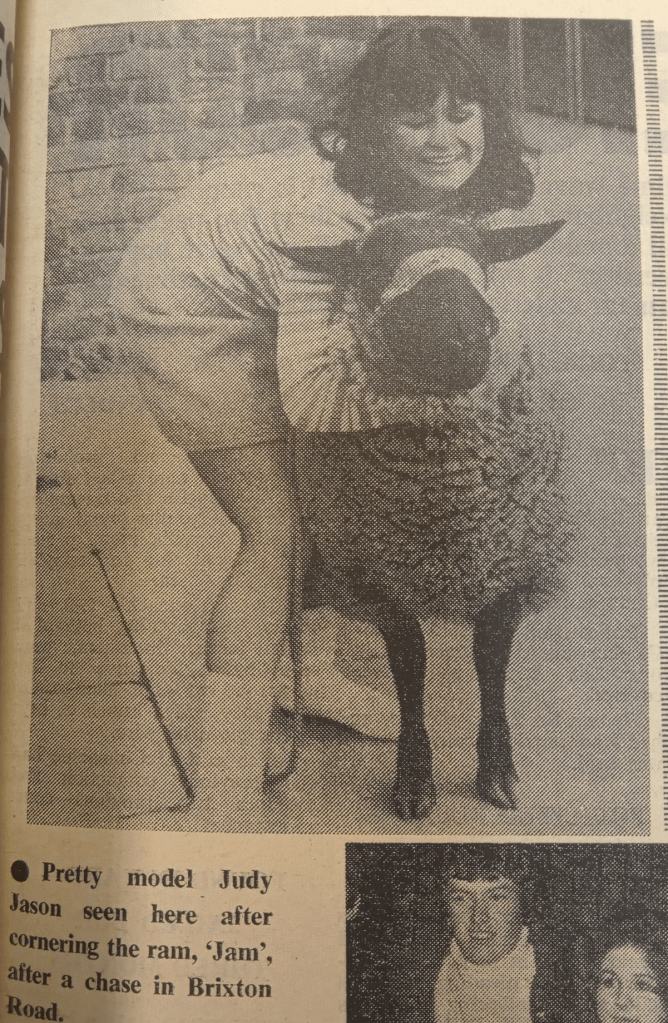
The Gunnell’s PR team certainly seem to have been in overdrive. The Brixton Advertiser also claimed that the fire brigade arrived within minutes of the club opening in response to a false alarm. “This sort of thing always seems to happen whenever a new club opens”, claimed an unnamed director.
If you were a regular at the club, the chances are that you would have had to get past one of the bouncers, Alex Hughes. He would soon rename himself Judge Dread and rack up a string of risqué hits in the early 70s, popular with the skinheads of the time.
Very few photos exist of the Ram Jam club but you can get a feel of the venue from this French TV footage of Junior Walker playing at the venue in 1967.
1966 and all that
1966, a time when the average house price was £3,840 and a gallon of petrol would set you back 5 shillings (25p in modern money). Shops were closed on Sunday, abortion and homosexuality were still illegal.
Unemployment in 1966 was at a near historic low. The Situations Vacant pages of the SLP were stuffed full of job vacancies. Youngsters could afford to be care free and footloose, knowing that they could quit their job and walk into a new one the next day if they wished.
Against this backdrop, society was on the cusp of huge changes, as popular culture exploded into multiple new forms. The roster of artists passing through the Ram Jam’s doors read like a “Who’s Who” of the new order.
Jon Savage’s “1966 The Year the Decade Exploded” is a good primer if you want to dig deeper into what was happening in popular culture.
Closer to home in Brixton, the SLP of 18th February 1966 reported that the Lambeth rates (the forerunner of council tax) had increased to 10 shillings 6d, 56p in modern money!
The issue of race was very much in the news locally as well. In one of several articles about race tensions, the SLP wrote that an allegation of racial discrimination at the George pub in Railton Road was likely to be one of the first complaints to be heard by the newly formed Race Relations Board. The Board had been set up as a result of the Race Relations Act 1965, which outawed racial discrimination. It would be another fifteen years before the venue would get its ultimate comeuppance, when it was burned down in the 1981 riots. The SLP described this as “undoubtedly an act of revenge for years of racial discrimination.”
Oh yes, 1966 was also the last (and only) time that England won the World Cup. It really was a very different world…
The view from the dancefloor
We have collected together some first hand accounts from people who were lucky enough to go to the Ram Jam club.
Don King started going to the Ram Jam club when he was 14 years old. Here he recounts some of his memories of the club:
“There were two sessions. An afternoon and an evening session on a Sunday. Quite often I would go to both. I almost lived in the place. I used to go, not every week but some weeks I went on the Wednesday, Friday, Saturday, Sunday.
There was always a scene of anticipation whenever you went there because you’ve got to remember this was before the days of social media so quite often we didn’t know who was going to be on next week. We just turned up on the day and you saw the poster on the wall. For example when I saw Hendrix for his first gig, it was John Mayall who was headlining and it said “and Jimi Hendrix Experience” well, who knows. You’d never heard of them.
There was a very steep staircase. I think the doorway was next to the South Eastern Electricity Board or something like that. You went up a steep staircase and I think the ticket box was on the left hand side where you paid your money, there was a cloakroom area, that led you into the café area upstairs where you could get those awful hot dogs. Then there was a quite narrow wrought iron staircase which took you down to the dancefloor which was the next level, which compared to other clubs was quite small. So you were almost on top of the stage. The stage itself was quite small. You could just about get a small band on there.
As you came down the stairs, the whole left hand side of the walls was covered with floor to ceiling mirrors, which gave the impression of additional space, which was on a sort of raised dais and then it took you down onto the dance floor. I tended to spend most of my time on the dais because you could see what you were doing with your dance steps and secondly you had a great view over the heads of the others to the stage which wasn’t that far away so the club was very intimate. I’ve never been to any other club like it. Considering the size of the club and the bands they had on, it was incredible.
The best band in terms of musicality has got to be Jimi Hendrix and the other band that was absolutely first class and sounded exactly like the vinyl was Junior Walker and the Allstars. I saw loads of others. I saw Georgie Fame and the Blue Flames a few times, Zoot Money, who had a habit of dropping his trousers, the Amboy Dukes I saw-they were journeyman that weren’t that original. Most of the bands tended to play standards but were quite competent. Jimmy James and the Vagabonds I saw there. I quite enjoyed John Mayall’s Bluesbreakers. I saw Chris Farlowe and the Thunderbirds, Carl Douglas and the Stampede, another touring band, Shotgun Express. I saw Paul Butterfield Blues Band a couple of times. Bobby Hebb I saw. His big hit was “Sunny”. I saw Cream there.
I’ve never experienced any club like it. I think largely because of its size. It was quite small for the crowd that was in there. It was quite choc a bloc at times. Because it was so small, you had a great view of the stage. It was very intimate.
It spurred my interest in black music. It introduced me to ska, which I hadn’t heard before and Tamla. Ska followed on then went into Rocksteady and then following on from that the music changed to Reggae and I’ve been a lifelong fan of that genre ever since.
It wasn’t the live music that drew me there. It was the fact that it was something different. But it opened my ears to other genres and types of music and the live bands were a bonus…. I can’t sum it up in words, no other club compared.
Punch ups. Yeah, that was quite often. People would be on the dance floor. They had two or three bouncers in there. Judge Dread was one of them. He went on to make a few sort of rude reggae records. He was quite a big lump. It was quite hilarious. He used to just grab hold of them around the neck in a headlock and just drag them out. On one occasion I did count 13 punch ups, which was an unusually high number. The bouncers got on top of it pretty quick, ejected them from the club and that was the end of it…. It’s strange, the police station was adjacent to the building and yet all the times I went there I don’t ever remember the police turning up.
There was a crowd of us that knew each other. There was about half a dozen of us. Most of us from the Streatham area. We all went together. We met up down there.
One of the guys I do remember specifically was a guy called Steve Barry who we used to call the vicar because he used to dress in these immaculate tailored Saville Row suits, tie done up and he used to stand there and didn’t do a thing other than that he was very affable and would quite happily chat to people who came up to him. I used to bump into him at another club I went to-the Caxton in Pimlico. It turned out he worked for Prince Charles at Balmoral Castle. Unfortunately, he’s dead now but eventually he was Prince Charles’ valet. We all called him the vicar because he looked like a vicar.”
You can hear the full interview here (apologies for the sound quality):
Barrie Greene worked in Brixton market in his family’s shoe shop. Here he recounts his time at the Ram Jam and talks about London in the swinging sixties:
Bands and DJs at the Ram Jam Club
Below is a month by month run-down of what was happening at the Ram Jam Club from start to finish, with adverts from the Melody Maker and photos from the Record Mirror and Melody Maker, together with a few snippets about what was happening in the wider world of music. Also, check out the excellent Garage Hangover website for more band info.
Several bands played the Ram Jam on multiple occasions. We have generally just noted the first or most significant appearance rather than listed every appearance.
February 1966

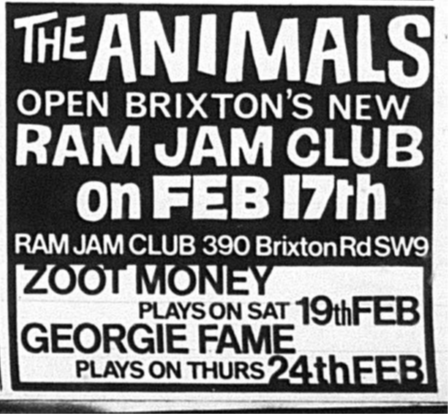

The club’s official opening was on 17th February 1966, with the now disgraced DJ Jimmy Savile officiating. The Brixton Advertiser gave extensive coverage to the opening. Savile turned up in his Rolls Royce and started selling tickets in Brixton market to raise money for charity. Given what we know now about Savile, some of the press coverage is in retrospect actually very creepy.
The Brixton Advertiser stated that 600 fans turned up for the opening night. The stars of the day were also out in force, including Stevie Winwood and Georgie Fame:

Stalwarts of the UK RnB scene The Animals played the opening night, promoting their new single, “Inside Looking Out”, which they had just premiered two weeks before on the Ed Sullivan show in the US.
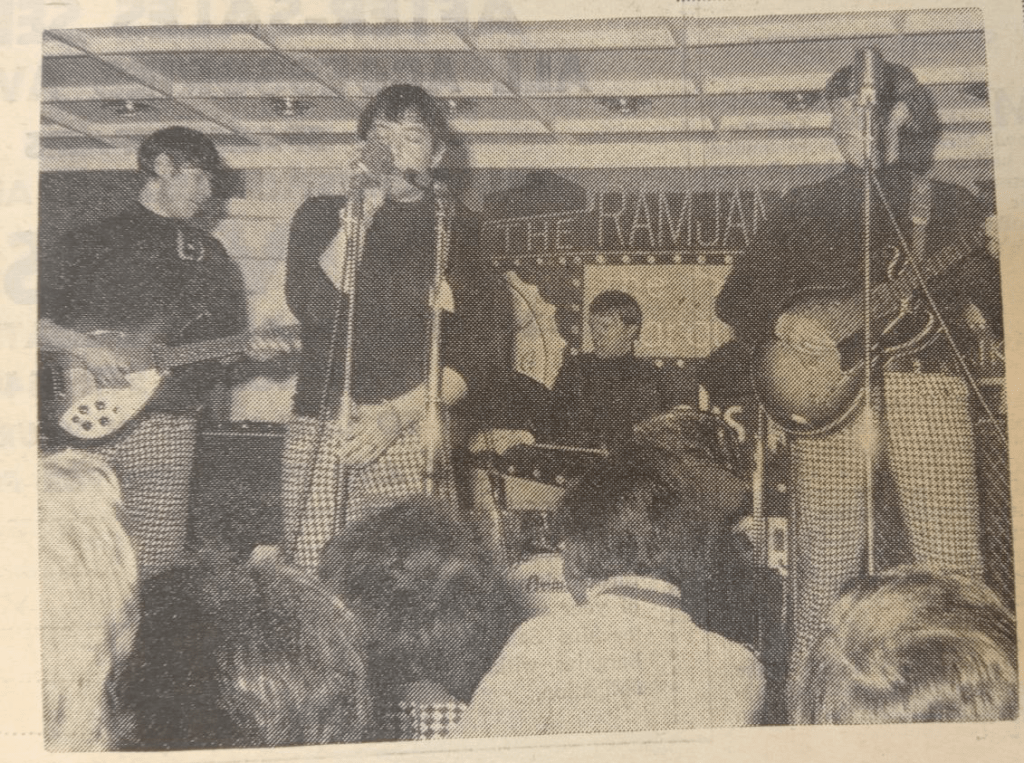
It’s a sign of how hard-working bands were during those days that no sooner had the Animals returned from the US than they had to put in several TV appearances in the same week as playing the Ram Jam, followed by opening the new Tiles nightclub in Oxford Street where, as this Pathé news footage shows, the “with it” generation hung out.
Support on the night came from the Ram Jam band. There is no mention of whether Geno Washington was with them or not.
Also playing that month was Georgie Fame, who was just months away from having his second number one hit with “Get Away”. Back in the 60s pop stars would still tread the boards on the club circuit even if they were top of the charts.
Regulars on the RnB scene Zoot Money and The Gass performed in the opening weeks, with The Gass playing twice in the space of a week. Many bands of that era would play several gigs in a week.

There was a far larger circuit to play on then, with more clubs being based in the suburbs, such as the Upper Cut Club in Forest Gate, the Bromel Club in Bromley and the Orchid Ballroom in Purley. Presumably the lack of night time public transport made it difficult for people to attend gigs in the centre of London.
The Shevells also made the first of many appearances at the Ram Jam.
In the wider world of music, we see the very early stirrings of the hippy underground. The Melody Maker journalist was very unimpressed with the “happening” which was staged at London’s legendary Marquee club. “And there weren’t even any nude birds”, he complained. Oh dear.
March 1966
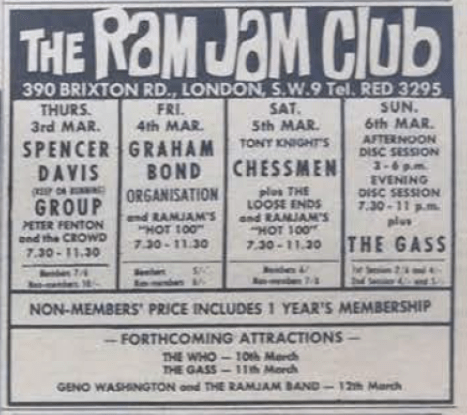

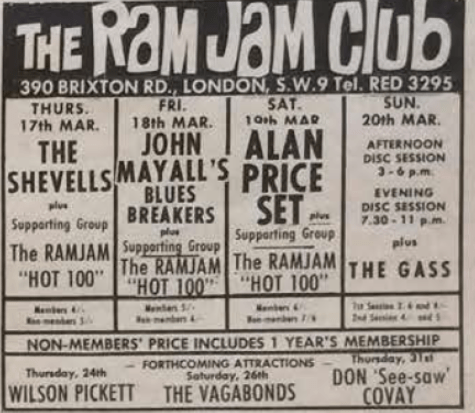
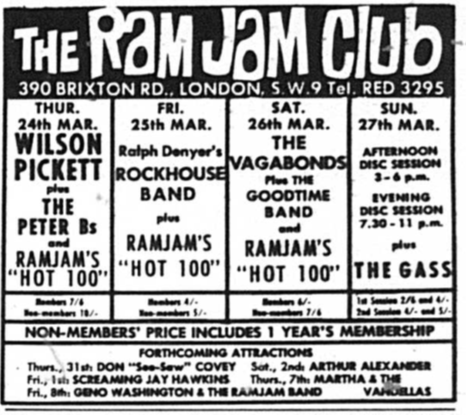
Bands were certainly put on a treadmill by their management back in the 60s. The Melody Maker of 12th February 1966 reports that recording of the Spencer Davis Group’s new single “Somebody Help Me” had been delayed due to 17 year old singer Stevie Winwood suffering from exhaustion due to pressure from work. Yet just three weeks later the group were headlining the Ram Jam. “Somebody Help Me” was released on March 18th and would go on to be a number 1 hit.
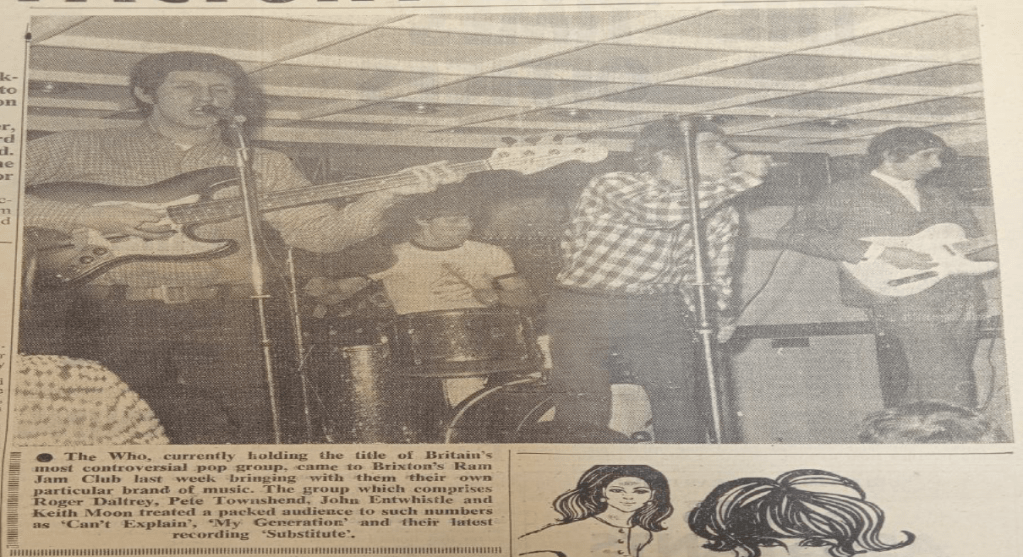
Other highlights for March at the Ram Jam included The Who, who had just released their single “Substitute”. It’s incredible to think that a group that would go on to fill stadiums would be promoting a classic top 5 single in a tiny club in Brixton. The Brixton Advertiser was there to take this photo:
March would also officially see the first of many appearances of Geno Washington and the Ram Jam band. Geno and his band continue to put on high energy shows to this day.

This grainy footage from a sadly never released documentary shows Geno and the band in action at the Ram Jam:

You can see the full trailer here:
The Graham Bond Organisation were another group who were seemingly everywhere in the mid 60s but never broke through into the mainstream. Naturally enough they made their Ram Jam debut in March 66. The group was a breeding ground for many musicians who later went on to find fame, such as Jack Bruce and Ginger Baker, who formed Cream. The “Ram Jam Hot 100” disc session provided support, as it would whenever there was no support band.
The end of March saw the first of many American soul stars to grace the Ram Jam’s stage, Wilson Pickett promoting his new single “634-5789”, followed the week after by Don Covay. Also on the bill with Don Covay was perennial support band The Peter Bs, who were supporting their new single “If you wanna be happy”. Listening to this cheesy instrumental, you would never guess that two of the bands core members, Peter Bardens and Mick Fleetwood would later achieve fame in the bands Camel and Fleetwood Mac.
The soon to be defunct Ralph Denyer’s Rockhouse Band played at the end of March, before morphing into Ralph Denyer’s Uptown Band. Ralph Denyer was represented by Rik Gunnell so could always be called on to play one of Gunnell’s venues.
Tony Knight’s Chessmen, sometimes just called The Chessmen, played the first of many sets at the Ram Jam. Their ever changing line up included free jazz legend Lol Coxhill. The band would often back visiting stars such as Martha & Vandellas, Mose Allison, Screamin Jay Hawkins, Rufus Thomas and Owen Gray. Their sole single, “Surfer Street” is a mod classic. Supporting the Chessmen were The Loose Ends (not to be confused with the 70s band of the same name).
Club scene regulars The Vagabonds also made the first of many appearances at the Ram Jam.
Elsewhere in the world of pop, James Brown played the long since gone Granada Brixton theatre. DJ Brian Matthews, Radio Two veteran of several decades, slammed Staff Sergeant Barry Sadler’s “Ballad of the Green berets” as “Sick and nauseating….There’s nothing heroic about bombing peasants in Vietnam.”
April 1966
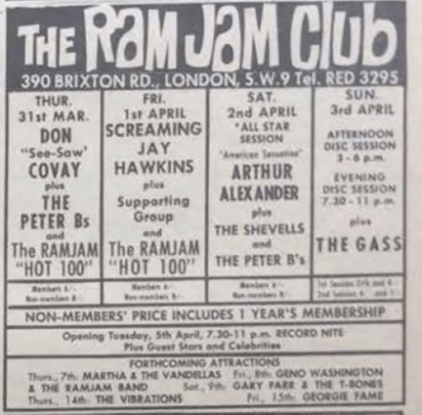

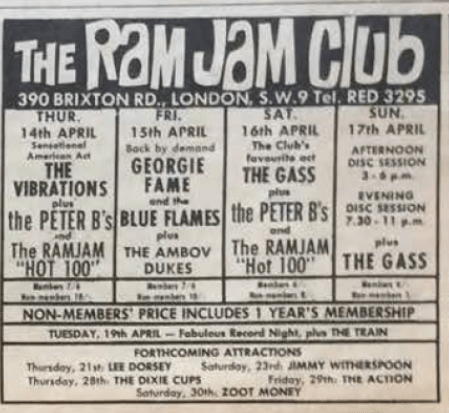
Screamin’ Jay Hawkins hit the Ram Jam on 1st April. He may not be a household name to many but he was one of the many performers over the years who were ahead of their time and never got the credit they were due. His main claim to fame was being the co-writer in 1956 of “I put a spell on you”, subsequently made famous by Nina Simone. The legendary DJ John Peel said of the song “I remember hearing that on the radio when I was a kid myself. Frankly, life was never the same after that.”
Ironically, in the very week that Screamin’ Jay Hawkins was playing the Ram Jam, the song had just been taken into the top 10 by the Alan Price Set, who had played at the Ram Jam just a few weeks before.
Screamin’ Jay Hawkins’ stage show was renowned for its outrageousness, which was an influence on many other performers, such as Alice Cooper. In a rare photo, you can see him performing at the Ram Jam here, although we are not so sure that this actually is the Ram Jam. The photo was posted by one of his daughters, one of the seventy five offspring that Screamin’ Jay claims to have sired.
Screamin’ Jay’s backing band for the night were Nottingham based Sons of Adam, who were tasked with finding a fish and chip shop, which Screamin’ Jay apparently loved.
Following straight on from Screamin’ Jay Hawkins, “American sensation” Arthur Alexander took to the stage the next night. Another performer who has gone under the radar with the passage of time, his songs were covered by The Beatles, The Rolling Stones and Bob Dylan amongst others.
A Melody Maker review of his gig at the Marquee the following week described his performance as “professional, but unmemorable” but then rather contrarily said “if he’s playing your way, he’s well worth a visit”. The review does at least praise his most famous song, “You better move on”.
A performer who never got the credit he was due, he died at the age of just 53.
Motown stars Martha and the Vandellas rushed straight from an appearance on the hippest TV show in town Ready, Steady, Go to play at the Ram Jam the next week. They were followed by soul group The Vibrations, who again were victim of having a pop group, The McCoys, take their song “Hang on Sloopy” and turn it into a sugar coated top ten hit.
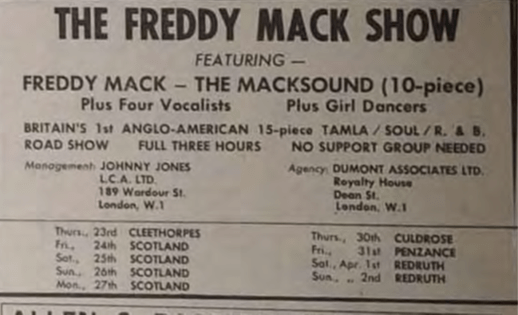
Recently retired light heavyweight boxer turned soul singer Freddie Mack, who seems to have played with just about everyone on the London scene, was next up. The 22nd April 1966 edition of the SLP described his new show at the Ram Jam “This and That” as being a “£12,000 pop sound package”, which combined two groups, “This” and “That”, who played separately, then line up as a 14 piece band for a two and a half hour show combining beat and big-band sound.
Freddie didn’t have much success in the 60s but reinvented himself in the 70s as Mr Superbad. You can read more about his amazing life here.
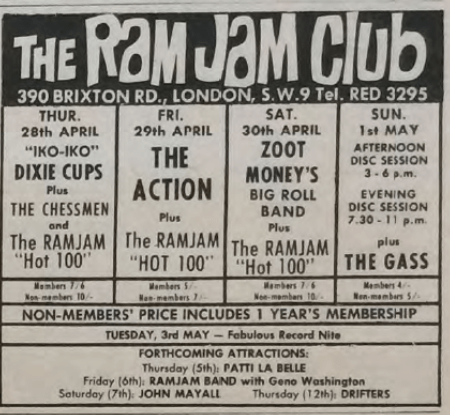
The sound of New Orleans came to Brixton at the end of April in the shape of mod favourite Lee Dorsey, promoting his new single “Confusion”. His classic “Working in a Coal Mine” would not hit the charts until later in the year, when it would go to number eight.
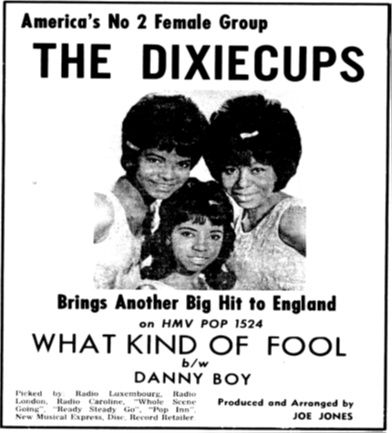
The week after fellow New Orleaners The Dixie Cups, whose much covered song “Iko Iko” had been a hit the year before were to play one of their last shows before temporarily retiring from the music business.
Gary Farr and the T Bones, regulars on the London RnB scene also played the Ram Jam for the first of several times; as did The Action. The Action were another of those mod bands on the circuit who never made it into the big time but had a lasting influence on many. Paul Weller and Phil Collins are known to be huge fans.
American blues singer Jimmy Witherspoon’s April 23rd gig at the Ram Jam was reviewed by the Melody Maker’s Chris Welch. Music journalism was much more prosaic back in the 60s and the review simply says “Jimmy Witherspoon’s appearances at R & B clubs like Brixton’s Ramjam might seem out of place. But he cuts across the music barriers with his driving, swinging blues approach, which manages to successfully reach ears used to the tighter, less flowing beats of R&B.” The three paragraph review finishes by saying “However the big boss blues singer is tremendous under any circumstances.”
Whilst not a massive draw for the younger generation, Witherspoon was certainly very popular with the BBC, making several appearances throughout the 60s.
It’s worth reminding ourselves that not every club in the UK invited such diverse line ups to play as the Ram Jam. The Melody Maker of 9th April reports that over a 100 local groups were boycotting a club in Staffordshire which was operating a colour bar. A committee member for the club is reported as saying “It’s true we don’t admit coloured people and that goes for coloured artists, too….We have 1,350 members and they make the rules. They have decided they don’t want coloured people in the club and that’s the end of the matter. If groups don’t want to come here, they can stay away.” This happened despite the fact that the 1965 Race Relations Act had specifically outlawed such discrimination.
May 1966
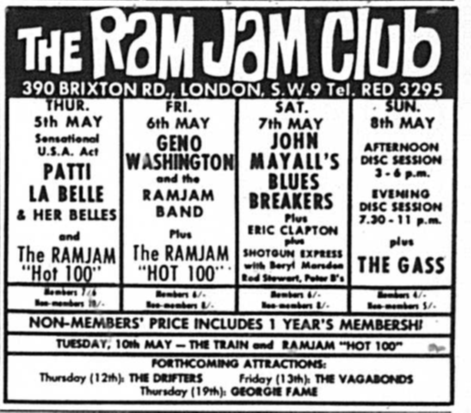
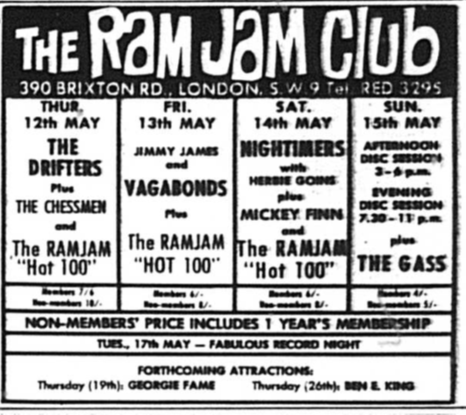

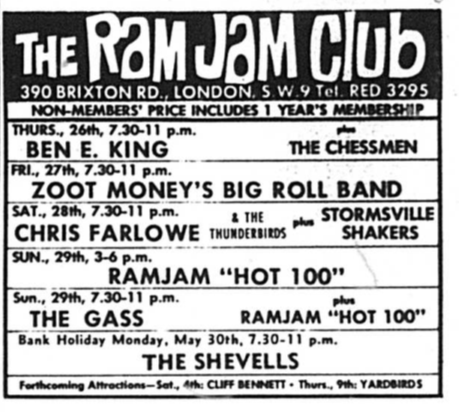
Patti La Belle and her Belles opened proceedings in May, promoting their new single, “Patti’s Prayer”.
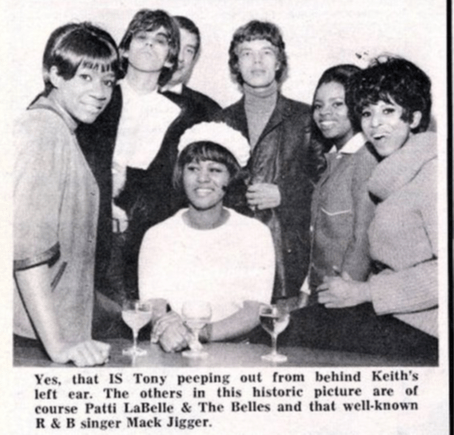
In the same week the group would appear on Ready Steady Go alongside the Small Faces and Tom Jones. Oh to be a fly on the wall at that gig. Two weeks after the Ram Jam gig Patti played at the Marquee Club. In Robert Sellers and Nick Pendeleton’s history of the Marquee Jack Barrie describes the gig: “There was a very small audience of no more than a hundred. But once she came on stage the atmosphere was unbelievable. We couldn’t get them off the stage. The crowds kept calling them back and they did nine or ten encores before calling it a day at half past midnight.”
Patti La Belle had been making records since 1962 with little success. However, her appearance on Ready Steady Go would change her life. She met the producer Vicki Wickham, who would reinvent the group as Labelle, famous for their 70s hit “Lady Marmalade”.
7th May saw a gathering of future superstars. John Mayall’s Bluesbreakers, played host to new recruit Eric Clapton. In support was The Steampacket, the RnB supergroup whose members included Long John Baldry, Brian Auger, Julie Driscoll and a then unknown Rod Stewart. Stewart was also a member of another supergroup, Shotgun Express, who performed one of their first gigs at the Ram Jam on 20th May. Shotgun Express, who mainly played soul covers, also counted amongst its members, Peter Green and Mick Fleetwood, future members of Fleetwood Mac.
Judging by this advert in Record Mirror, the band only chose the name at the last moment and still had to solidify its line up.
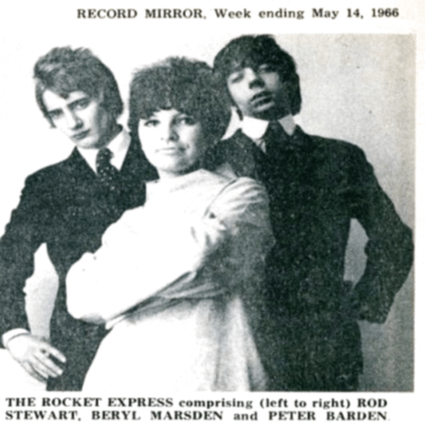
The Drifters, whose classic songs included Save the Last dance for me and Under the Boardwalk, may have been past their commercial peak but they were still managing to get into the top 40.
The Drifters would be shortly followed by ex Drifter Ben E King, who last graced the charts five years before with “Stand by Me”, which only managed to get to number 27 in the charts, before being catapulted to the number 1 spot on the back of a Levis advert in 1987.
The appearances of The Drifters and Ben E King come with a health warning. Both acts were managed by the notorious promoter Roy Tempest. As this footage from his tour manager shows, he would on occasion pull people off the street to imitate the Motown stars of the day. Tempest would normally put an adjective such as “original” before the groups name when he pulled this stunt, which didn’t happen in this case, so maybe the Drifters and Ben E King really did play.
To complicate matters further the Record Mirror of 29th April 67 pondered “Who’s who in the Drifters?” as it revealed that there were no less than three separate versions of the Drifters currently touring. The 4th November 67 edition of the Melody Maker reported that Tamla Motown were suing Roy Tempest over this scam. It’s not know what the outcome of the trial was.
Chris Farlowe made his first appearance at the Ram Jam on 28th May, promoting his number one single “Out of Time”, written by Mick Jagger and Keith Richards.

Given the Gunnell’s reputation, we’re not entirely sure this picture was faked!
18 months later he had started a business selling Nazi war memorabilia.
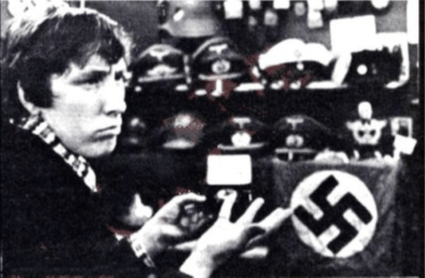
Cult mod group, the Stormsville Shakers were in support. Their song “I’m gonna put some hurt on you” would reach number 40 in the Melody Maker charts in June.
Another mod cult group, The Nightimers with Herbie Goins played the first of several gigs at the Ram Jam in 1966. If you have either of their 1966 singles, “No 1 in your heart” or “The incredible Miss Brown”, you are sitting on a nice little earner as they are Northern Soul collectibles. To get a feel of the live experience, this clip from French TV programme Bouton Rouge gives you a good idea. The Mickey Finn were in support that night, who would themselves gain cult status in the 80s with their 1967 freakbeat classic “Garden of my mind”.
Rick ‘N’ Beckers made the first of multiple appearances in May. Clearly they were a band that could be called upon to fill any gaps in the schedule but little is known of them.
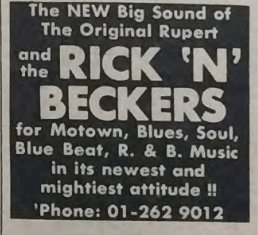
May 66 saw the end of Bob Dylan’s current tour. The tour, which saw Dylan being accused of being “Judas” for selling out his folk audience and playing with an electric band, would subsequently become infamous in rock history. The 4th June edition of the Melody Maker included a half page feature on the tour, which includes the less well known heckle of “Woody Guthrie would have turned in his grave”, which was interesting as he was still alive!
June 1966

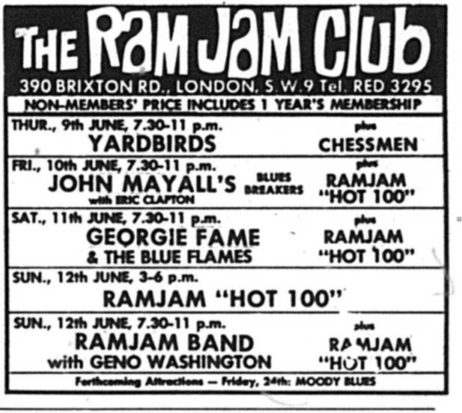
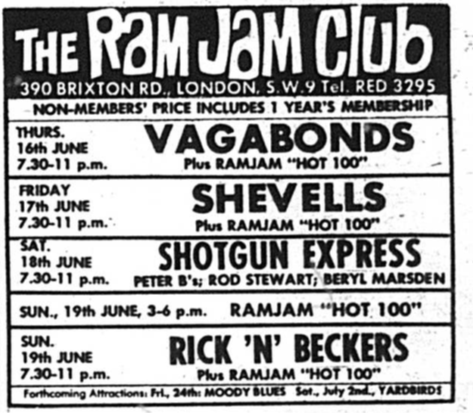
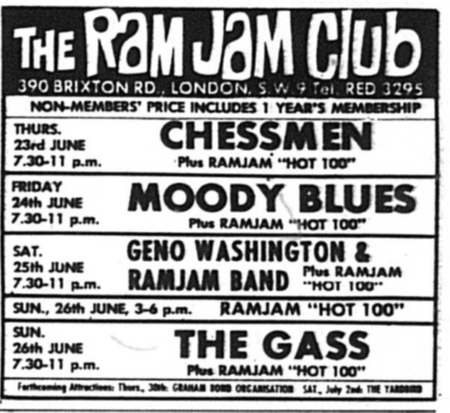
The lack of recent chart success didn’t stop Ben E King from swiftly returning to the Ram Jam in early June, “Back by demand”. If it was an imitation Ben E King playing, he must have been good.
Cliff Bennett and the Rebel Rousers had been on the London club scene for several years before they made their first appearance at the Ram Jam Club in June 1966. The band would hit the top 10 for the second (and final) time in August with their cover of the Beatles’ “Got to get you into my life”.
The Moody Blues had been suffering diminishing chart returns since their number 1 hit “Go Now”. 1966 was a particularly barren year for them, with them having no hits at all. As was often the case back in the 60s, bands would continue to tread the boards and make a living after the chart action had dried up. However, in the case of the Moody Blues, the best was yet to come. In 1967 they would reinvent themselves with the classic “Nights in White Satin” and go on to sell over 50 million records.
The June 1966 Melody Maker ran a two part interview with the Rolling Stones’ Mick Jagger. His answer to the question “Do you think the Rolling Stones will be going in ten years?” was “It’s very unlikely.” Nearly 60 years later they are still treading the boards…
July 1966
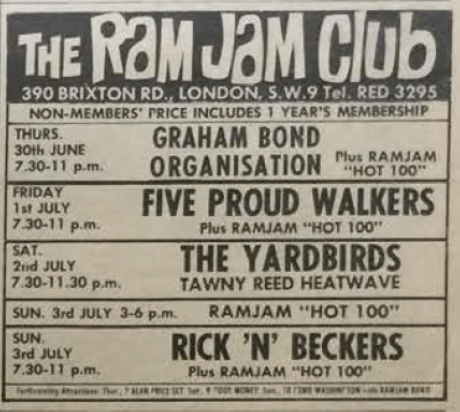
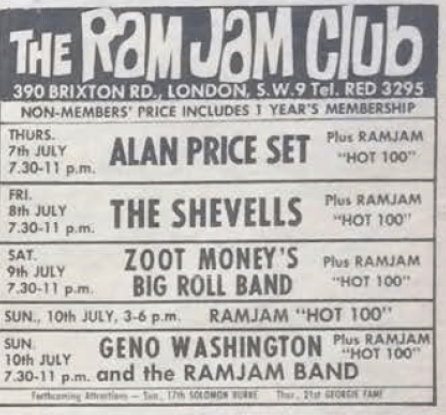

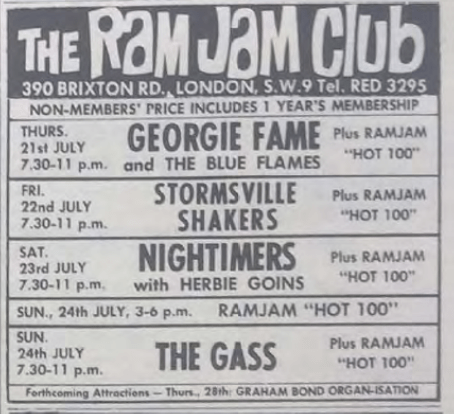
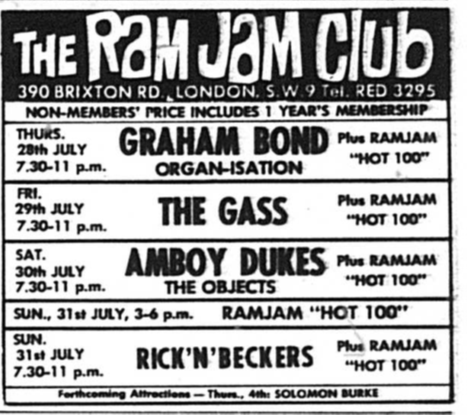
The Five Proud Walkers made the first of two appearances at the Ram Jam on 1st July. In spring of 1967 the band would have an epiphany after watching Pink Floyd and change its name to Elmer Gantry’s Velvet Opera, who were a cult psychedelic band.
July saw the first appearance at the Ram Jam club of the Yardbirds. Less than two weeks before a young Jimmy Page (soon to become famous as the guitarist in Led Zeppelin) had joined the group. The group were promoting their new single “Over Under Sideways Down”. Despite being past their commercial peak, the Yardbirds would still be deemed hip enough to represent the sound of swinging London two months later when they appeared in Antonio’s classic Film “Blow Up”.
Support on the night came from Tawny Reed and her backing group, Heatwave. Another talent who never quite made it, despite an appearance on German TV’s Beat Club programme. Her two singles are highly collectible. If you want to know what it was like for a struggling musician with no connections in 60s London, look no further than this blog for a brief history of Tawny’s life.
According to adverts from the Melody Maker at the time, The Stormsville Shakers were due to appear on the 22nd July. However, the Small Faces official website states that the Small Faces played at the Ram Jam on that date. The list of gigs on the website is very comprehensive and The Small Faces also played frequently in Streatham, so it is not inconceivable that the band did play that night.
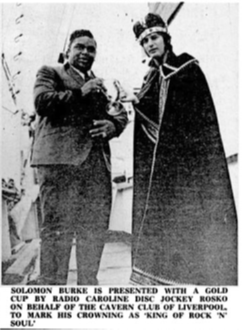
Solomon Burke was another US soul singer who graced the stage of the Ram Jam who never received the credit he was due. Described by Atlantic records boss Jerry Wexler as the greatest soul singer of all time, he never managed to repeat the success of his classic 1964 recording, “Everybody Needs Somebody to Love.”
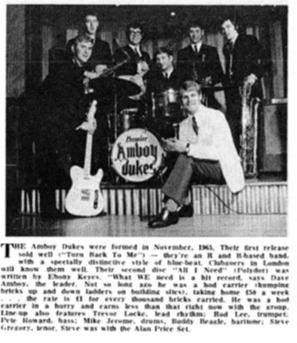
The Amboy Dukes (not to be confused with the American band of the same name) headlined the Ram Jam for the first time in July. Another act who were represented by Rik Gunnell, they played many times at the Ram Jam. They recorded six singles for Polydor between 67 and 68. Their first single “High life in Whitley Wood” is a ska song about a suburb of Reading. There can’t be many songs that fit that category! A Melody Maker review of their gig at the Saville theatre in October 67 said that they played “the only convincing white ska and High Life I have heard.” Subsequent singles, such as “Turn back to me”, were mod records.
Cult mod group Dave Anthony’s Moods made the first of what could have been several Ram Jam appearances in July. Their sound definitely fitted in with many of the groups playing there at the time. Unfortunately, the group got on the wrong side of the Gunnell brothers. Guitarist Tim Large takes up the story in his book “Dave Anthony’s Moods-This Obscure Group“:
“Christmas Eve 1966. We were double booked by the Gunnells – the Ram Jam in Brixton for the early session, then the Flamingo All-Nighter, midnight through to four of five. Nobody wanted to do this. I’m blaming Roger for the half-baked plot that ensued.
The plot was: on the way out of the Ram Jam after the set, a volunteer actor would be striken with, let’s say, appendicitis and have to be rushed off to hospital, in Bournemouth. Therefore we couldn’t do the gig….So coming down the iron steps out of the Ram Jam, John would suddenly collapse, clutching his belly. Concerned colleagues would rush to the rescue, gather him up and ease him and his agony into the van.
The acting was impeccable: but it didn’t fool Johnny Gunnell. what were we thinking of? To imagine that we could get away with dumping this massive unsolvable problem on London’s most powerful gangster-based music control organisation? I now feel quite sorry for them, committed as they were to supplying live all-night music to a heavingly full Flamingo, a crowd with high expectations and high regard for this band, and all of these people to be let down at the twelfth hour by the arrogant whim of a bunch of self important idiots-stupid is the only word that fits…I regret my connivance at this fraud: especially as it proved to be the next step towards the decay and collapse of the Moods.”
Unsurprisingly after the Christmas Eve debacle, the group never played the Ram Jam again and quickly decamped to play residencies in Italy until the band split up a few years later.
Both the Melody Maker and the New Musical Express reported that the BBC and the government were in discussions to launch a new pop music service in an attempt to rival the pirate radio stations which were dominating the airwaves. This manoeuvre would lead to the creation in 1967 of Radio 1 and the outlawing of the pirate stations.
August 1966

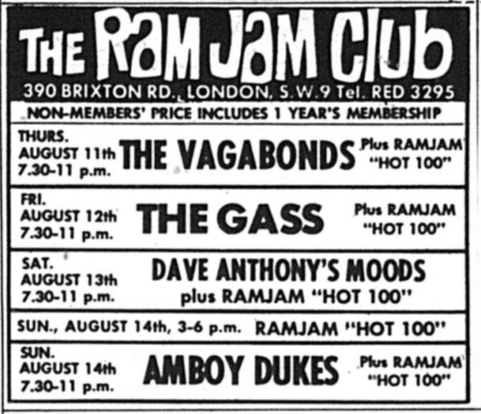
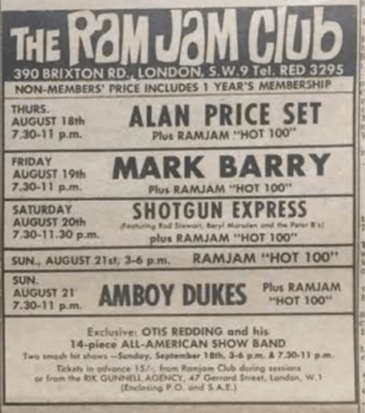
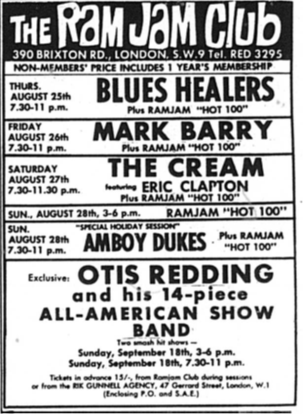
The highlight of August had to be the first performance at the Ram Jam of the supergroup Cream. Having played their first gig just a month ago they were already touring hard, playing 15 gigs in just less than three weeks. The gig at the Ram Jam would be the first of two gigs that night, before they headed up to Soho to play an all-nighter at the Flamingo Club. Cream would only last for two years, recording four albums and taking the world by storm, before internal tensions led to their break up.
Hot on the heels of winning the Melody Maker’s 1966 National Beat Contest, The Eyes of Blue first played the Ram Jam in July. The 20th August edition of the Melody Maker reported that their bookings had jumped since winning the contest. Sadly, this interest didn’t translate into national popularity. The group recorded four singles and two albums before pursuing other musical ventures in the 70s.
Mark Barry (also known as the Mark Barry Group and the Mark Barry Five) played the first of two gigs in August at the Ram Jam. Despite being fairly prolific on the London club scene they appear to have disappeared into the mists of time. The Blues Healers also headlined in August but again, although they often played on the club scene, little is known about them.
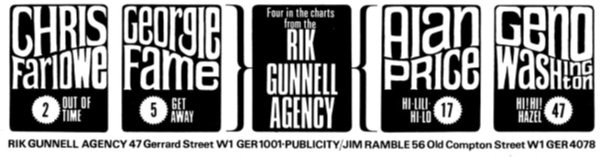
August saw plenty of chart action for Rik Gunnell’s acts, as well as an interview in Record Mirror.
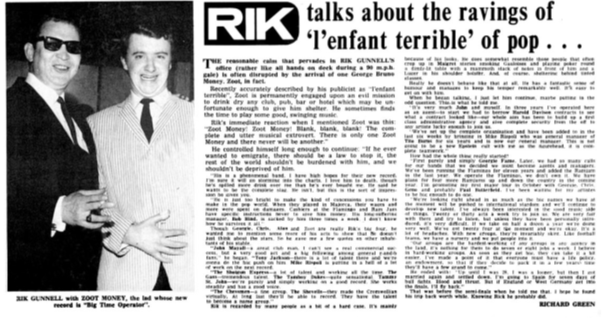
The 20th August edition of the Melody Maker reported that “A revolutionary new tape cassette, said to be the recording world’s answer to the transistor radio, is to be launched in October.” The cassettes were to retail for £2, nearly twice the price of an LP, so it’s easy to see why it would take another 15 years or so before they caught on.
September 1966
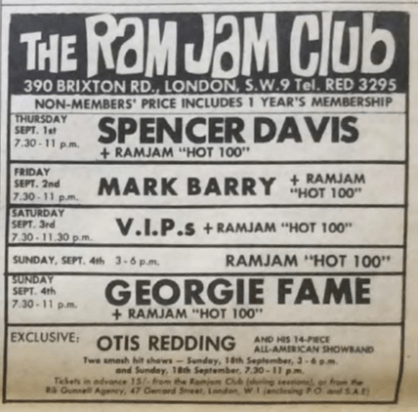
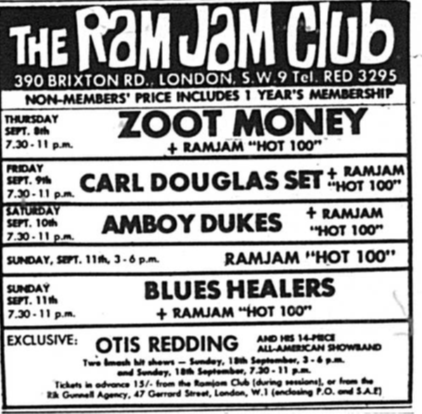
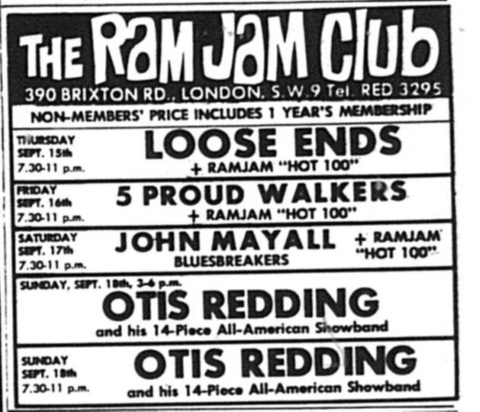
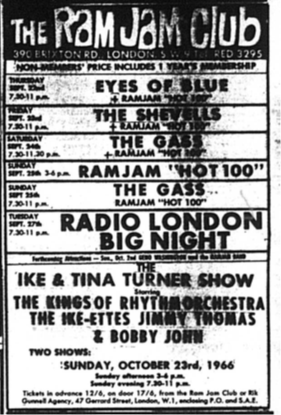
Undoubtedly the highlight of September was the appearance on 18th September of soul legend Otis Redding and his 14 piece band. Just two days before Otis and his band had played a live special for Ready Steady Go, an incendiary performance.
The gig certainly had an influence on some future stars. Peter Gabriel is quoted as saying of the gig “When he came on, it was like the sun coming out. It was just this amazing voice, totally in command, great band, great grooves and passion that permeated everything”…… “It is still my favourite gig of all time.”
Robert Wyatt described the gig as “the best non-jazz gig I ever went to. His first number was like most people’s encores”.
The V.I.P’s, veterans of the club scene made their first (and surprisingly only) appearance in September. At this stage in their career their keyboard player was Keith Emerson, who would subsequently form The Nice and prog rock behemoths Emerson, Lake and Palmer. The V.I.P’s would subsequently morph into Art and then Spooky Tooth, as times and musical tastes changed. The V.I.P’s would be the first band in the UK to jam with Jimi Hendrix later in September, just days after he had arrived in the country. Hendrix said of the V.I.P’s in the 28th January 1967 edition of the Melody Maker “What was the group I played with first when I got here? Oh yeah, the VIPs. Can we get something in about them? They’re good – really out -of -sight. The singer has soul -mustn’t use that word – he has a good feeling for what he sings.” The performance was apparently so phenomenal that Hendrix’s manager said “Kit Lambert [co-manager of The Who] knocked half the tables in the club over, getting across and wanting to do a deal with Hendrix. So we did a deal there and then, for £1,000. That was it.”
Somebody who did play plenty of times at the Ram Jam was the Carl Douglas Set. Carl Douglas is known to most people for his 1974 novelty hit “King Fu fighting” which went to number 1. This is a far cry from the soulful numbers he would have been playing in the 60s, such as “Something for nothing”.

September also saw the start of a Tuesday night residency for the “Radio London Big Night”. The pirate radio station, which was the breeding ground for many future Radio 1 djs such as John Peel and Tony Blackburn, promised “bands, discs, name guest stars & djs”. Who actually turned up on the night is not recorded. The residency only lasted until November.
The Knack (not to be confused with the 70s band of the same name) closed out September, playing one of only two shows at the Ram Jam. The lightweight pop they played was rather at odds with the more cutting edge bands normally playing at the Ram Jam. The band was predominantly based in Germany. The UK was so spoilt for choice, that it was quite common in the 60s for bands to base themselves in Europe, where they could make a better living. It wasn’t unknown for bands to have top 10 hits in Europe but be almost unheard of in the UK.
October 1966
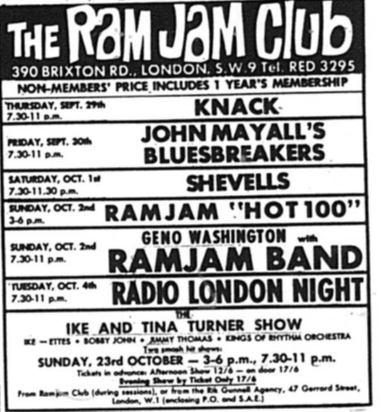
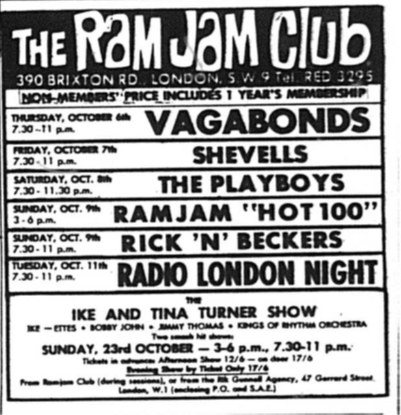


Putting on Otis Redding in September was a hard act to follow. But the Ram Jam management rose to the challenge by hosting the Ike and Tina Turner Show in October, who played a matinee and evening performance.
Having struggled for years to find a hit, Ike and Tina Tuner had finally struck gold, with “River Deep, Mountain High”, which reached No 3 in the charts in June 66. They followed this with two other hits in 66-“Tell Her I’m Not Home” and “A Love Like Yours”
A feature in the 1st October edition of the Melody Maker proclaimed “Ike and Tina show comes to town – all nineteen of them”. The Ike and Tina revue included the Ikettes and the Kings of rhythm orchestra. The group had come to the UK as support act to the Rolling Stones, playing venues such as the Royal Albert Hall and Liverpool Empire. The Melody Maker enthused. “This must be one of the most exciting acts ever to come to Britain from America…they deserve to come back here and tour as star attractions.” Judging by this TV appearance at the time, they weren’t exaggerating. The band also managed to put in an appearance on Ready Steady Go.
The Record Mirror of 15th October reported that the band was refused entry to a hotel in Bristol due to their colour.
Unbeknownst to the rest of the group this was to be Ikettes PP Arnold’s final gig with the group. During the tour she had befriended Mick Jagger and the Rolling Stones entourage, who had persuaded her to launch a solo career. Ike Turner’s abuse of Tina Turner is well documented. What is less well documented is how he abused the rest of the group, from fining band members for costume or musical errors through to raping PP Arnold.
In her book “Soul Survivor” she documents her escape from the cutches of Ike:
“My last gig with the Revue was the Ram Jam Club in Brixton. I brought all my luggage in a taxi and hid it in a storage room, making sure no one saw how much there was. I kept everything to myself except for my ex-lover Gabriel. He recognised that this was a once-in-a-lifetime opportunity. He promised not to tell a soul and wished me well.
The club was packed and it was a great gig but I found it hard to concentrate and performed on automatic. While I was on stage, the Stones roadie Ian Stewart and recording engineer Glyn Johns packed all my gear into their car…Ian and Glyn whisked me off to Epsom in Surrey.
Around 4 a.m., I received a very irate phone call from Ike. ‘Bitch is you crazy?….What the fuck do you think you’re doing leaving in this way?…..‘Mick Jagger don’t care nothing about your black ass. You are a fool!’”
Everything was going to be an anti-climax after Ike and Tina Turner, so there were plenty of workaday groups from the circuit in October, such as The Playboys, who made their Ram Jam debut.
Also making their Ram Jam debuts were Ronnie Jones and the Blue Jays and Julian Covey and the Machine.

The Melody Maker of 22nd October included a feature on “Psychedelic the new in word” and warned “make a note of that word because it’s going to be scattered round the In Clubs like punches at an Irish wedding”. Curiously the piece presents psychedelic music as an almost exclusively American phenomenon. So whilst it mentions some very underground American bands such as Love, The 13th Floor Elevators and Count Five, it fails to mention the nascent UK underground scene, which had been holding happenings since the beginning of the year, with the likes of the Pink Floyd. The sole representation of UK psychedelia is “I’ll Take You Where The Music’s Playing” by The Fingers, who faded into obscurity, not least because this record is about as un-psychedelic as you can get!
November 1966
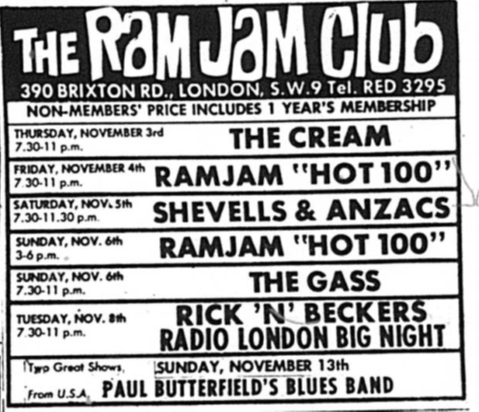

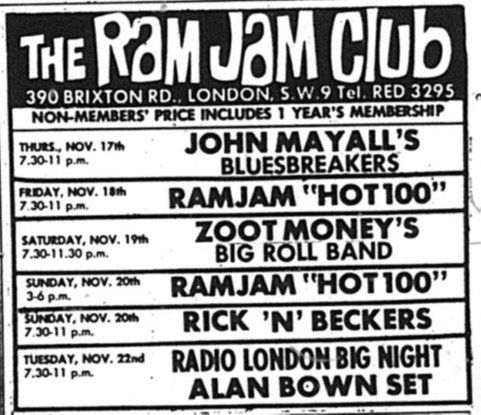

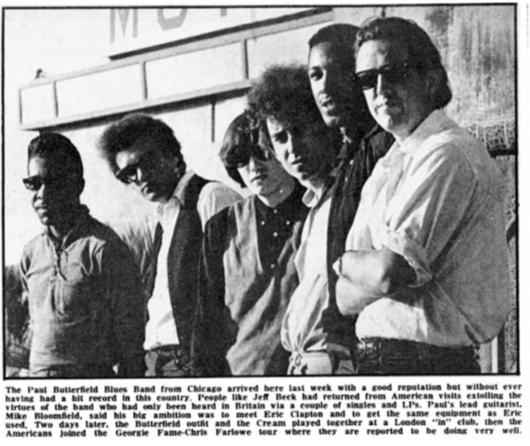
One of the foremost bands in the latest wave of blues rock, the Paul Butterfield Blues Band jetted in from the US and played two sets at the Ram Jam in November. The band were promoting their latest album “East West”. The band would go on to perform at two of the defining festivals of the decade, Monterey and Woodstock.
The Anzacs played their first and last show at the Ram Jam, after which they faded into obscurity.
Also playing their one and only gig at the Ram Jam were the Alan Bown Set. This is really surprising given how ubiquitous they were on the club scene. The band would regularly headline at the Marquee and released a live album of one of their shows there.
The 26th November edition of the Melody Maker ran a feature on the prevalence of pot smoking. This came off the back of a Music Maker article by convicted paedophile Jonathan King, who fulminated against the sexual promiscuity and use of drugs in the pop world. Fellow paedophile Jimmy Saville agreed, saying “People take drugs because it’s fashionable. It’s also foolish and quite unnecessary…..drugs and sex are a drag on the business and I’ve done without both”. If only we knew then what we know now.
Freddie Garrity of Freddie and the Dreamers said “It’s mostly London groups-they are too level-headed in the North. Up here it’s pints and birds.” None of the musicians interviewed would put their head above the parapet to admit that they smoked weed, with responses ranging from Eric Clapton’s “I really have no idea how prevalent it is” to Eric Burdon’s “I suppose a lot of creative people do use it”.
Ready Steady Go presenter Cathy McGowan may have been one of the hippest people in town but clearly she hadn’t read the memo when she appeared in this advert in Disc magazine:

December 1966
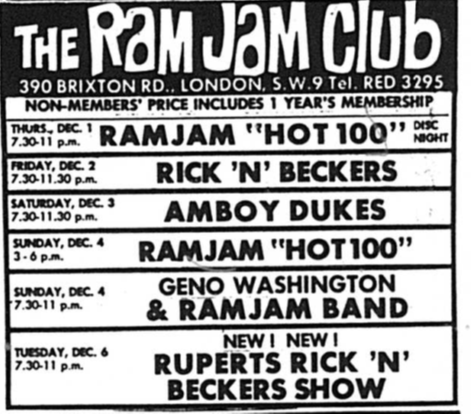
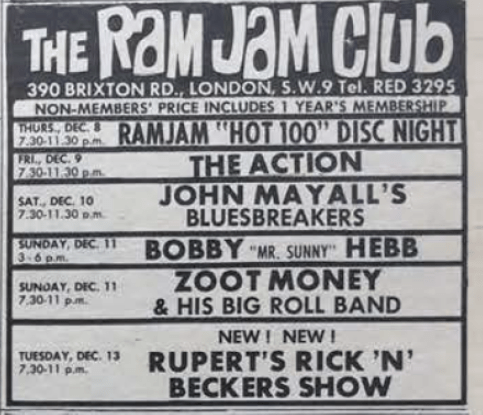
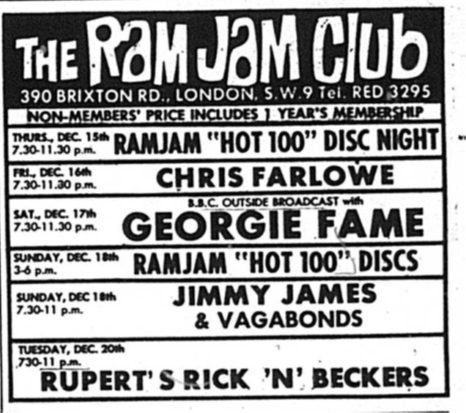
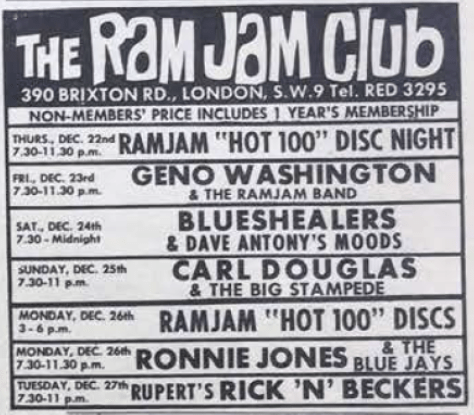
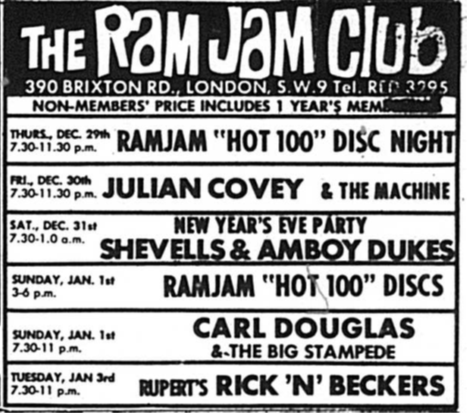
The most important gig in December wasn’t even advertised. Guitar legend Jimi Hendrix had only arrived in London on 24th September but was already making waves on the music scene. Having hastily arranged his band the Jimi Hendrix Experience, they had played some impromptu gigs in Europe and some showcases in London. However, Jimi wasn’t able to officially work in the UK until his work permit came through on the 7th December. So Hendrix appeared as an uncredited support to John Mayall’s Bluesbreakers on the 10th December. In a good example of how people’s memories play tricks on them with the passage of time, Experience bassist Noel Redding said that the group “totally freaked the regulars at the Ram Jam-an all-reggae black smokers’ club-who had no idea what to make of us”. They may have freaked them out but the Ram Jam couldn’t be described at this stage as being an all-reggae black smokers’ club.
According to David Henderson’s Hendrix biography “Scuse me while I kiss the sky”, the set included the Muddy Waters song “Catfish Blues”, the Elmore James song “Dust My Broom” and Howlin’ Wolf’s “Killing Floor”. Henderson also quotes a spectator as saying that Hendrix puncture the ceiling with his guitar neck and then used the fissure to create sound effects with his guitar. Nice story but did that really happen? Whilst Hendrix was a showman, would he have done this only two days after gaining his work permit? You would have thought his management would have made hay if it did happen, as they did when he he burned his guitar in March 1967 at the Finsbury Astoria.
A punter on the night described the scene in Record Collector magazine: “It’s early evening on Saturday 10 December 1966. My mates and I met up earlier. We’re going to see a midnight movie in Leicester Square, central London. “John Mayall’s on at the Ram Jam….We arrive somewhere after 8pm and pay at the door. The Bluesbreakers are already on when we arrive. After visiting the bar, we move across to the stage and watch….It’s the interval. We drift back to the bar and, while we order more drinks, we hear activity by the stage. An unannounced support act is setting up. We saunter back. Three guys, one black, two white. “Please welcome Jimi Hendrix”. Jimi who?”
Three days later the band would record Hey Joe for the penultimate edition of Ready Steady Go.
Bobby Hebb played the day after Hendrix, promoting his No 12 hit “Sunny”, which would go onto be a standard covered by the likes of Frank Sinatra, Stevie Wonder and Ella Fitzgerald, amongst many others.
Georgie Fame returned to the Ram Jam on the 17th December to take part in a BBC outside broadcast, broadcast at 10PM on Saturday. The BBC Light Programme titled the programme “Dancing Round Europe”. The audience were “invited to dance or listen to some -of the top orchestras in Northern Europe”. Alongside Georgie Fame and the Name Band (who had replaced his previous backing band, The Blue Flames), you could listen to Thorleif Oestereng’s big band, broadcasting live From Oslo.
The Ram Jam was even open on Christmas Day and Boxing Day, hosting gigs by Carl Douglas and Ronnie Jones.
The 24th December edition of the Melody Maker asked “Is there a colour bar in pop?” after allegations that “Tiles Club was refusing admission to Negroes. The allegation was denied in last week’s MM by the club’s co-manager, Maurice Sellers. But the club’s manager, Richie Howell agreed they operated “a controlled admission system”, He went on· “We only let in three coloured boys at a time because we know from past experience that trouble will start. By trouble I mean knife fights, handbag snatching and drug pushing. But we keep out white trouble makers too.” Not to the extent of only allowing three whites in at a time, apparently.”
1967
1967 really was the year when the world was turned upside down. All the old norms were thrown out of the window as psychedelia went overground and turned 1967 into “The summer of love”. Sex and drugs became more openly discussed and many forms of alternatives cultures began to blossom. Pop music morphed into rock music as artists explored new ways of expressing themselves. The Vietnam war was intensifying, leading to protests around the world and a new political awareness that hoped that the world could be reshaped into a peaceful alternative society.
January 1967
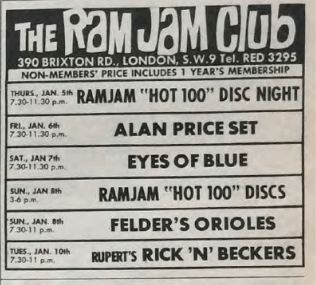
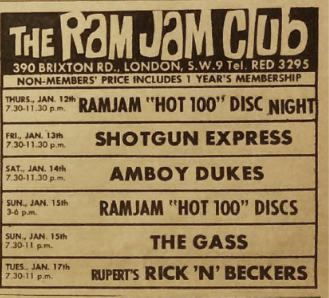
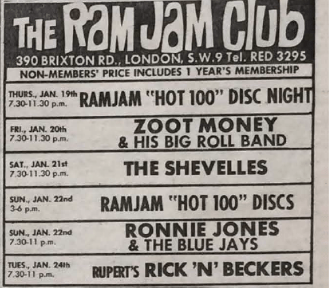

In a generally quiet month (as Januarys always are on the live scene), Felder’s Orioles played the Ram Jam for the first time. Their RnB/Mod sound, exemplified on the collectible “I Know You Don’t Love Me No More” would very soon be yesterday’s news and the group would disband a few months later.
Cream did put in an appearance in January, promoting their recently released single “I Feel Free”, which reached No 11. 1967 would be the year when Cream exploded onto the scene.
Also making their one and only Ram Jam appearance were The Fireballs-another group who played a few gigs around the London area then disappeared.
The Melody Make of 7th January 1967 devoted its front page to the “Destructive practices” harming pop. The opinion piece bemoaned the fact that access to pop music was being cut off: “After a long struggle by Britain’s young people to create a pop culture which has made millions of pounds for the Establishment, the same Establishment are busy kicking pop in the teeth.” it fumed. Ready Steady Go had recently been axed and legislation was being brought in to outlaw the pirate stations.
In order to provide an alternative to the pirate radios, the government of the day had pledged to start Radio 247, a pop station funded by the government. Subsequent editions of the Melody Maker in January hosted lively debates about what format the new Radio 247 (which subsequently became Radio 1) should take.
As if out of nowhere, suddenly psychedelia was all over the music papers. The Melody Maker reported on the New Year’s Eve “Giant Freak -Out All Night Rave”, featuring The Pink Floyd, The Who and The Move, whose stage act included smashing up TVs and a car.
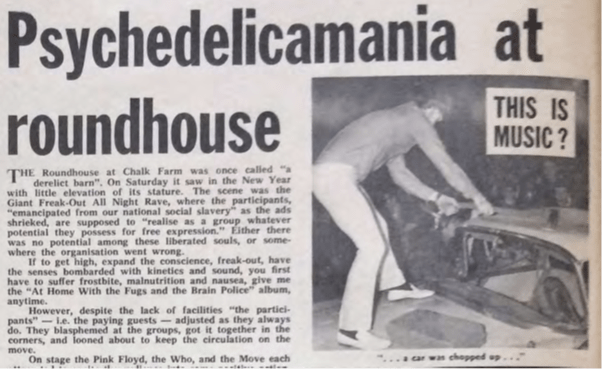
Elsewhere, suddenly the listings were full of “Freak Outs” and “Happenings” and the Melody Maker were running features on the new scene.
February 1967


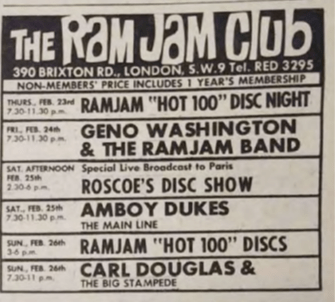
The Jimi Hendrix Experience made their formal debut at the Ram Jam on 4th February. By this time Hendrix was the talk of the town and his first single “Hey Joe” had just gone top 10.
Cult mod group “The All Night Workers” were in support that night.
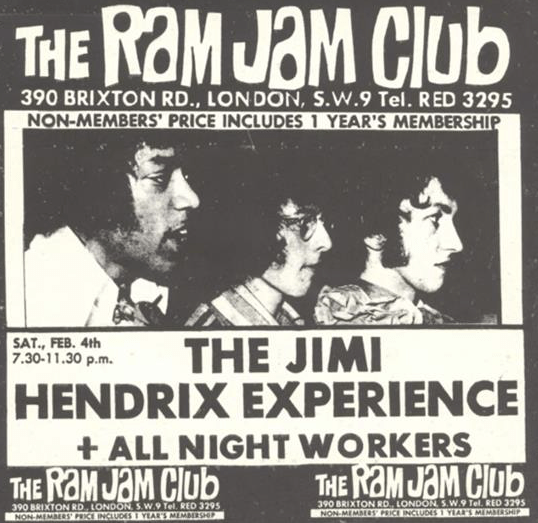
As Rik Gunnell’s booking agent explains here, Hendrix’s manager was so desperate to get some exposure for Hendrix that he agreed a very low fee for the return booking for Hendrix in February. By this time, he was of course huge, having already scored a top ten hot with Hey Joe, so the manager missed out on a big fee. “Chas. was, I recall, pretty miffed at the time, as he hadn’t asked for a ‘chart clause’ to be included in the contract (often insisted on by agents and managers if they thought that the artist had a record out that might chart by the time of a gig taking place).”
Live documentation of the Ram Jam is hard to come by. However, thanks to a fan with a tape recorder, there is a live recording of John Mayall’s Bluesbreakers at the Ram Jam in February. This is one of the classic line ups of the Bluebreakers, featuring future members of Fleetwood Mac, Peter Green, John McVie and Mick Fleetwoood.
US soul singer Maxine Brown, on her first visit to the UK, played the Ram Jam in February, backed by the Q-Set. She had a string of records to her name, dating back to 1960. Her tour had already attracted attention from the pop cognoscenti, with Jonathan King, Stevie Winwood, Chris Farlowe, Erie Burdon and the Tremeloes among others attending the opening night at the Bag O’ Nails club.

Following a chance discovery of the short lived Soul Music magazine, we discovered a review of the gig:

This discovery was important in many ways. Gig reviews of the Ram Jam are incredibly rare. Other than the reviews in Soul Music magazine we were only able to find one brief review of the Ram Jam club in the mainstream music press.
It is also an important find in that it is a very rare early example of a fanzine. The common perception is that fanzines were popularised during the punk movement in the 70s. However, Soul Music magazine, which ran for 8 months during 1968, predates the better known fanzines by several years.
Soul Music Music magazine (which was initially based in Streatham but then moved to Chislehurst) also gave an early start to the careers of writer and broadcaster Charlie Gillett, Tony Cummings and Clive Richardson.
February also included a live broadcast to Paris from the Roscoe’s Disk Show. We can only presume that this was Emperor Rosko, pirate radio and soon to be Radio 1 DJ but have nothing to back this up at present.
Mick Jagger commenced legal action for live against the News of the World at the start of February: “I am shocked that a responsible newspaper like the News Of The World can publish such a defamatory article about me. I want to make it quite clear that this picture of me is misleading and untrue, and therefore the only way left for to prevent this libel being repeated is for me to ask my lawyer to take legal action in the High Court immediately.”
The News of the World would have the last laugh as the next week Jagger and Keith Richards were arrested in an infamous drugs bust coordinated by the News of the World and the police. In a now famous editorial entitled “Who breaks a butterfly on a wheel?”, Times editor William Rees-Mogg criticised the establishment’s partisan treatment of Jagger, who was sentenced to prison rather than probation: “If a promising undergraduate had come back from a summer visit to Italy with four pep pills in his pocket would it have been thought right to ruin his career by sending him to prison for three months? Would it also have been thought necessary to display him handcuffed to the public?”
Elsewhere, Monkee mania broke out as The Monkees were mobbed by fans on their first visit to the UK, with 800 girls waiting to greet the group as London airport.
The Melody Maker of 11th February gave a one sentence obituary to producer Joe Meek, which was tucked away on page 16 amongst the gig listings.
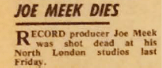
In 1967, Meek would have been regarded as very old hat and past his sell-by-date. How times change. Now he is regarded as a legend, with a blue plaque, an appreciation society and a feature film to his name.
March 1967
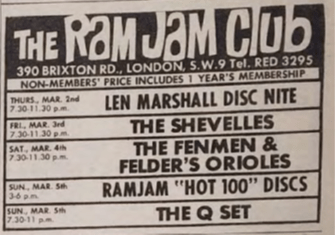
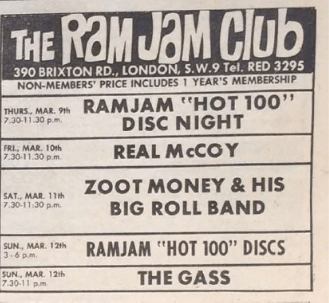
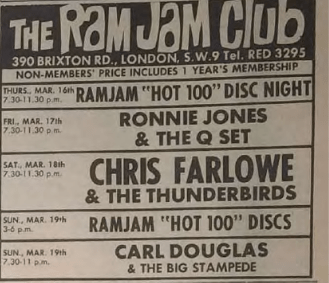

The Fenmen played their one and only gig at the Ram Jam in March. Despite scoring two hits in 1963 and 1964, in the fast-moving world of pop their Mersybeat style pop was now out of fashion. They wouldn’t manage to see out 1967, after members Wally Allen and Jon Povey jumped ship to join The Pretty Things.
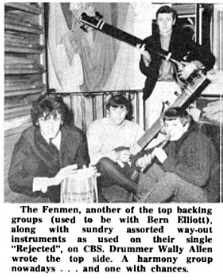
Another band making their one and only appearance was Real McCoy (not to be confused with the 70s band of the same name). They were, according to the Melody Maker confirmed cocoa addicts.
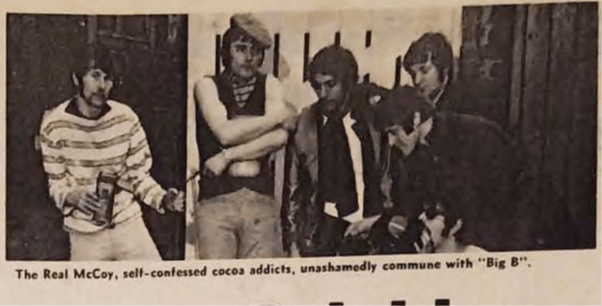
The Q-Set returned to the Ram Jam in March, firstly in their own right, then backing Ronnie Jones two weeks earlier.
March also saw the first appearance of the Len Marshall Disc Nite. He doesn’t appear to have been active on the London club scene and by May his night had been axed. The only other possible appearance we could find by him was as a DJ and compere in Hastings and Ramsgate.
Rounding off a quiet month were The Urchins, who again never played the Ram Jam again.
The music papers this month seemed to have almost saturation coverage of the Monkees, with major features on the group every week in the month.
Elsewhere, the BBC was busy banning records it deemed to be subversive, from the Pink Floyd’s “Arnold Layne”, with its story of a transvestite knicker thief, through to The Smoke’s “My Friend Jack”, whose reference to sugar lumps was deemed to be a reference to LSD.
A few letter writers this month were vexed by the establishment’s reaction to drugs. G.H.Cooper from Leicester wrote “I was at a Nottingham club recently raided by the police. I had gone to see the Drifters group at midnight and the raid was at 1.45 a.m. All 600 present were searched and had our names and addresses taken. We were released at 4a.m. We did not get our entrance fee back and we didn’t see the group. There is a serious drug problem, but raids like this will only create bad feeling between police and teenagers.”
April 1967

To insert
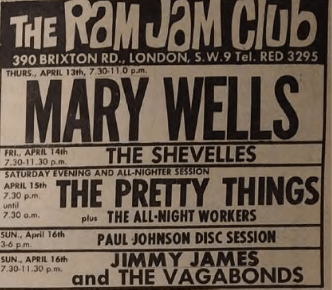
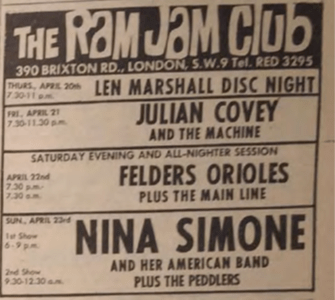
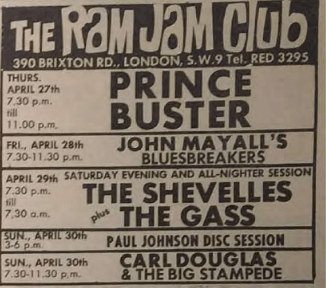
The Artwoods kick started the first all-nighter at the Ram Jam on 1st April. Stalwarts of the RnB scene, they never quite had the same impact as their contemporaries. They were promoting their new single “What shall I do”, which would be their last release before splitting up later in 67. Keyboard player Jon Lord went on to find fame and fortune in Deep Purple.
There were several highlights to choose from in April.
Nina Simone had been touring the UK with comedian and activist Dick Gregory. She played a solo show at the Ram Jam.

Nina’s shows had been receiving rave reviews.
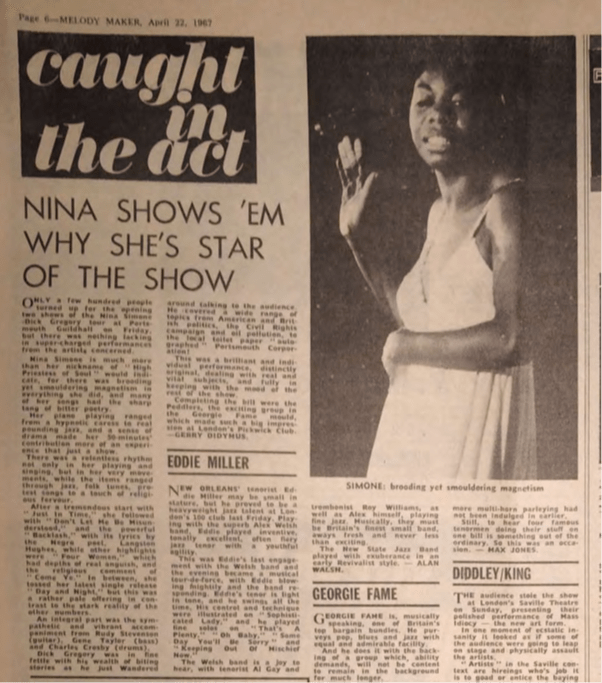
However, the Ram Jam gig didn’t go to plan. As David Nathan, president of her fan club relates, the mercurial Simone lost her temper with the audience and stormed off, angered by their constant requests for “My Baby Just Cares for me”. Fearful of a riot, the club owner tried to persuade her to go back and sing the song. “I’m not singing that piece of shit”, she exclaimed, before finally being cajoled into returning to play the song.
Singer Julie Driscoll recalled the gig in the 1st February 1969 edition of Disc and Music Echo: “The Ram Jam was odd. She really had to work hard there. I think she felt that because the audience was black they were HER people and she had to get across to them more than anyone else. The funniest thing about Nina is that often you can sense she’s around before she’s even appeared. She puts out this atmosphere
that gets almost tense before she appears. At the Ram Jam we were all sitting waiting for her and all of a sudden I just knew shed walked through the door. And when I turned round there she was.”
Support on that infamous night came from The Peddlers.
Nina Simone and Dick Gregory managed to fit in a couple of BBC TV appearances during their tour, with “Dick Gregory entertains” and “Dee Time”.
Mary Wells, best known for her classic 1964 hit “My Guy”, the first Tamla Motown hit in the UK also played that month. The hits had dried up, but judging by the size of the advert, she was still a big draw on the live scene.
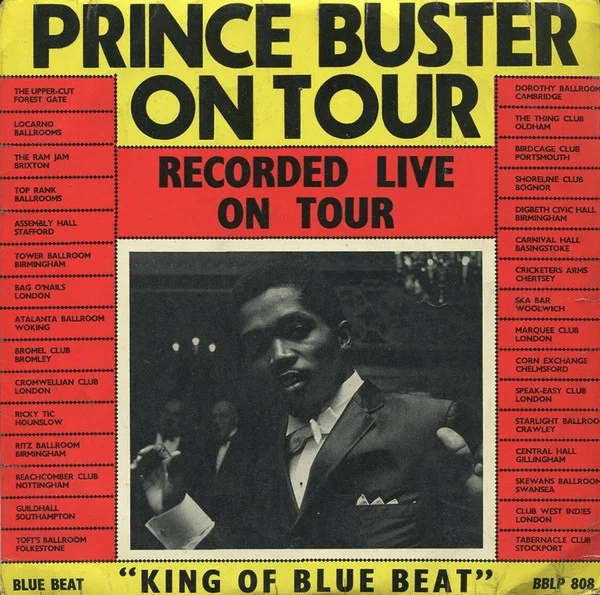
Prince Buster was the first ska act to play the Ram Jam. He must have had a good PR man as the music weeklies were full of features on him.

Unfortunately for Buster, the music press savaged the record “Ten Commandments of Man” that he was here to promote.
Melody Maker wrote “Oh what an enormous drag. In this ghastly monotone Prince “Al Capone” Buster delivers this horrible speech….Typical jogging hypnotic bluebeat backing which drones on getting nowhere slowly. Not really 1967 bop and not even funny.”
NME were equally damning “It isn’t sung, it’s spoken-like a West Indian Rex Harrison…I found it rather monotonous, apart from the basic idea of the lyric, which is well conceived.”
Neither review even made mention of the grossly misogynistic lyrics. Buster was scheduled to make TV appearances on Top of the Pops and Dee Time. However, as the record failed to chart, these were cancelled.
Whilst on tour Buster also recorded a “live” album, although it sounds suspiciously like a studio recording overdubbed with crowd noise, which was a common trick in the 60s.
The Pretty Things, contemporaries of The Rolling Stones, may have passed their commercial peak when they played the Ram Jam in April. However, despite the hits having dried up, the band had fully embraced the psychedelic age and a new influential phase was starting for them. This culminated in the release in 1968 of the first rock opera, S.F.Sorrow.
Paul Johnson’s Disc session started and also finished in April. Clearly, he wasn’t much of a hit with the crowd.
Morality was high on the agenda in the music weeklies.
Jimi Hendrix, on tour with the Walker Brothers, was told by tour organisers that his stage performance was too suggestive and was told that he had got to change his act. “No chance”, replied his manager, Chas Chandler.
A Melody Maker headline pondered “Drugs-what harm is it doing pop?”
“Groups are continuously stopped and searched en route to jobs, stripped at airports and shunned by ” respectable” citizens. I’m sick of having fingers pointed at me and whispers that I must be a drug addict because I’m in the pop business.” claimed a member of The Troggs.
The Melody Maker reprinted a letter that Manfred Mann had sent to The Times. In a sign of how fast moving the times were, matters which couldn’t be discussed a few months ago were now being discussed in the open. “The widely held view that marijuana smoking should be suppressed because it leads to more serious drug taking is totally wrong.” He went on to propose decriminalisation of marijuana and other similar drugs.
Elsewhere in the Melody Maker, Manfred Mann was asked about his attitude to homosexuality (which was still illegal): “I deplore the sniggering gossip that goes on about who’s queer and who isn’t.”
Meanwhile the Melody Maker’s Paris correspondent reported that European promoters were being put off booking British acts because of their poor behaviour. One promoter moaned about a group who “were all hopelessly drunk when they came on stage and half -way through one song the lead singer left the stage to be sick”.
“No doubt there is a rich market for British pop to be opened up in Europe – but there are many groups who are in need of a crash course in polite and professional behaviour before we talk of conquering Europe.” 29th April saw the coming out party of the psychedelic underground. The 14 Hour Technicolour Dream at the Alexandra Palace attracted the cream of the underground. The BBC Man Alive programme captured the action.
Frank Zappa and Andy Warhol and The Velvet Underground were schedule to appear but didn’t show up. Nick Jones raved about the event in the Melody Maker: “despite the haphazard organisation and the shortage of groups, one could detect a kind of spirit among the thronging, romping audience….. Didn’t the majority of the audience go up there – and it seemed well over 7,000 people attended -because they were being presented with not just an ordinary dance -rave, but also the chance of being part of something?”

May 1967
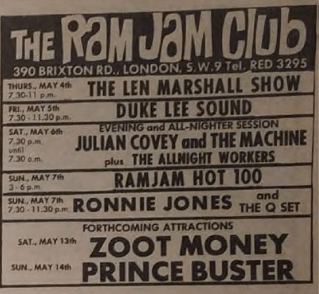
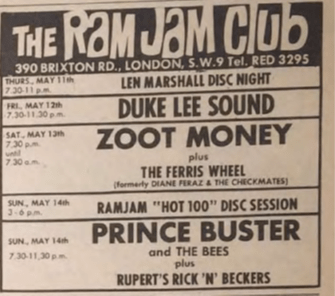
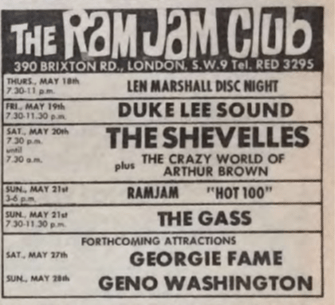

A few new support bands were added to the regulars this month.
Most prominent of these was The Crazy World of Arthur Brown, who would score a No 1 hit in 1968 with “Fire”. Given the band’s burgeoning reputation on the underground scene, it is surprising to see them billed beneath The Shevelles.
The newly formed Ferris Wheel (billed as “formerly Diane Feraz & The Checkmates”) played the first of several gigs at the Ram Jam, supporting regular Zoot Money. They have been described as “one of England’s great lost musical treasures of the mid- to late ’60s”. Judging by their 1967 single “I Can’t Break The Habit”, you can see why.
The Duke Lee Sound began the first of many appearances at the Ram Jam. His sound system had been a regular feature at the ElPartido in Lewisham since 1965.
The Hunky Chunk Band made their one and only appearance at the Ram Jam band before disappearing, whilst The Nat Cole Show (an early tribute act?) made four appearances in May and June before also disappearing.
The Melody Maker reported that The Beatles were laughing off a BBC ban on their song “A Day in the life”, the closing song on the soon to be released Sergeant Peppers album. According to the BBC it contained drug references. Bizarrely the Beeb didn’t find anything wrong with one of the album’s other tracks “I get high with a little help from my friends”.
The Melody Maker posed the question “Four years ago, the MM asked: Is the Black and White Minstrel Show superb entertainment or rank bad taste?” Last week, the rest of the world caught up with the Melody Maker. Two hundred coloured people from the London area signed a petition asking the BBC to take the show off because it is offensive.”
The Melody Maker asked the stars of the day their opinions, which provide an interesting insight into how times have changed:
JOHN LENNON: “No, don’t ban It. That’s another form of prejudice. If anybody digs the stupid show, let him dig it. If it were banned, people who don’t watch it would unite demanding to see it.”
ALAN BLAKLEY (TREMELOES):”I think the people who complained are very silly. Coloured people are always asking to be accepted but I think that objecting to the Black And White Minstrels would turn people against them.”
JEFF BECK: “Many people love it but it seemed like a stupid show to me. I’ve only seen It once-three years ago. If I was coloured I think I would be very annoyed about it”
CHRIS FARLOWE: “If a TV show can’t have people with black paint mixing with white faced artists in a studio, how can we expect coloured and white people to mix in everyday life? I think the petition is a bit stupid.”
The BBC refused to pull the show, which was incredibly popular, drawing audiences of 16 million. Apparently, the BBC gauged public opinion to the petition by reading the letters page of the Daily Mail!
Elsewhere, the UK parliament voted by 488 to 62 to apply to join the European Economic Community. 50 years later the decision to leave Europe wouldn’t be quite so harmonious!
June 1967

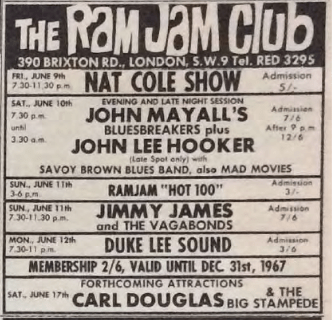
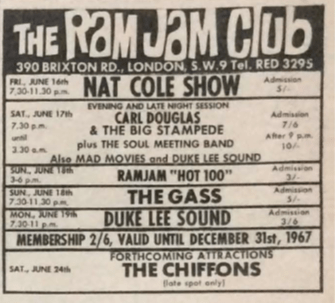
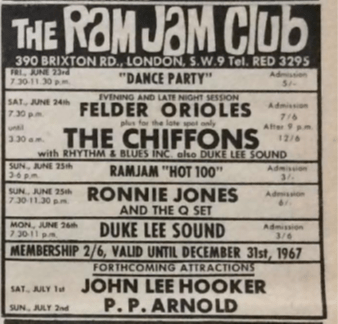
Blues legend John Lee Hooker played an all-nighter on the 10th June as joint headliner with John Mayall’s Bluesbreakers. He had already proved to be an inspiration to the original UK blues boom in the early 60s, inspiring the like of the Rolling Stones. On the back of this, he even managed to break into the charts in 1964 with “Dimples”. Now, three years later, he was providing inspiration to a new generation of blues rock artists. On the back of this revival in his career, he had secured his first chart album success earlier in 1967, when “House of the blues” went into the top 40.
His backing band for the night were Savoy Brown. According to this diary entry, Hooker turned up to the Ram Jam whilst Savoy Brown were rehearsing the set and walked out of the clubs with the words “I don’t rehearse”.
The all-nighter saw the first introduction of “Mad Movies”, which became a feature of the Ram Jam going forward.
Friday night also became “Party Night” at the Ram Jam, with guest groups and late night movies promised.
The Chiffons made their one and only appearance at the Ram Jam. Returning from a German tour, the group made a whistle stop tour of the UK, which included a prestigious slot supporting Jimi Hendrix at the Saville Theatre. The NME gave them a one sentence review “The Chiffons, on their first British tour, were polished and good but seemed dated.”
Best known for their No 16 hit from 1963 “He’s so fine”, the group had continued to release records, with limited success, despite producing some really quality records. Check out their 1967 release “Keep the boy happy”.
The 24th June edition of the Melody Maker gave a rave review of their gig at the North London club Klooks Kleek, expressing happiness that for once a visiting group had a decent backing group, Pete Kelly’s Rhythm & Blues Inc.
Lucas and The Mike Cotton Sound played for the first and last time at the Ram Jam, promoting their new single “Step out of line”.
You couldn’t escape flower power in the music press, as the Summer of Love reached its peak. Procul Harum hit the No 1 spot with “Whiter shade of pale” and the Beatles “Sergeant Peppers Lonely Hearts Club Band” garnered rave reviews.
Prominent features were also devoted to the first London psychedelic club UFO and the Monterey International Pop Festival in the US.
July 1967

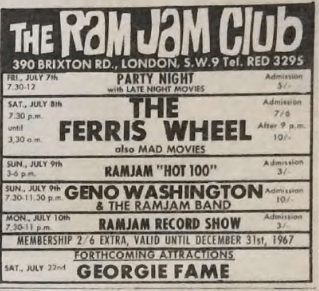
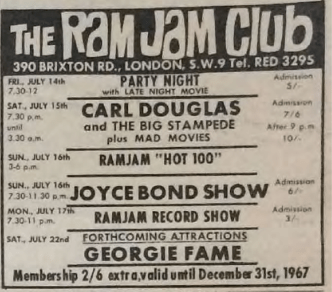

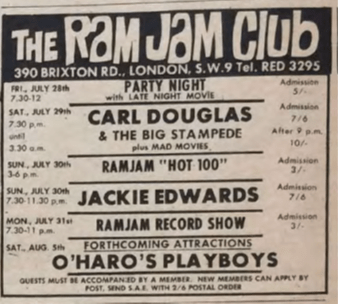
Less than a year after escaping the clutches of Ike Turner, P.P.Arnold had just scored her first top 20 hit with the classic “The first cut is the deepest” when she headlined the Ram Jam in her own right. In a revealing interview in the 3rd June 1967 NME she said that she had got married at the age of 16 and was currently separated from her two kids, who she was hoping to bring over to the UK. Asked about Ike and Tina Turner her response was” I don’t have any comment…except that Tina is a very lovely girl and I feel sorry for her.” With the benefit of hindsight we can see what she was getting at.
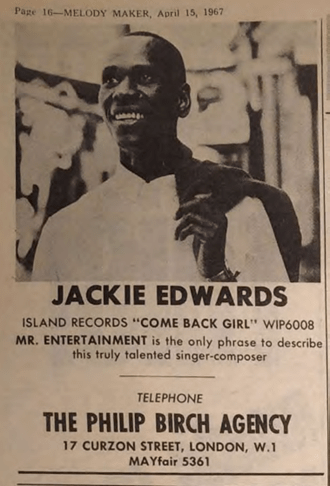
Jackie Edwards made his first appearance at the Ram Jam at the end of July. His songs would already be familiar to the Ram Jam crowd as he wrote the original versions of “Keep on running” and “Somebody help me”, which were huge hits for the Spencer Davis group. Edwards was incredibly prolific and would go on to play several times at the Ram Jam.
The Joyce Bond Show made its first appearance in July. Joyce and her band were very busy on the club scene. The same week as playing the Ram Jam they also played gigs in Hertfordshire, Kettering, Cheltenham and London as well as setting aside time to record a new single and album tracks.

The Coloured Raisins also made their debut in July. They were omnipresent on the club scene.
The 15th July edition of the Melody Maker intriguingly notes that Geno Washington and the Ram Jam band were to be filmed for a documentary on the 19th July at the Ram Jam club. It is not known what happened to the film.
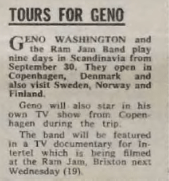
The 26th November edition of Disc magazine also noted that the band were featured in a 15 minute colour film for cinema distribution early in 1968. Lest it be forgotten, TV programmes were still in black and white in 1967, with the first colour broadcast only happening in July 67.
The Melody Maker of 1st July tested the opinions of 100 of its readers about their attitudes to LSD after Paul McCartney had admitted that he had taken it. 57% of readers thought he was wrong to admit taking it against 37% who thought he was right. 18% thought that LSD should be legal and only 7% knew someone who had taken it.
August 1967

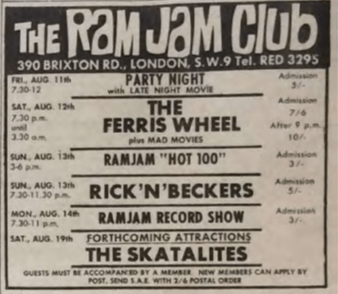

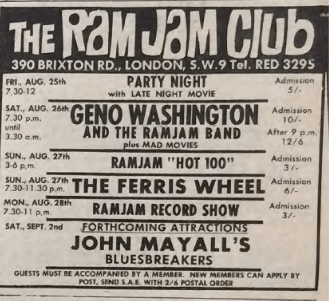
A version of the legendary Skatalites made their appearance at the Ram Jam in August. The original line up of the band had disbanded in 1965. However, a new line up was now touring the UK off the back of “Guns of Navarone” becoming a top 40 hit in April 1967. Lloyd Bradley, in his excellent history of reggae “Bass Culture”, notes that clubs like the Ram Jam were rarities in that the live music scene catered for an almost exclusively white audience. He goes on to say that when the Skatalites played the Porchester Hall in 1967, the crowd was barely into double figures. This was despite the gig being well promoted and the Porchester Hall being on the fringes of Notting Hill Gate and Ladbroke Grove, which both had sizable black populations.
The Shellshock Show made their one and only appearance at the Ram Jam before fading into obscurity.
Beatles manager Brian Epstein admitted in the 5th August edition of the Melody Maker that he had taken LSD as well as smoked marijuana. He went public in order to back up Paul McCartney after he revealed that he had taken LSD and also to provide solidarity to the Rolling Stones after their drug bust earlier in the year. In a wide ranging interview split over three issues, he was continually probed as to why he hadn’t got married. Despite the fact that homosexuality had been decriminalised the month before, he felt unable to reveal that he was gay. The saddest revelation of all was his reply when asked what he feared the most: “Loneliness. I hope I’ll never be lonely.” Just three weeks later he would commit suicide.
Pirate station Radio London closed down the day before pirate stations were made illegal, although the other main pirate station, Radio Caroline, vowed to carry on broadcasting.
1,000 people attended the funeral of jazz giant John Coltrane, with the list of attendees reading like a who’s who of jazz. Music for the event was specially composed by Ornette Coleman and Albert Ayler.
September 1967

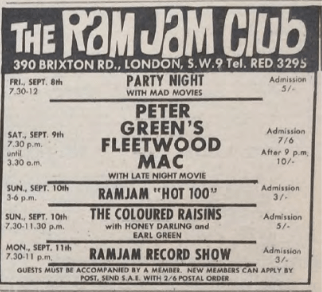
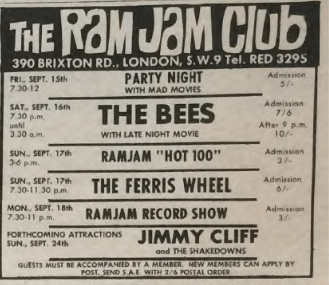
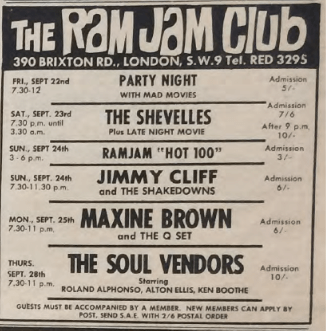
Peter Green’s Fleetwood Mac made their one and only appearance at the Ram Jam in September. There was already a big buzz around the group as Peter Green had been lauded as the guitar virtuoso in John Mayall’s Bluesbreakers. The band had only made their debut one month earlier at the Windsor Jazz and Blues Festival. The band’s ascent would be rapid, as would be the fall out. Within just over a year, the band would score three top 40 singles (including No 1 “Albatross”) and two top ten albums. Whilst Fleetwood Mac would go onto international stardom, Peter Green’s struggles with mental health have been well documented. Guitarist Danny Kirwan, who was born in Brixton and lived there for many years, similarly had a tragic life after he left the band.
Prince Buster’s backing band The Bees made their headlining debut at the Ram Jam. You can read more about their evolution as a band here. The band were promoting their new single “Jesse James rides again”.
Jimmy Cliff also made his Ram Jam debut in September. Jimmy Cliff had been living in the UK since 1964 and gigging regularly. It would be a few years before he would attain international stardom with the film “The Harder they come”, which would put reggae on the world stage for the first time.
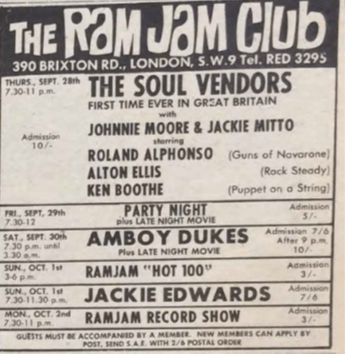
Famous Studio One backing band The Soul Vendors, which comprised several members of the original Skatalites, toured the UK for the first time in September 1967, adding the Ram Jam club onto their original itinerary.

The Record Mirror of 1st December 67, which devoted a feature to the group, reported “Perhaps the most successful performance on the tour was at the Ram Jam Club – where hundreds of fans crowded the floor to listen for the first time – to ‘live’ Rock – Steady’ from the actual recording artistes themselves. Such tunes as ‘Ain’t That Loving You’; ‘Ram Jam’; ‘Puppet on a String’; ‘Feel Good’; ‘Phoenix City’; were given tremendous receptions on recognition by two packed houses.”
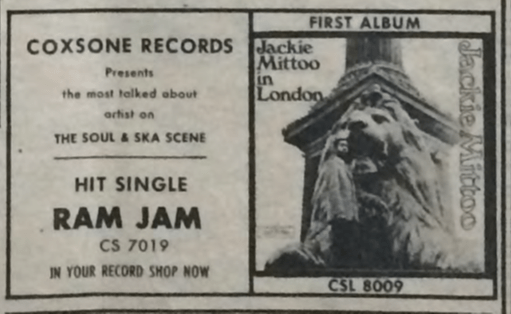
The club would inspire keyboard player Jackie Mittoo to write “Ram Jam” in its honour.
The September editions of the music press were very much dominated by the Beatles: the fall out from Brian Epstein’s death, the Beatles’ meeting with the Maharishi and the filming of the Magical Mystery Tour.
It has to be said that the music press was very much focussed on psychedelia by this time, much to the distress of some of its readers. In a sign that outrage didn’t begin in the social media age, a reader from Cheltenham wrote in the 30th September edition of the Melody Maker: “All I seem to see in your paper today is Psychedelic, Flower Power and Hippies-what a load of tripe! Having seen Arthur Brown, Soft Machine and Pink Floyd, I’m shocked that anyone should like such acts. As far as audience participation goes, it is dead compared with the real ravers and real hippies-the fans of Geno Washington, Alan Bown, Jimmy James, Herbie Goins and, of course, that fantastic Stax show. Yet they get no publicity. Instead we get pictures of painted morons who are just using the poor brainwashed English teenagers.”
October 1967
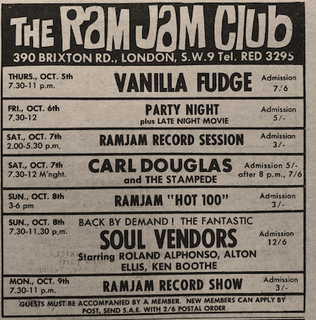


The Vanilla Fudge played the Ram Jam in October. They had originally intended to play as a support act to Traffic as part of a UK tour. However, they quit that tour on the first day, complaining that they had to borrow equipment and were then only able to play two songs. The band were touring to promote their rock version of the Supremes “You keep me hanging on”, which reached No 18 in the charts.
Horatio Soul and the Square Deals played their first gig at the Ram Jam in October. Horatio would return for a second and final show with The Square Deals, who had renamed themselves The Jokers, in March.
Blues giant Freddie King was making his first tour of the UK, backed by the British blues band Chicken Shack. So impressed was Freddy when he first heard the band rehearsing at the Ram Jam that he said “Man we don’t need no rehearsal”. Equally impressed was the Melody Maker’s Chris Welch, who wrote of their gig at the Saville Theatre “a surprise appearance of blues giant Freddie King who worked beautifully with the Chicken Shack and broke applause records.”
Joey Young and the Tonics played at the Ram Jam for the first time. It is surprising it took this long for them to play there given how busy they were on the London club scene.

Junior Walker and the Allstars played the Ram Jam on 23rd October as part of a UK tour. The performance was filmed for French pop programme Bouton Rouge.
With the band drenched in sweat, the performance looks electrifying. The band’s gig at the Saville Theatre the previous week garnered a rave review from the Melody Maker’s Chris Welch:
“Last Sunday saw Jr Walker and the All Stars blowing up a proverbial storm, bringing the audience to their feet for an orgy of cheering and clapping. A frantic climax with “Shot Gun” proved there is power in old Tamla’s bones yet to thrill and excite for the most jaded palates. As Junior pretended to stop his band from playing while the fans chanted for more, the house was in happy uproar”. Compere at the Saville that night was Peter Stringfellow.
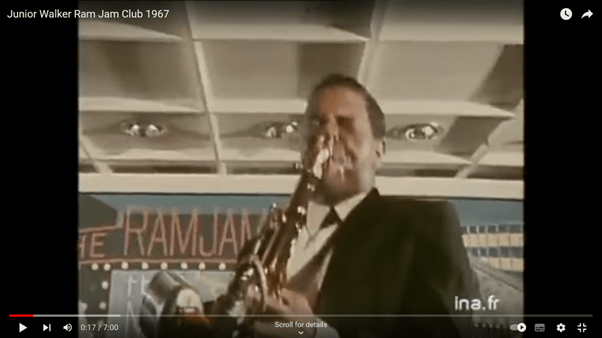
This black and white footage from the same gig gives a better view of the stage:
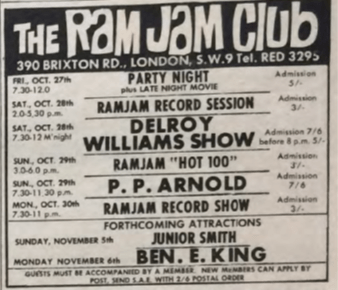
Delroy Williams played the Ram Jam for the first time in October. A Brixton local, he was responsible for putting on the first free festival in Brockwell Park in 1966.
The front page of the 7th October edition of the Melody Maker reported on a complaint that had been submitted to the Press Council, alleging that the paper had encouraged drug use:
“Mr A. M. Harris, 37(c) Willesden High Road, London, NWIO, complained to the MELODY MAKER that if he did not interpret the article as an open and explicit encouragement to drug -taking, then the English language had been completely debased beyond all understanding.”
In what would be unthinkable these days, newspapers used to publish people’s home addresses, including in the Lonely Hearts columns. The Press Council rejected Mr Harris’ complaint.
October saw the introduction for the first time of a drink drive limit and breathalyser tests. Musicians weren’t happy. “It’s terrible. The only thing to do is to take it in turns to lay off the drink”, complained jazz musician Alex Welsh.
The Melody Maker reported on the launch of Radio 1, the first BBC radio station dedicated to pop music. In a poll of 100 readers, 54% approved, whilst 35% disapproved, with 11% still undecided. Listeners were still unconvinced as to whether Radio 1 was better than the pirate stations it was replacing.
In a nod to the blues and folk revival in the UK, the Melody Maker of 14th October devoted a half page obituary to influential folk singer Woody Guthrie and a festival at the Hammersmith Odeon, featuring the last of the original bluesmen: Sonny Terry, Brownie McGhee, Son House, Bukka White, Skip James, Little Walter, Hound Dog Taylor, Odie Payne, Koko Taylor and Dillard Crume.
“Who killed flower power?” pondered the Melody Maker of 28th October, as the UFO club closed down. After a meteoric rise, psychedelia seemed to be waning: “This instant commercialisation of flower power quickly surrounded the truth in a heavy fog. Instead of the ideals and messages getting across, the general public just took what they wanted.”
November 1967
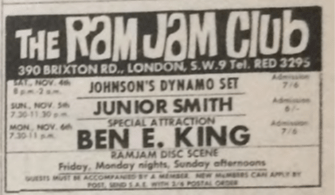

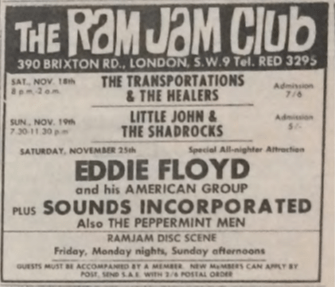

Highlight of November was soul legend Eddie Floyd, who had no less than three hit singles and an album in 1967, the most famous of which was “Knock on Wood”. He would also play the Upper Cut club in Forest Gate on the same night as playing the Ram Jam. His backing band for the night was Sounds Incorporated, who complemented his usual drummer and bass player. The support band was The Peppermint Men, erstwhile backing band of Rey Anton, the singing window cleaner!
Johnson’s Dynamo Set, Junior Smith and the Sound Casters, the Transportations and the Healers all played their first and last gigs at the Ram Jam in November, before fading from the pages of history.
Little John and the Shadrocks also played one of only two gigs at the Ram Jam. They did at least leave a vinyl legacy both as a solo act and as collaborators.
The Rolling Stones vowed to carry on despite guitarist Brian Jones being sentenced to a nine month prison sentence for possession of drugs. The sentence was subsequently overturned.
Bee Gee Robin Gibb, whose song Massachusetts was No 1 in the charts, was one of 78 people injured in a train crash at Hither Green. The accident claimed the lives of 49 people.
The 25th November edition of the Melody Maker reported on the latest sounds from the US. What would subsequently be the most revered of the lot, The Velvet Underground, received just a one sentence mention.
The Melody Maker also forecasted the end of mono albums as stereo sounds started to take over. In 1967 mono was still the predominant format and it would not be uncommon for engineers to put more attention into the mono mix than the still niche market of stereo.
Promoters also began to fret that the devaluation of the pound meant that fewer overseas acts would be visiting Britain.
December 1967
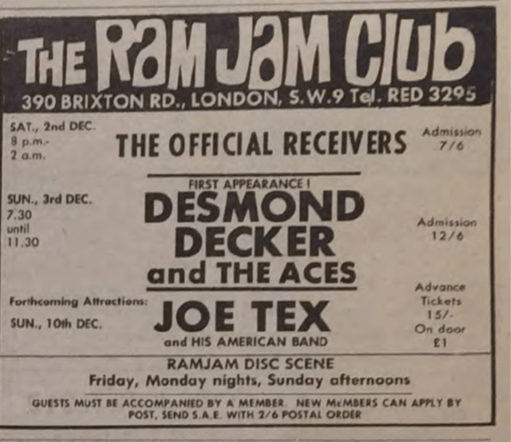
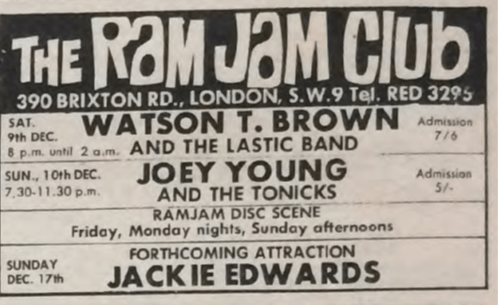
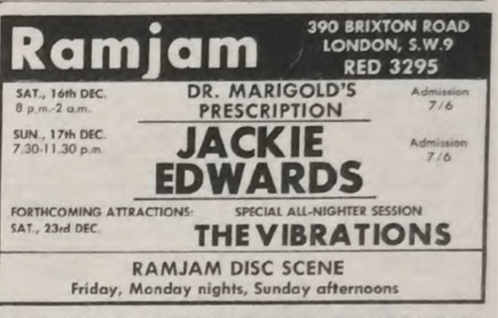


After a quiet November, the quality of acts picked up again in December.
Desmond Dekker and the Aces played their first gig at the Ram Jam in December. Earlier in the year he had scored a No 14 hit with “007” and would go on to score the first reggae No 1 with “Israelites” in 1969. Dekker’s appearance at the Ram Jam was part of a two month tour to promote his new single “Sabotage”.
Soul singer Joe Tex is not a name known to non-aficionados. He had been releasing records for more than 10 years before playing the Ram Jam, with no chart success in the UK. He did however manage to break into the charts in the US, with songs such as “Hold on to what you got” and “Show me”. When reporting on Joe Tex’s tour of the UK, The Melody Maker at the time said that he was also due to play on 30th November as well at the Ram Jam, although this isn’t shown on any of the Ram Jam adverts. He played some prestigious gigs whilst here, including the Saville Theatre and the Royal Albert Hall.

Joe Tex wouldn’t see any chart action in the UK until 1977, when he scored a No 2 hit with the very un-pc disco hit “Ain’t gonna bump no more (with no big fat woman)”. Perhaps his greatest influence can be shown in the number of acts that sampled him.
Dr Marigold’s Prescription were regulars on the club scene. They played just one gig at the Ram Jam, of which keyboard player Alan French said rather cryptically “well we just about got away with that one owing to having a female singer”.
The Official Receivers and The Kingston By-Pass battled it out for the title of “bad name for a band” award. Not surprisingly they both played their one and only gig at the Ram Jam. They do not appear to have been active on the London club scene. The only references we could find to them were a few gigs in the Bournemouth area.
Watson T.Brown (sic) would also play his one and only gig at the Ram Jam. He left a recorded legacy that started in 1968 with the likes of “Some Lovin”, produced by Eddie Grant.
The year was rounded off with the first appearance of the Duke Reid sound system (not to be confused with the Jamaican producer and Treasure Isle boss of the same name), who like Duke Lee also played at The El Partido in Lewisham.
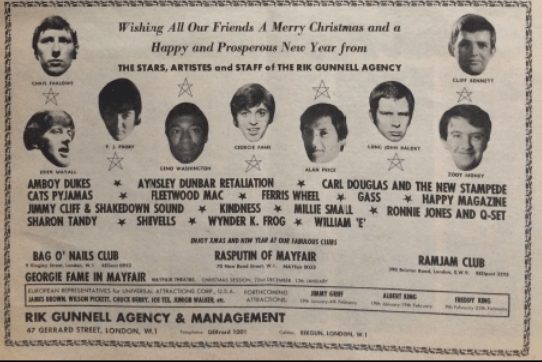
The Pyramids (who previously played the Ram Jam as the Bees) finished off the year with a New Year’s Eve party at the Ram Jam, promoting their current single “Train Tour To Rainbow City”, which reached No 35 in the charts.
The band would subsequently morph yet again into skinhead favourites Symarip.
The Melody Maker of 16th December devoted several pages to the tragic death of Otis Redding, killed in a plane crash: “Redding topped the Melody Maker Pop Poll this year as the world’s number one male vocalist. He was the man who introduced soul music to Britain, a singers’ singer whose fans included many of Britain’s top performers.”
The Melody Maker also reported that the influential Upper Cut Club in Forest Gate had closed after just one year. This came on the back of Tiles nightclub in the West End closing down a few months before. The 23rd December edition fumed “ANOTHER major British city has declared war on pop and closed down a top beat dub. Following Sheffield’s closure of the famous Mojo Club, Leicester has closed down the Nite Owl Club, frequented by teenaged pop fans from all over the country. Manager George Parker told the MM “The police have closed my doors and refused me a licence. The reason given is that it is not a fit place for teenagers, hut we have never had any trouble inside the club and we have never had to call the police. We were the only club in Leicester and we would get 800 to 900 fans in for the all-nighter sessions, from as far away as Southend. I have appealed to the magistrates and the fans are sending protests to Leicester’s People’s Protection Committee.”
1968
It’s often said that the change between 1967 and 1968 can be exemplified by the songs of the Rolling Stones. In 1967 they sang “We love you”. By 1968, the love had turned into anger as they released “Street fighting man”.
The dreams of the summer of love had died and anger took its place. Protests broke out around the world, particularly against the Vietnam war. Civil rights activist Martin Luther King Jr was assassinated. Enoch Powell made his infamous “rivers of blood speech”, which inflamed racial tensions. His speech was weaponised during the local elections in Brixton, which led to the Tory party being elected to lead Lambeth council in a landslide victory. Some Tory councillors even went so far as to demand that “immigrants” be banned from living in Lambeth.
January 1968

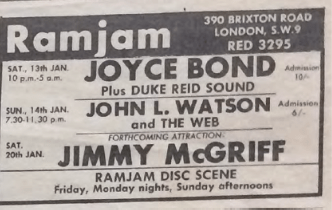
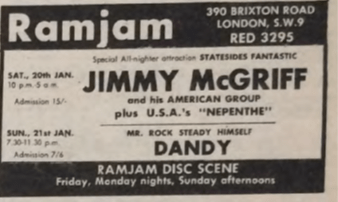
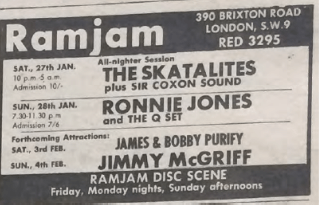
Owen Gray had relocated from Jamaica to the UK in 1962. He was a true pioneer. A prolific artist, he spanned the transition from RnB in the 50s, through to ska, rocksteady and reggae.
Alongside Owen Gray were Youth and Rudy, who had been playing the London club scene throughout 1967.
Organ supremo Jimmy McGriff played the first of two dates in January as part of his first ever UK tour. The tour received a rave review from the Melody Maker. This French TV footage from the time gives a feel of the live experience.
Support on the night came from Nepenthe, styled in one advert as “America’s glamorous coloured star” and the “lovely, beautiful, voluptuous”. Although she seems to have played quite a few gigs in 67 and 68, little else is known about her. She would go on to headline the Ram Jam in February with The New Nadir in support.
Dandy Livingstone, whose records at the time were made under the name of just Dandy, made the first of two appearances at the Ram Jam in January. Advertised as “Mr Rock Steady Himself”, Dandy was promoting his recently released album “Mr Rock Steady”. The album was savaged in the 23rd December edition of the Melody Maker: “Ska can be very exciting but rock steady, the slower equivalent tends to become very boring especially when all the tracks sound the same. You feel like shouting “Wake up”, at the band as they drift aimlessly through “People Do Rock Steady,” and “Keep Them Fretting.” Come on lads, you can do better than this.”
Later in 68 Dandy would release the classic “Rudy a message to you”. It wasn’t a hit at the time but in 1979 The Specials would make it into a top ten hit with their version. Dandy wouldn’t have a hit until 1972, when “Suzanne beware of the devil” got to No 14.

The Skatalites returned to the Ram Jam in January. In support was Sir Coxson Sound. Lloydie Coxsone has been a cornerstone of soundsystem culture to this day.
John L.Watson and his group The Web played their one and only gig at the Ram Jam in January. The lightweight pop of their 1968 single “Baby won’t you leave me alone” was very much at odds with the Ram Jam vibe.
The Melody maker’s Chris Welch looked rather gloomily at the scene to forecast who might make it big in 1968. “Looking into my crystal ball all I can see is mud”, he said. Those bands who he did predict big things for mostly faded into obscurity. Anybody remember Aire Apparent, Pregnant Insomnia, The Plastic Penny, Lee Harmer’s Popcorn or Wages of Sin?
January 1968 saw the unveiling of the “I’m backing Britain campaign”, which was launched by five secretaries who offered to work an extra half an hour a day for free in order to boost productivity and encouraged others to do likewise. The Melody Maker responded in rather flippant fashion: “If Britain is going to the dogs, it is obvious a large section of the (older) community are convinced sinful pop stars are the prime movers in sending us all to yelping perdition”.
The Supremes visited Britain for a brief tour and TV appearance. For all the new found freedoms of the age, some habits hadn’t died. The Melody Maker headline screamed “With their looks, the Supremes don’t even have to sing”. A review of their concert said “Personally, I’d applaud if Diana Ross, Mary Wilson and new girl Cindy Birdsong just stood there for an hour. And it seems almost unfair that they sound as good as they look.”
February 1968

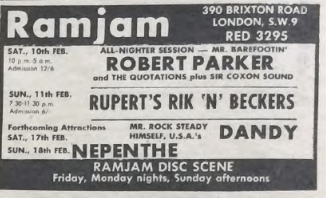
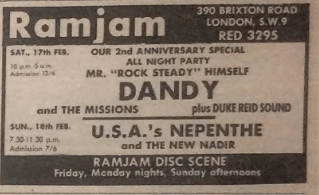
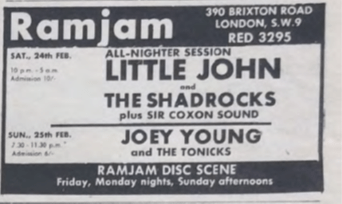
US soul stars James and Bobby Purify played the Ram Jam as part of their UK tour. Much better known in the US, where their 1966 song “I’m your puppet” had been a hit, the duo didn’t have any hits in the UK until 1976, when a re-recorded “I’m your puppet” reached No 12 in the charts. The song has been covered extensively, including versions by Elton John and Cliff Richard.
The pair were promoting their latest single “Do unto me”, which the Melody Maker described as “a carefree shout of joy that might help drown sorrow and make one forget the boredom and hollowness of life, if only for two minutes twenty three seconds”. The pair also managed a TV appearance on the newly launched Southern TV programme “New Releases”, hosted by Radio 1 DJ Tony Blackburn.
Robert Parker had scored a No 24 hit in August 66 with “Barefootin’ ”. According to the Record Mirror of 24th September, he was due to play the Ram Jam on 12th October 66. For some reason this gig didn’t materialise. Instead, he made his Ram Jam debut in February 68, backed by The Quotations.
March 1968

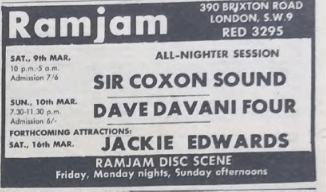


The Fantastics played for the first time in March, followed by a final appearance in April.
Dave Davani and his group had been treading the boards for a few years (often as a backing band for visiting singers) before making their one and only appearance at the Ram Jam. The band are best known for their 1965 record of the “Top of the Pops theme”.
The Chico Bailey Show with the Night Hawks as backing band had only started gigging in early 68, before making their one and only appearance at the Ram Jam.
As Bill Hailey and the Comets started a tour of the UK, the Melody Maker wrote articles about a rock and roll revival and looked back to how it had reported about the phenomena in 1957, including some choice quotes from the time: “The effect of rock n’ roll on young people is to turn them into devil worshippers; to stimulate self-expression through sex, provoke lawlessness. impair nervous stability and destroy the sanctity of marriage.” Rev Albert Carter.
There was indeed a back to basics movement starting to happen, exemplified by the release of The Beatles “Lady Madonna” in March and The Band’s “Music from Big Pink”, released later in 1968.
Elsewhere in March, the music press reported on the Beatles visit to the Maharishi’s ashram in Rishikesh. Ringo didn’t seem that impressed and left early. “His meditation centre is a bit like a Butlin’s holiday camp…It’s all very luxurious”, he said.
The front page of the Melody Maker on the 30th March 68 thrilled over an exciting collaboration between the Beatles, the Beach Boys and Donovan, who had all met at Rishikesh. Whilst nothing concrete had been planned, Mike Love of the Beach Boys enthused “We want to see more creative people in charge working to principles other than the pure profit motive….We’re tired of hassles with the Establishment. They’ll be obsolete very soon.” Nothing ever seems to have come of the collaboration, although the Beatles ill fated Apple Corps seems to have reflected some of the principles outlined in the article.
The same issue of the Melody Maker carried a special feature on the effects that the recent budget would have on the music industry. A tax was introduced on musical instruments and records, whereas a new petrol tax would hit gigging musicians.
April 1968
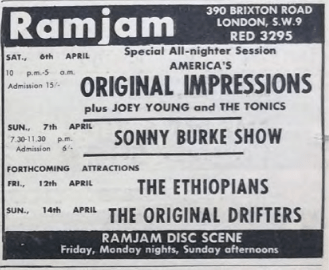
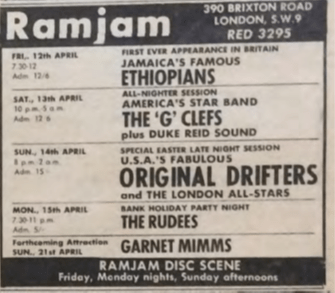
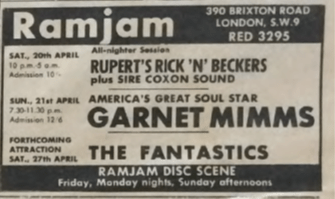

The Original Impressions and the Original Drifters both played the Ram Jam in April. The “original” prefix would suggest that they were both another of Roy Tempest’s counterfeit bands. There was certainly no mention of either of these US bands touring the UK in the music press.
Sonny Burke also played. There were a few Sonny Burkes doing the rounds in 1968 but given the overall music policy, it is likely that it was this man who played there. He would probably have been promoting his single “All you”.
The Ethiopians had scored a top 40 hit with the classic “Train to Skaville” in September 67. The Melody Maker was effusive in its praise for the record: “This beautiful record deserves to figure highly in the popular tune lists for as long as the trains to Skaville are running.” On the back of this (their only UK hit) they undertook a brief tour of the UK, which took in an obligatory gig for Jamaican musicians at Count Suckle’s Cue Club in Paddington. Other stops on the tour included the Ram Jam, the Savoy in Catford and the Mistrale in Beckenham.
The ’G’ Clefs played the Ram Jam as part of their first European tour. With their roots in doo-wop, the band had been due to tour in February with James and Bobby Purify but instead toured under their own steam in April.
The Rudees kept the reggae vibe going. The band would morph into several different groups, including Greyhound, Freddie Notes and the Rudies and Rico and the Rudies. A year later the group would name check Brixton in their “Brixton Rocket” instrumental. Freddie Notes describes the gig in “Tighten Up-The History of Reggae in the UK”: “Sonny Binns called me up and asked if I’d like to join this group he’d started called The Rudies [Sonny formed the group around 1966], as they needed a vocalist and frontman. At the time Sonny was really the only professional in the band and they needed polish to get them out on stage. So we debuted at the Ram Jam Club after just two hours’ rehearsal in this sweatbox under a dry cleaners.”
Garnett Mimms was one of the lesser-known soul stars, who never quite broke through. This was despite TV exposure on Ready Steady Go in 1966 and rave reviews from the music press. A review of his single “My baby” in Disc and Music Echo magazine raved “For far too long Garnett Mimms has been ignored in this country, while lesser talents have been recognised….I love it and hope it makes the chart as it deserves”. Garnett wouldn’t break into the UK charts until 1977, when he got to No 44 with the disco song “What it is”.
Sugar Simone, formerly of Sugar ‘n’ Dandy with Dandy Livingstone, had just released his ballad “The vow” when he played the Ram Jam. The two sentence review in Record Mirror concluded “strong performance, but really an unlikely prospect right now”.

So there it ends. But not quite….The last advert for the Ram Jam appeared in the 27th April 68 edition of the Melody Maker. The advert promised J.J.Jackson in May. We didn’t know whether the gig went ahead or not. However, we then discovered this gig review in Soul Music Magazine.
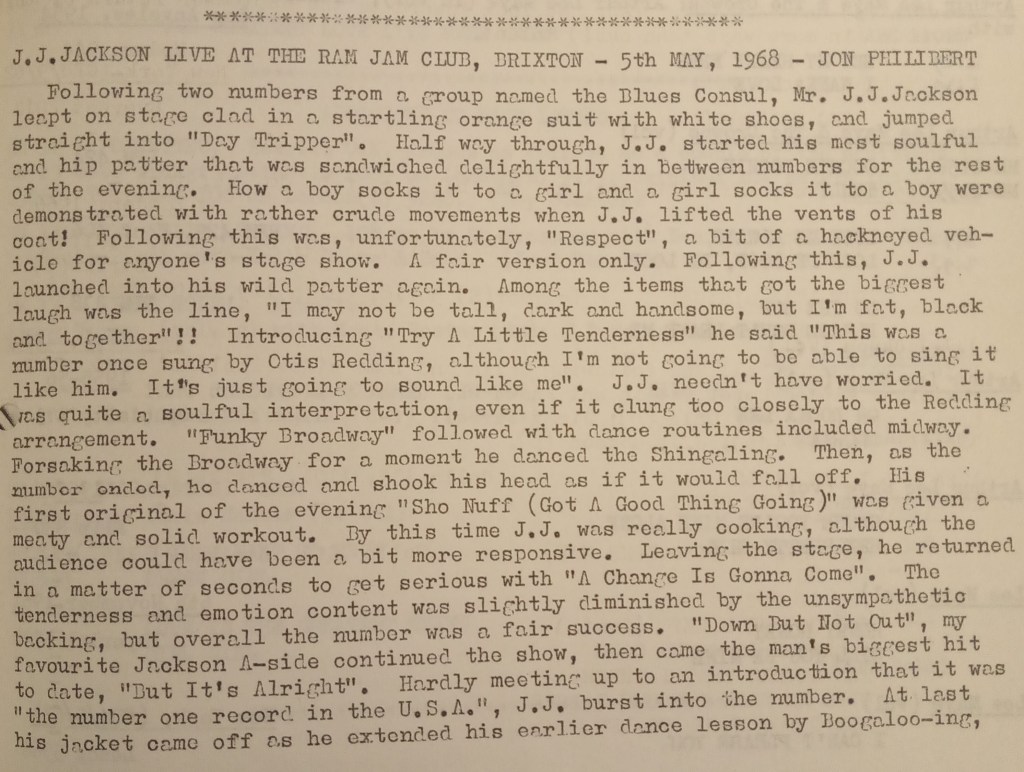
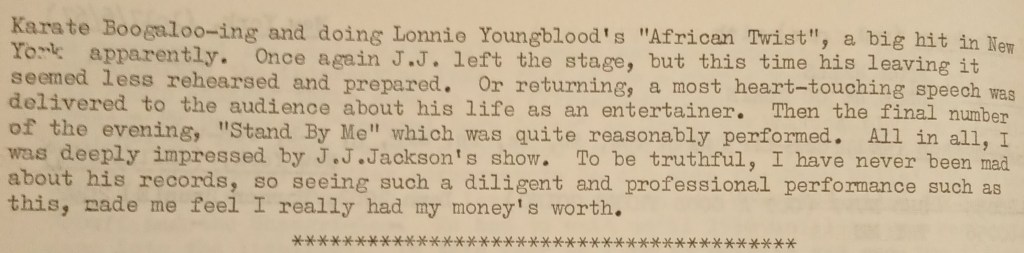
The discovery of Soul Music magazine also shows that the gigs didn’t just stop when the Melody Maker adverts stopped. A June edition of Soul Music has a review of an Oscar Toney Jr show:
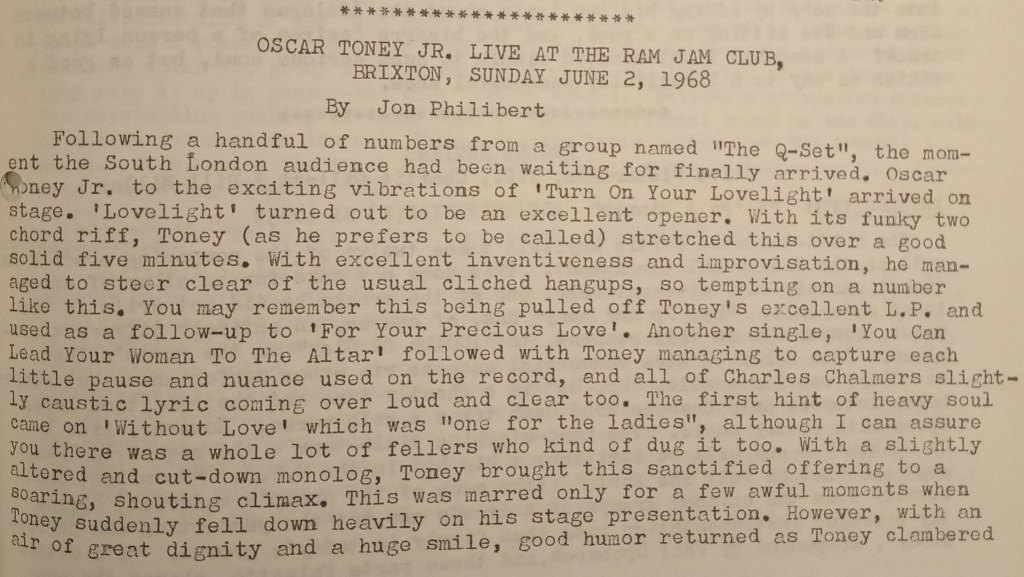

The Ram Jam club seems to have closed down without fanfare after just two and a half years. There is no reference to its closure in the music press.
It seems that there were two possible reasons why the club closed down. It is unclear if the closure was as a result of one particular reason or a combination of the two. Whatever the reason, we would love to know more.
There is certainly plenty of anecdotal evidence from gig goers who spoke to us (and some press coverage after the club had closed) to suggest that violence had become a problem at the club.
When a new discotheque was proposed in late 1969 in nearby Gresham Road, issues of crowd trouble at the Ram Jam were brought up. A neighbour in Gresham Road said “There could very well be trouble even though we are only 50 yards from the police station. Proof of that theory was the Ram Jam club.” Local councillor David Renwick echoed this statement at a town hall meeting, pointing out that even though the proposed discotheque was close to the police station, this was no guarantee that there would be no trouble: “The Ram Jam Club is evidence of this. It was opposite the station but there were still two stabbings there.”
In an interview with Record Mirror in 1973, the club’s bouncer Judge Dread said “I used to live in Brixton and work in a club until I got hit over the head with a chopper and stabbed three times in the guts.”
When the site of the Ram Jam re-opened in 1976 as Clouds, the SLP reported that the new manager “had to live down the reputation of the Ram Jam club, which occupied the premises “Clouds” has taken over, and still lives on in the memories of local people and the police as a magnet for trouble.”
Paul Gilroy’s book “Ain’t no black in the Union Jack” adds: “The rivalry that developed between North and South….was the foundation for much of the violence of the Ram Jam and other clubs and was perpetrated by the supporters of the Sound Systems-Coxon and Duke Reid in the South and Count Shelly in the North especially. This rivalry, which often erupted into violence was responsible for the division of the black music scene as a whole. The clubs lost their respectability.” There certainly seems to have been no love lost between Coxsone and Reid, based on this interview.
There does seem to be some disconnect as to the reporting of trouble. The South London Press and Brixton Advertiser in early 1968 (which in those days reported extensively on crime and disorder) make no reference to incidents at the Ram Jam. The only incident we could find in the local press whilst it was open was a front page headline in the 18th November 1966 edition of the South London Press. This reported on a court case where somebody who was queuing outside had stabbed a part time steward.
Gig goers we spoke to said that despite the violence they never once saw the police there. Given that the club was directly opposite Brixton police station, you would have thought that something might have got into the press. Reading the local news of the time, all the reports of violent incidents are at clubs in Streatham (including stabbings, brawls and an attempted murder) rather than Brixton. The excellent Past Tense blog suggests that there was an on-going rivalry between regulars at the Locarno in Streatham and the Ram Jam in Brixton.
It only seems to be after the club had closed that reports crept into the press more about violent behaviour. Was this a case of people exaggerating the trouble in order to stop the Ram Jam and the proposed discotheque in Gresham Road from getting licences? Or did the press just not pick up on the violence at the time?
However, the violence might not be the whole story. It seems that the Ram Jam may have fallen foul of new, stricter licensing laws which came into being in 1967. In March 1968 the Ram Jam made an application to the Greater London Council (GLC) to carry out fire safety works to the club. This date coincides with the last adverts appearing in the Melody Maker at this time.
The GLC carried out an inspection of the Ram Jam in August 1968. The report says that the 1st Floor (where the main stage and dance floor was) was being used as a jazz and dance club but that the 2nd floor was currently not in use. The inspection expressed concern about the amount of inflammable plywood in the club. The GLC then wrote to the Ram Jam in September 1968 to tell them that the venue could be made suitable for an annual licence if the necessary alterations took place.
We do know that Pat Robinson applied for a new licence, which was refused in early September 1968. Pat Robinson stated that his intention was to attract an older audience and that he intended a fresh start for the club, with a new name. The police claimed that there had been 17 criminal offences emanating from the club, including GBH and demanding money with menaces. The owner of the tailors shop below the Ram Jam complained of youths blocking up key holes to his premises and that his windows had been smashed 5 times in 1967 alone.
The matter was taken to appeal, with the resulting decision appearing on the front page of the 1st November 1968 edition of the Brixton Advertiser. It seems that the club had been closed since the 25th August 1968. The club did not previously have a drinks licence but was now applying for one as the club members were requesting it. The idea was to spilt the club in two, with one floor having a bar and one floor being for younger members. The plan was that the licensed part of the club would not be open on the same night as the unlicensed part.
The appeal was rejected, with the chair of the licensing committee noting that if the appeal was granted it would only add to the existing difficulties of the police in the area. The appeal was opposed by the shop owner below the Ram Jam, the South London Licensed Victuallers Association and the police. Police Inspector Peter Latham told the committee that the police were constantly being called to the club because of trouble there and that he would not be happy to see a licence at the club. Police Inspector Townsend said that he went to the club on one occasion and saw the club manager, Mr Robinson, escorting a young boy whose face was bandaged and was in a dazed condition.
The archives show that Pat Robinson subsequently contacted the GLC officer via phone in March 1969 to state that the club had been closed since August 1968 and that the owners had decided to sell the premises. They wished to sell the club as a “going concern” and therefore throughout 1969 applied for over 60 one off licences between April and August 1969 whilst negotiations were carried out with the new owners. The licences came with strict conditions that only the 1st Floor be used and that attendance numbers be limited to 150, a long way short of the hundreds who attended during the Ram Jam’s heyday.
It is difficult to know if any events took place on the dates of these one off licences or whether the Ram Jam were applying for them purely so that they could sell the club. There are certainly no adverts in the Melody Maker in 1969 for the Ram Jam. However, the acts playing the Ram Jam had changed during 1967 and 1968, so it could be that if acts were playing they were not the type of mainstream acts that would appeal to Melody Maker readers .
In the correspondence from the Ram Jam club to the GLC there are references to the club remaining open and that Pat Robinson had been asked by the new owners to carry on as manager. A letter from Pat Robinson in May 1969 states “the activities of the club will continue basically in its present form which is, of course, music and dancing. It would certainly cause much concern to many people should we have to close the premises.”
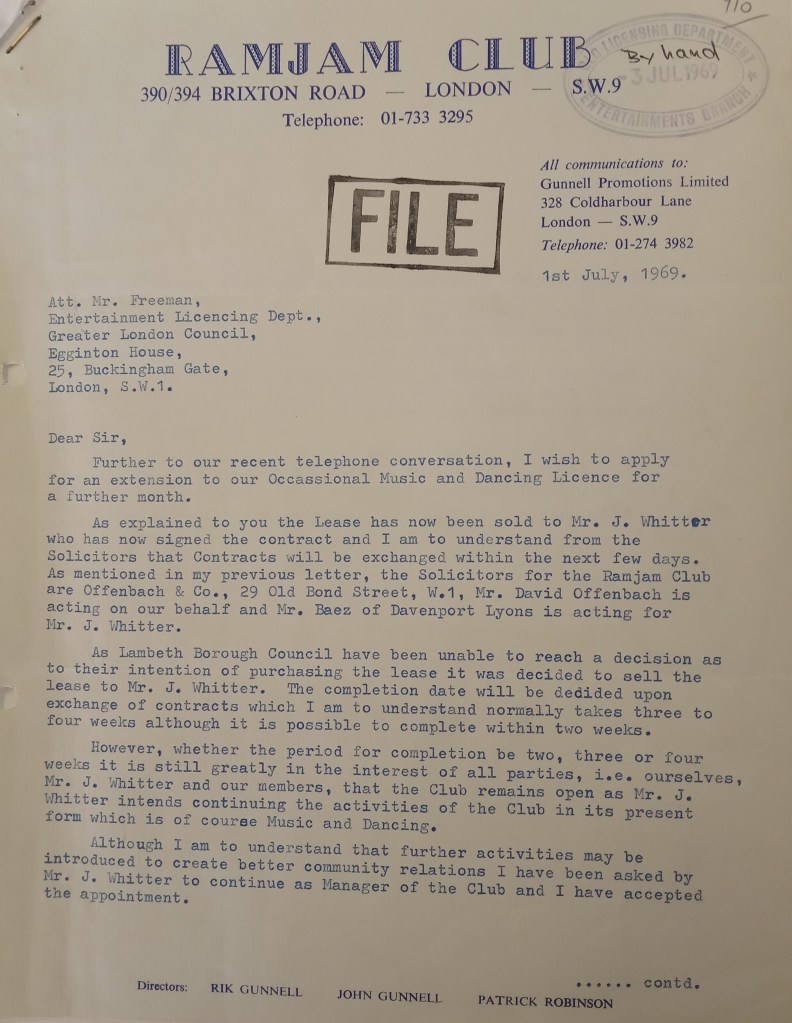
At one stage Lambeth council were interested in buying the club. However, this fell though and the club was sold to a Mr Whitter in July 1969. The new owners renamed the premises the Globe Club, who expressed an intention to carry out the necessary fire safety works and apply for an annual licence. It is unclear whether this ever happened.
 brixtonmusicmemories